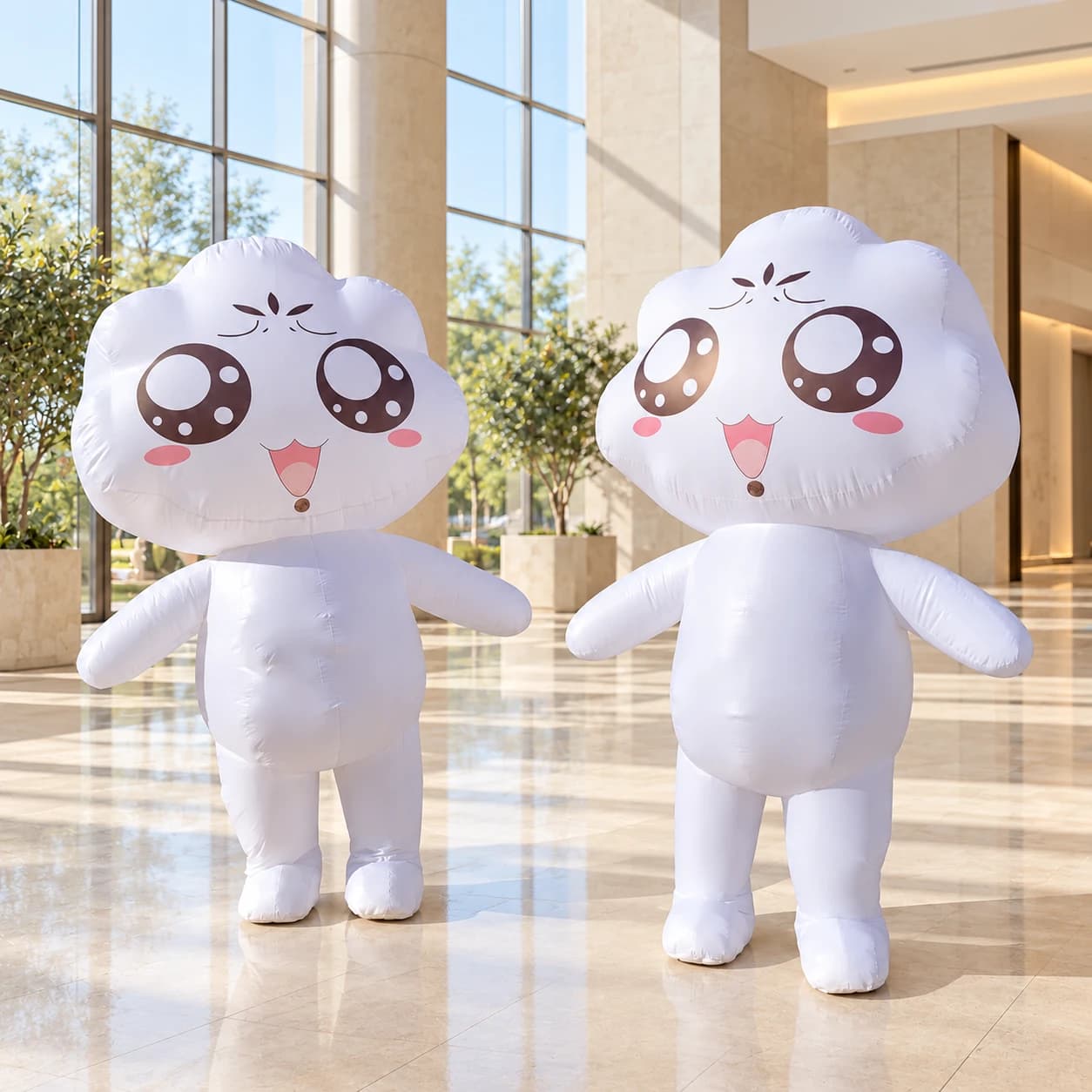
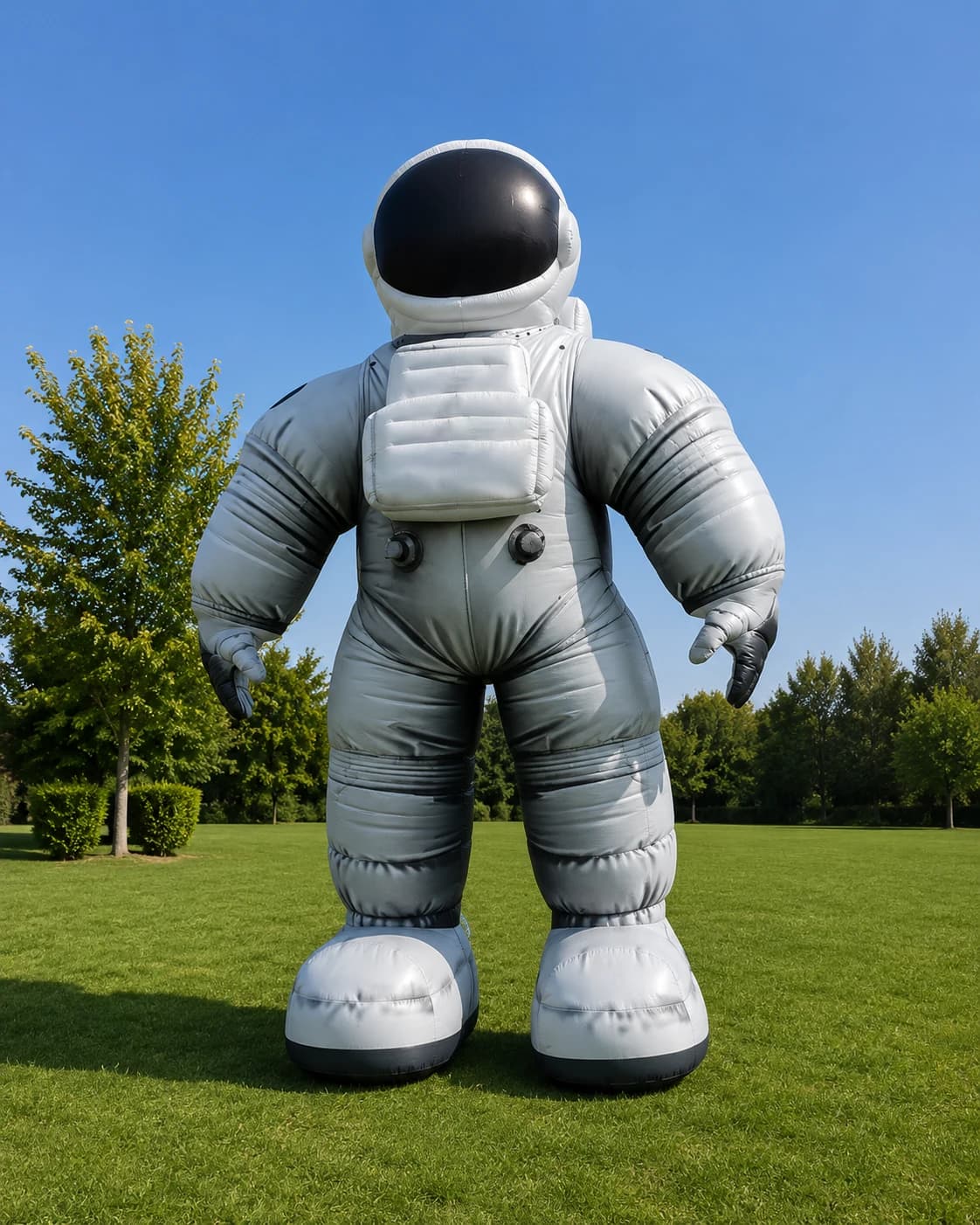
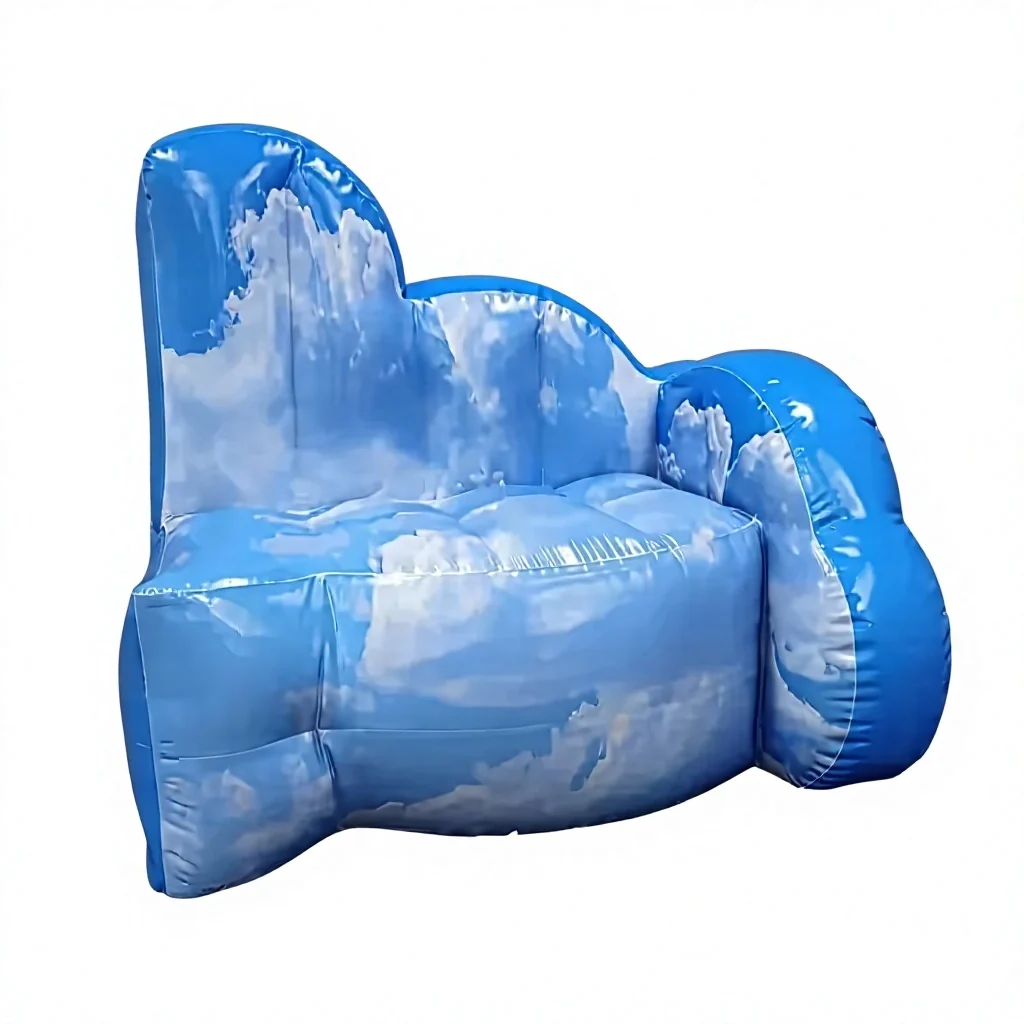
Your character will dance, but it cannot look exactly like your drawing. This article explains why, using the real physics of how air dancers work, and shows you how good design decisions preserve what actually matters about your character.
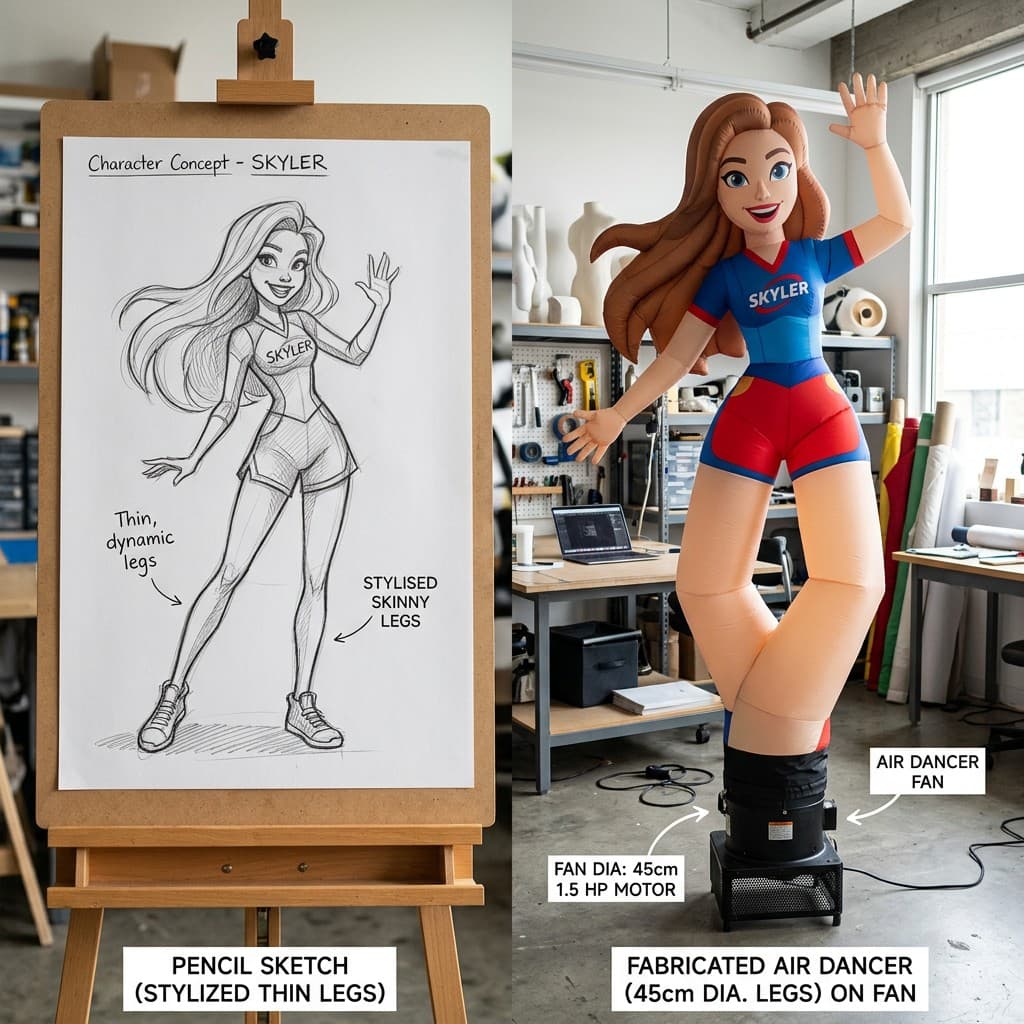
The 45cm Rule: Why the Fan Decides Your Character's Legs
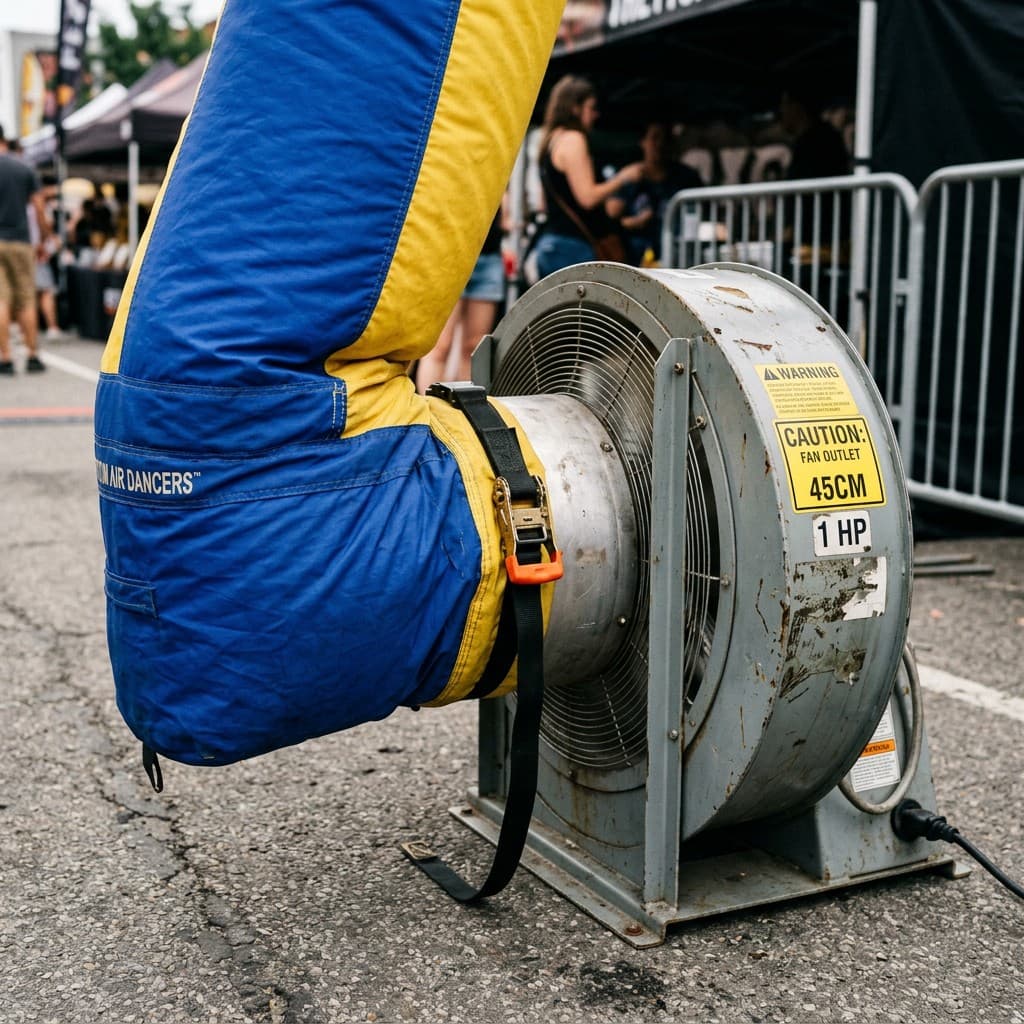
An air dancer is not a balloon — it is a fabric column kept alive by continuous airflow from a fan at its base. The fan's outlet diameter is the single most important number in the entire design, because the character's leg can never be narrower than the fan outlet itself.
Our standard commercial fans have a 45cm outlet. That means a dancing character's leg will be roughly 45cm wide no matter what the sketch shows. Draw a ballerina with 15cm ankles, and physics will politely decline. Narrow the tube below the fan diameter and you choke the airflow — the dancer collapses or barely sways.
What Motion Does to Detail
The second constraint is movement itself. An air dancer folds, whips, and snaps several times per second. Any detail that depends on staying in a fixed position will spend most of its life folded, stretched, or inverted.
- Faces need to be at least 40% of the head panel to stay readable mid-dance.
- Text belongs on the base or a static section, never on the whipping upper body.
- Color blocks beat gradients. A two-color outfit stays recognizable when folded.
- Hair and accessories become silhouettes. Ponytails and bows work better as fabric shapes.
"Will She Still Be Recognizable?"
Character identity survives in three things: silhouette, color signature, and one exaggerated feature. A girl character with a red bow, yellow dress and pigtails is recognizable at 100 metres from those three cues alone. Face detail contributes almost nothing at distance and even less in motion.
When we send the revised 3D render, we are not asking "do you accept a compromise?" We are showing that the parts of the character your audience actually recognizes are intact.
Frequently Asked Questions
Can you make an air dancer with two legs like a real person?
Yes — twin-leg dancers run on a dual-outlet fan or two fans, and each leg still follows the outlet-diameter rule. Twin-leg models dance with a different, more 'walking' character than single-tube models.
What's the minimum size for a face to stay recognizable?
As a rule of thumb, facial features should occupy at least 40% of the head panel, with high-contrast outlines. We simulate the folded state during design review to verify readability.
Can you print our logo on the dancer's body?
We recommend placing logos on the static base cylinder or a chest panel engineered with reduced flex, not on free-whipping sections. We will show logo placement options in the 3D render.
What if we're not sure between an air dancer and a static mascot?
Send the artwork and the use case. We will tell you honestly which format serves it — including when the answer is the cheaper product. Air dancers trade fidelity for motion; mascots trade motion for fidelity.
Related Resources
- Pre-shipment mascot video checklist — review the actual figure, specified movement, equipment and packing before dispatch
- Custom Inflatable Cartoons & Mascots — browse character inflatables we can build from your artwork
- The Complete Air Dancer & Tube Man Guide — sizing, blowers and placement
- Case Study: Custom Cartoon Mascot for a US Client — a character design taken from sketch to production
Get a Free Feasibility Check
Send us your character sketch or branding files. Our 3D team will review feasibility, airflow limits and the next mockup step before production is discussed.
Start Your Design