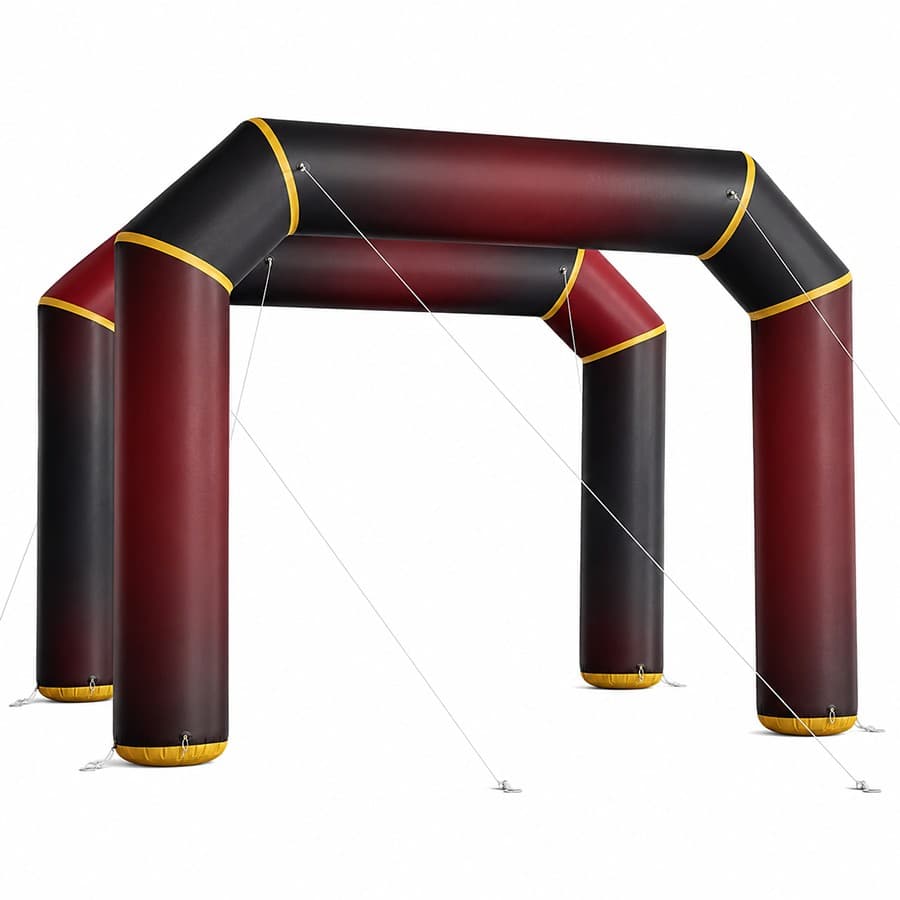
An inflatable arch positioned outdoors — at a marathon start line, a festival entrance, or a sporting event gateway — faces a structural challenge that indoor inflatables never encounter: genuine, unpredictable wind load. Unlike a static rigid structure, an inflatable arch's lightweight, air-filled construction makes proper anchoring not just a setup formality, but a genuine safety requirement.
Why Anchoring Quality Matters
An inflatable arch is lightweight and flexible — its resistance to wind comes almost entirely from its anchoring system holding it in place, combined with its aerodynamic profile. An under-anchored arch in moderate wind isn't just an aesthetic problem, it's a genuine safety risk to anyone nearby.
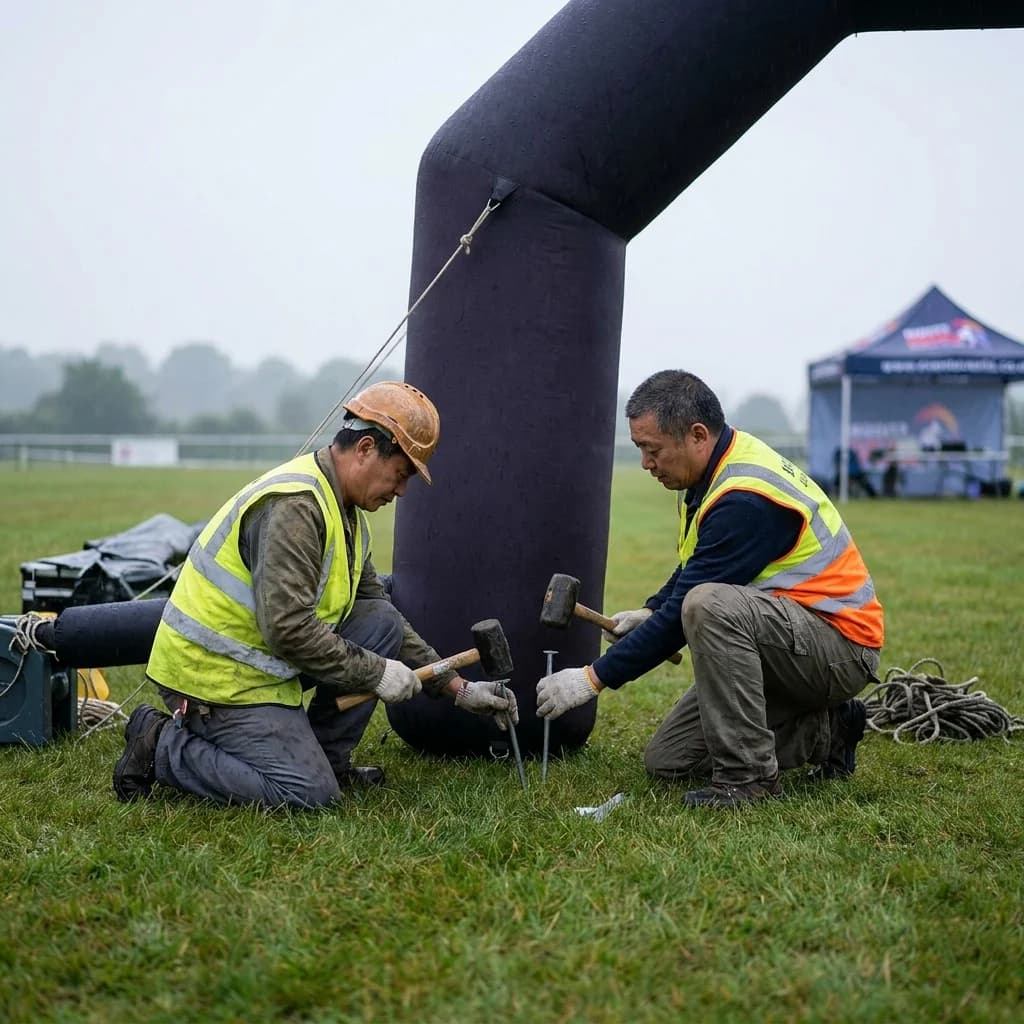
Standard Anchoring Components
Ground stakes
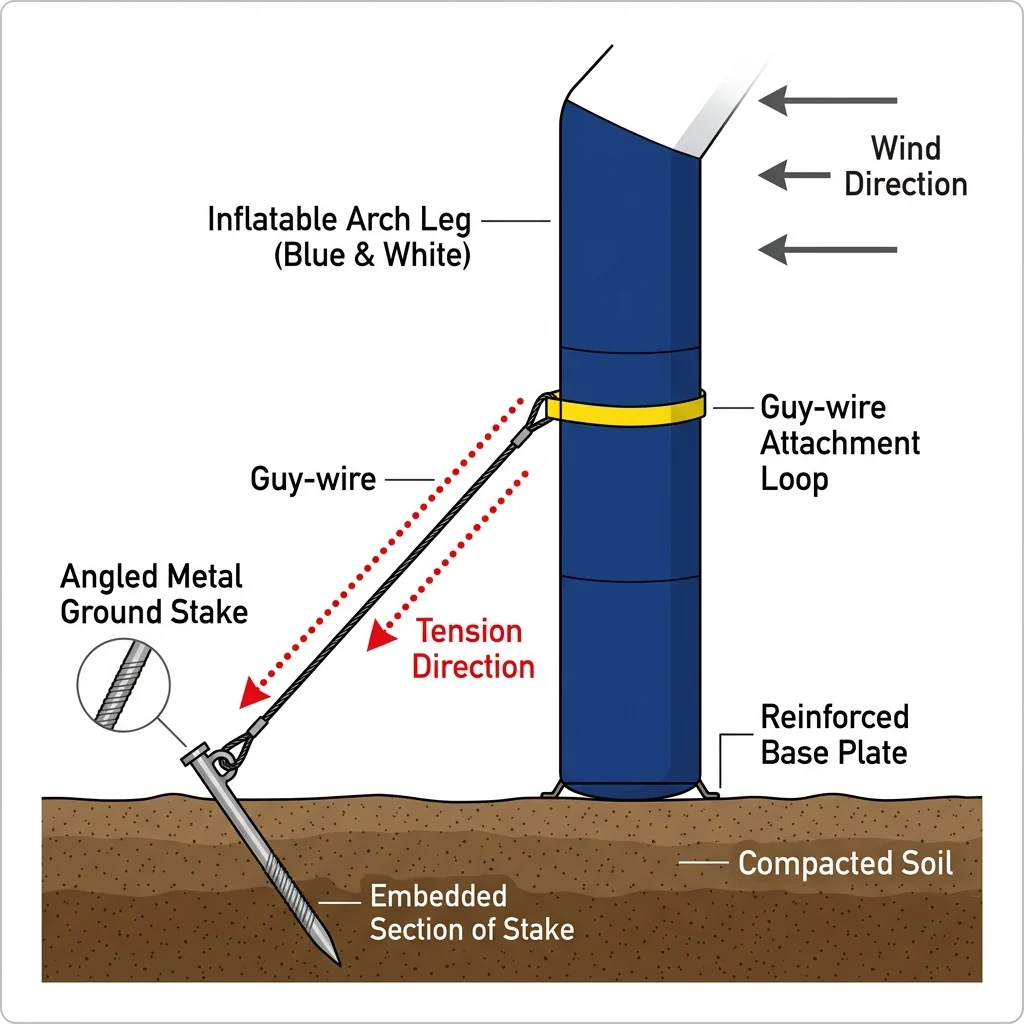
Driven into soil or grass at multiple points around the base of each leg, angled away from the structure for maximum holding resistance.
Sandbag attachment points
For hard surfaces where stakes aren't possible, weighted sandbags substitute for stake anchoring.
Guy-wire tensioning lines
Lines running from upper points on the arch structure down to separate ground anchor points for lateral stability.
Reinforced anchor loops
Actual fabric attachment points on the inflatable itself, reinforced to bear concentrated structural loads.
Surface Type Strategy
| Surface Type | Recommended Method |
|---|---|
| Grass / Soil | Ground stakes (primary method) |
| Asphalt / Concrete | Sandbags or weighted base plates |
| Indoor Flooring | Sandbags or weighted base plates only |
| Sand (Beach) | Extra-long stakes or buried anchor plates |
Proven Stability in the Field
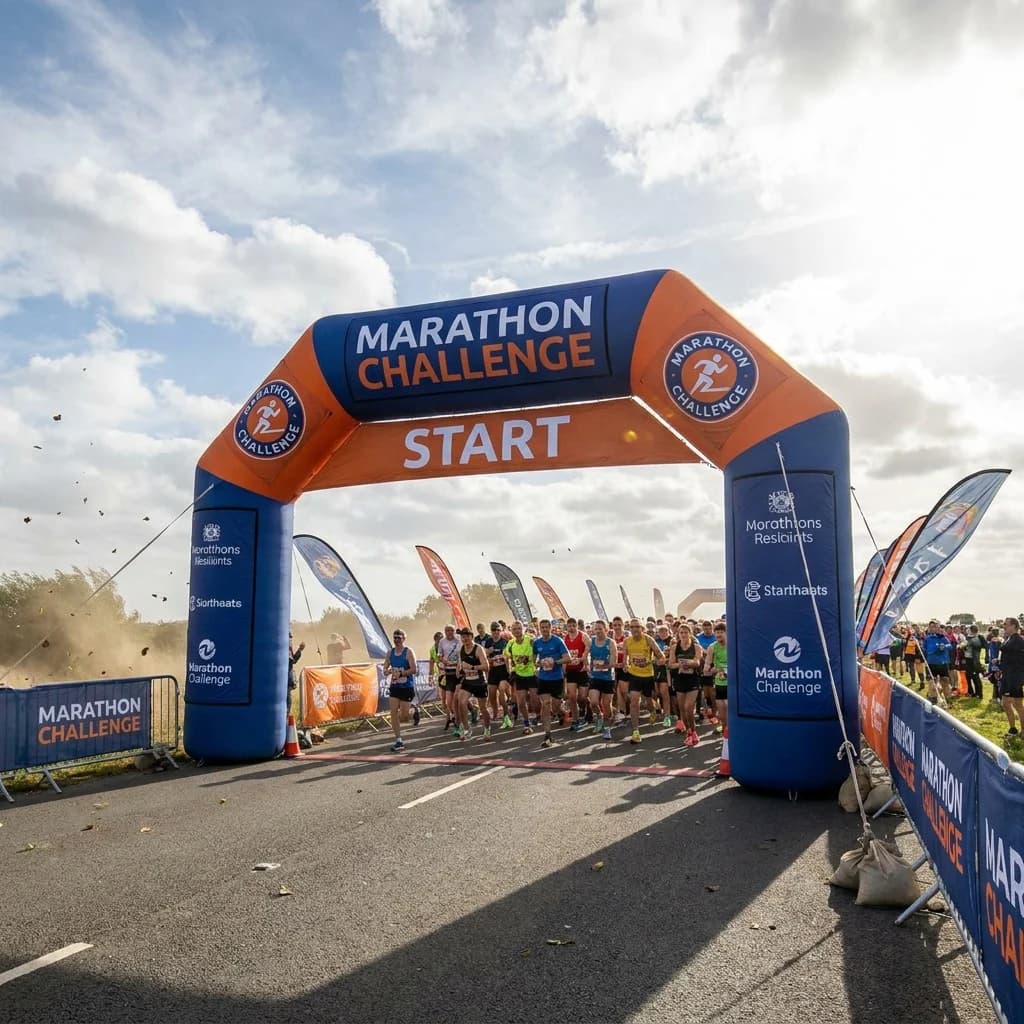
Most inflatable structures are rated for stable operation up to wind speeds of 35-40 km/h with proper anchoring. Beyond this, the standard recommendation is to deflate and secure the structure. Check your forecast and have a clear deflation plan.
Pre-Event Questions to Ask
- "What wind speed is this arch rated to withstand?"
- "How many anchor points are included?"
- "What anchoring do you recommend for [grass/concrete]?"
- "Do you provide guy-wire tensioning lines?"
Frequently Asked Questions
Can an inflatable arch be used safely on a beach or sandy surface?
Yes, with appropriate anchoring adapted for sand — typically longer stakes or buried anchor plates rather than standard ground stakes, since loose sand provides less holding resistance than packed soil.
What happens if wind exceeds the rated threshold during my event?
The structure should be deflated and secured immediately. Continuing to operate an inflatable arch beyond its rated wind tolerance risks both structural damage and safety hazards to anyone nearby.
Do indoor inflatable arches need any wind anchoring at all?
Indoor structures don't face wind load, but basic stability anchoring (typically sandbags or weighted bases) is still recommended to prevent accidental displacement from foot traffic or incidental contact.
Is wind anchoring hardware included with the arch, or purchased separately?
Standard anchoring kits (stakes, ropes, basic guy-wire attachment points) are typically included with outdoor-rated inflatable arches as standard equipment — confirm this explicitly when requesting your quote.
Source Event-Proven Arches
Our arches are engineered for outdoor stability with reinforced anchor points and comprehensive tie-down kits. Request a quote with wind-safety documentation today.
Get a Free Arch Quote