Price negotiation is a completely normal part of B2B sourcing, and any experienced manufacturer expects buyers to ask questions about pricing flexibility. But negotiating effectively requires understanding what factors genuinely move a custom inflatable's cost.
The Factors That Genuinely Affect Price
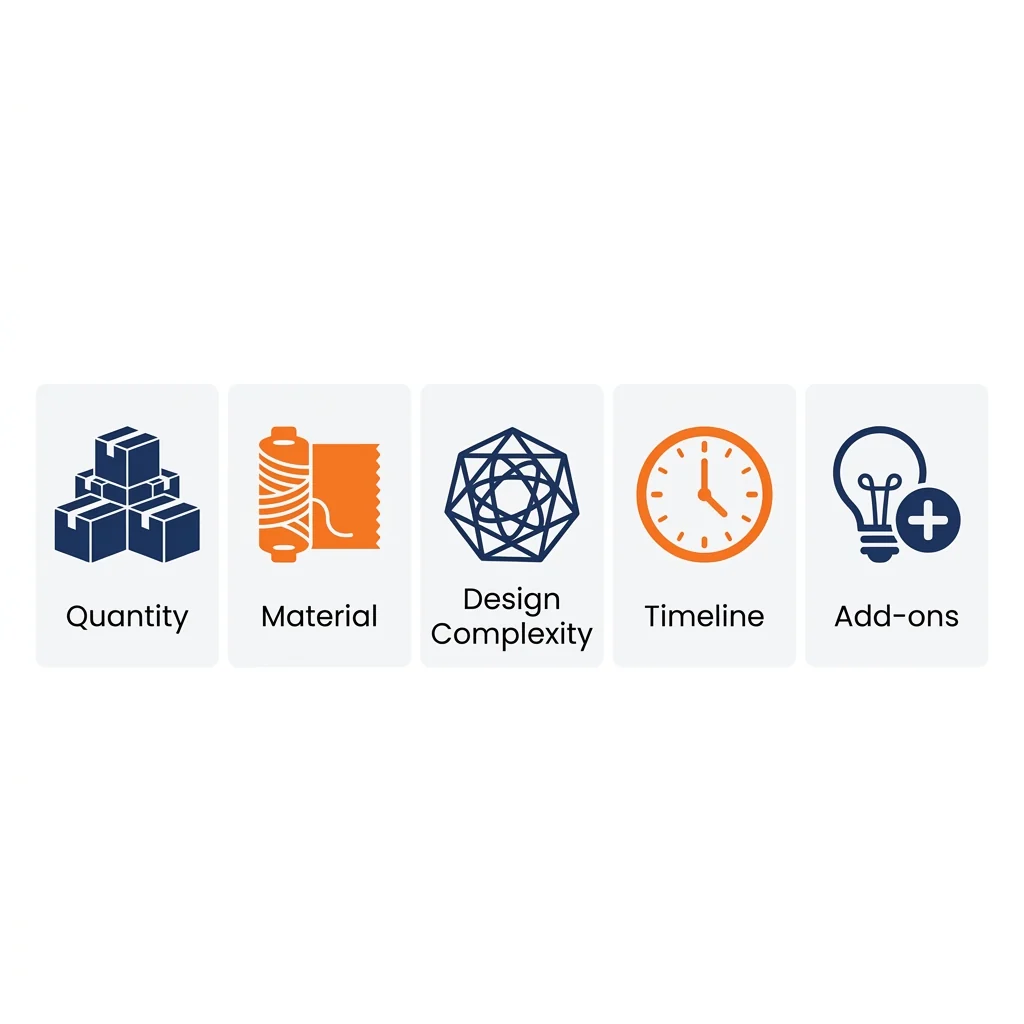
1. Quantity and order volume
This is the single largest lever for meaningful price reduction. Per-unit costs for design, mockup creation, and production setup are largely fixed regardless of quantity — ordering 10 units instead of 1 spreads these fixed costs across more units, creating real, justifiable savings per piece.
2. Material grade and thickness
Lighter-weight Oxford fabric costs less than heavier-duty PVC tarpaulin; thinner-gauge materials cost less than reinforced heavy-duty options. This involves a genuine durability trade-off, not just a price difference.
3. Design complexity
A simple single-color inflatable letter is faster and cheaper to produce than a multi-panel, multi-color, intricately shaped custom mascot with fine printed detail.
4. Production timeline
Rush orders that compress the standard timeline typically require overtime labor or reshuffling other clients' production slots — this is why rush surcharges exist and are generally non-negotiable.
5. Add-on features
LED lighting systems, custom blower upgrades, and reinforced anchoring systems all add direct material and labor cost. These are usually optional and can be removed to reduce price if budget is the primary constraint.
What Doesn't Realistically Move the Price
"Can you match a competitor's much lower quote?"
If a competing quote seems significantly lower for an apparently identical product, the difference is very likely explained by a different material grade, thinner fabric denier, absence of a blower, or a different quality control standard — not simply a different margin on an identical product. Ask for the exact material specification behind any competing quote before assuming it's a fair comparison.
"Can you remove the 3D mockup step to save cost?"
The 3D mockup process protects both parties from costly production errors — skipping it doesn't meaningfully reduce cost but significantly increases the risk of a finished product that doesn't match expectations.
"Can you use thinner material but still guarantee the same outdoor lifespan?"
Material thickness and durability are directly linked by basic physics — a supplier who agrees to this request without changing the underlying spec is either misunderstanding the request or not being fully transparent about the trade-off.
How to Negotiate Effectively

The most productive pricing conversations focus on factors that genuinely create savings:
- →"What's your price break at 5 units? At 10 units?"
- →"If we extend the timeline by one week, does that reduce cost?"
- →"What's the price difference between Oxford fabric and PVC for this specific design?"
- →"Is there a way to simplify this design slightly to reduce cost while keeping the core visual impact?"
These questions invite a supplier to genuinely engage with realistic cost levers, rather than asking them to simply discount an already-accurate quote without any underlying change.
A Note on Long-Term Relationships
Buyers who establish a track record of repeat orders are often offered preferential pricing or priority production scheduling over time — this reflects the real value of reduced sales overhead and predictable production planning for the manufacturer. If you anticipate ongoing or seasonal recurring orders, mentioning this upfront is a legitimate way to discuss longer-term pricing structure, distinct from a one-time discount request on a single order.
Frequently Asked Questions
Is it reasonable to ask for a sample at a discounted rate?
Sample pricing is typically close to standard per-unit cost regardless of a future bulk order, since fixed setup costs don't scale down. Some suppliers offer to credit the sample cost toward a subsequent bulk order — this is a more realistic negotiation point than asking for a discounted sample price outright.
Why would two suppliers quote significantly different prices for what looks like the same product?
Almost always due to differences in material grade, fabric weight, included accessories (blower wattage, anchoring kit completeness), or quality control process — request the full specification behind any quote before comparing price alone.
Does requesting DDP shipping make negotiating the base product price harder?
Not directly — DDP simply bundles freight and duties into the total price. The underlying product cost negotiation (quantity, material, complexity) operates independently of the shipping term chosen.
Is it normal to negotiate payment terms as well as price?
Yes, particularly for established or repeat buyers — terms like deposit percentage or payment timing are a legitimate part of commercial negotiation, separate from the core unit price discussion.
Ready to Discuss Your Project's Pricing?
Share your project details so the product scope, quantity, artwork and destination can be reviewed for a professional B2B quotation.
Get Your Custom Quote