"Do I need to keep it plugged in the whole time?" This is one of the most common questions we receive from first-time buyers — and getting the answer wrong means ordering the wrong product entirely. This guide settles it once and for all.
There are two fundamentally different types of inflatable products on the market: continuous-airflow inflatables (which use a blower fan that runs throughout the display) and sealed airtight inflatables (which are pumped once and closed like a bicycle tyre). They behave completely differently, suit different environments, and the wrong choice will cause real problems on your event day.
How Continuous-Airflow Inflatables Work
A continuous-airflow inflatable is not actually airtight. It is designed with deliberate small openings — or relies on the slight porosity of Oxford fabric — through which air slowly escapes. A blower fan, typically attached to the base, constantly pushes fresh air in to replace what leaks out. The product stays inflated only while the blower is running.
This design has a significant practical advantage: small punctures are effectively self-sealing. If the fabric catches on something and develops a small tear, the constant positive pressure from the blower compensates, and the inflatable keeps its shape while you organise a repair. You don't need to deflate the product, patch it immediately, and re-inflate. This is why continuous-airflow is the dominant choice for outdoor events where contact with rough surfaces, equipment, or high foot traffic is expected.
The trade-off is clear: the blower must remain powered throughout your display. This means a power cable running from the inflatable to a power source, and a constant noise output of approximately 55–70 decibels — similar to a vacuum cleaner running in the room. For outdoor festivals, sports events, and busy retail environments, this is rarely a problem. For quiet indoor venues, luxury installations, or film and photography sets, it can be a dealbreaker.
How Sealed Airtight Inflatables Work
A sealed airtight inflatable is exactly what the name suggests: it is manufactured with airtight PVC seams throughout, inflated to pressure using a pump (manual or electric), and then sealed with a valve. No power supply is required to maintain inflation.
Under stable indoor conditions, a well-manufactured sealed PVC inflatable holds air for a minimum of 48 hours. Many of our clients report 3–5 days before a top-up is needed. The included manual pump makes top-ups fast and straightforward — less than two minutes for most sizes.
The result is a completely silent, completely cable-free display. This makes sealed inflatables the preferred choice for luxury hotel lobbies, high-end retail pop-ups, shopping mall atriums without nearby power access, and any setting where a trailing power cable is aesthetically or practically unacceptable.
The limitations are size and outdoor suitability. Sealed inflatable technology becomes less practical above approximately 2–3 metres, as the air volume required and the structural pressure needed for stability increase significantly. Outdoor use is also more demanding: temperature changes cause air to expand and contract, requiring more frequent top-ups, and a significant puncture cannot be compensated for while the display is running.
Side-by-Side Comparison
| Feature | Continuous-Air Blower | Sealed Airtight |
|---|---|---|
| Power required during display | Yes — constant | No — pump once only |
| Noise level | 55–70 dB (blower running) | Completely silent |
| Cables visible | Yes — power cable to blower | None |
| Self-repairs minor punctures | Yes — blower compensates | No — must patch and re-inflate |
| Maximum size | Unlimited (1m–12m+) | Practical limit ~3m |
| Air hold without power | Minutes only | 48h+ indoor |
| Setup time | 3–15 minutes | 3–8 minutes |
| Best for outdoors | ✅ Excellent | ⚠️ With considerations |
| Best for indoor retail | ⚠️ Noise may be an issue | ✅ Excellent |
| Best for luxury venues | ⚠️ Blower noise concerns | ✅ Preferred |
| Best for large-scale events | ✅ Preferred | ⚠️ Size limitations |
Which Type to Choose — By Use Case
Outdoor sports events & marathons
→ Continuous-airflowLarge-scale, high-traffic environments need the durability and self-repair advantage of continuous-airflow. Wind resistance is also better managed with a blower maintaining constant pressure. Size requirements (3m+ arches and tunnels) make sealed technology impractical.
Trade shows & exhibition stands
→ Continuous-airflow (large) / Sealed (small)For large stand-anchor pieces (2m+), continuous-airflow is the reliable choice over multi-day events. For smaller counter displays where power access is limited or aesthetics demand cable-free installation, sealed models work well.
Shopping mall atriums
→ Depends on accessMalls with nearby power access typically use continuous-airflow for large seasonal displays. For installations in the centre of an atrium without cable routing, sealed inflatables up to 2m are the clean choice. All products must carry fire retardancy certification for mall use.
Luxury retail & hotel lobbies
→ Sealed airtightThe silence and absence of cables make sealed inflatables the natural choice for premium interior environments where ambient quiet and visual cleanliness are non-negotiable. Sizes under 2m are ideal for lobby statement pieces and window displays.
Night festivals & outdoor concerts
→ Continuous-airflow with LEDLarge-scale night events need continuous-airflow for size and structural stability. LED internal lighting is compatible with continuous-airflow products and provides the 360° illumination impact that makes inflatable displays unmissable after dark.
Photography & film production
→ Sealed airtightBlower noise makes continuous-airflow inflatables unsuitable for any environment where audio is being recorded. Sealed inflatables are the only appropriate choice for prop use on film sets, photography studios, and broadcast environments.
Using Sealed Inflatables Outdoors: What You Need to Know
Sealed inflatables can be used outdoors, but with important caveats. Temperature is the primary variable: as ambient temperature rises, the air inside the inflatable expands, increasing internal pressure. As temperature drops at night, the air contracts and the product may feel slightly soft. In temperate climates, this is manageable with occasional top-ups. In extreme heat or cold, it becomes a significant maintenance burden.
Wind is the second concern. Sealed inflatables rely entirely on their anchoring system to remain stable — there is no constant-pressure blower to help maintain shape under lateral wind load. All our sealed products include multi-point anchoring rings and a ground stake kit, but we recommend keeping sealed inflatables indoors or in sheltered outdoor settings when wind speeds exceed 25 km/h.
For prolonged outdoor use — seasonal retail displays, outdoor market installations, or any display running for more than 48 hours outdoors — our continuous-airflow range is consistently the more reliable choice.
Which InflatCustom Products Use Each Type?
Continuous-Airflow Products
- →Inflatable letters & 3D logo signs (all sizes)
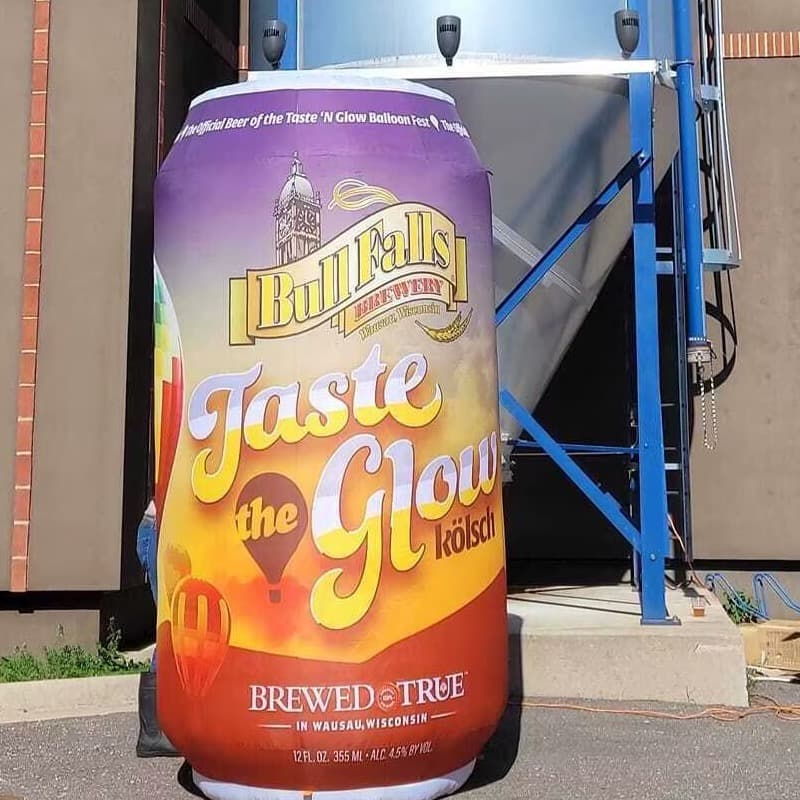
- →Giant product replica bottles & cans
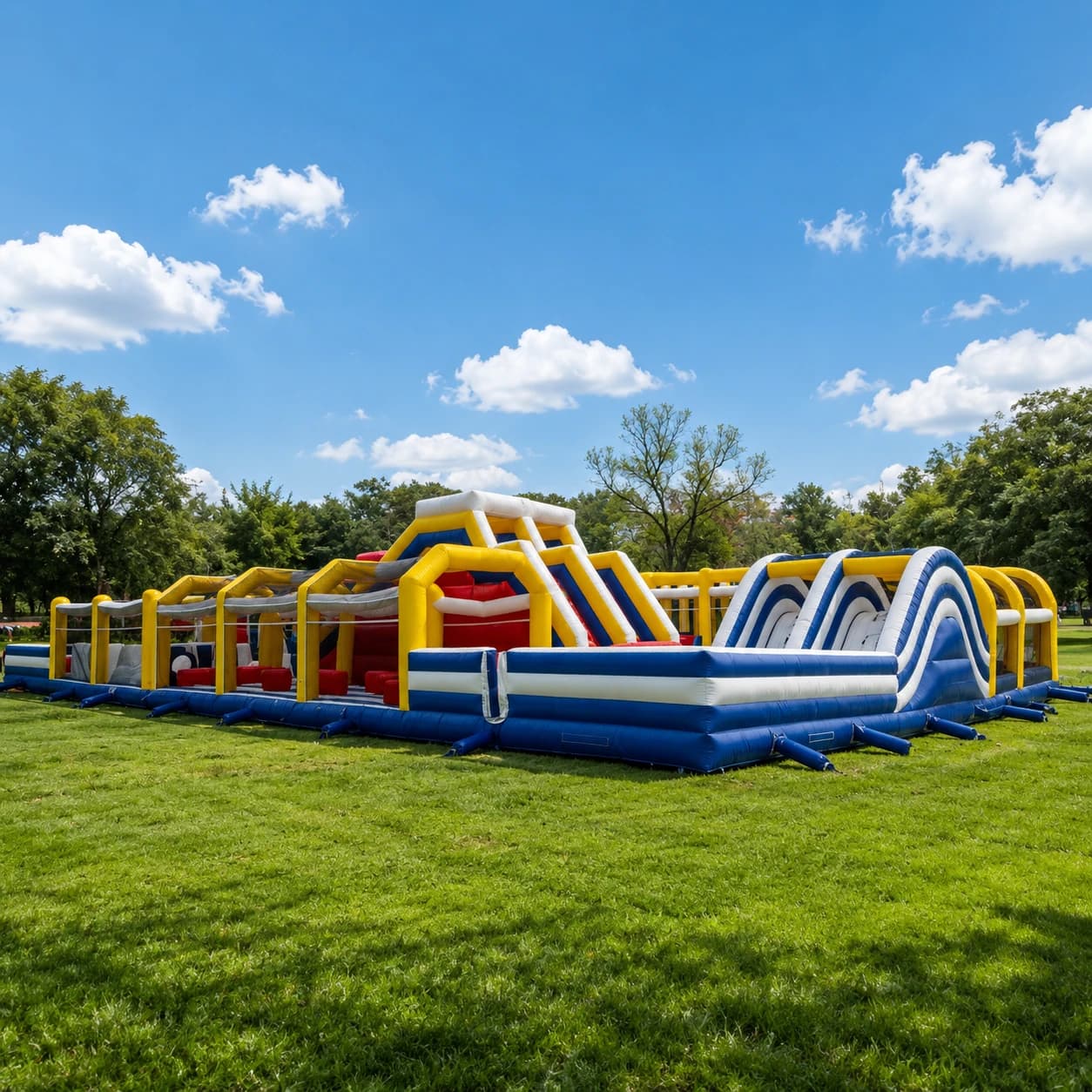
- →Inflatable event tunnels & arches
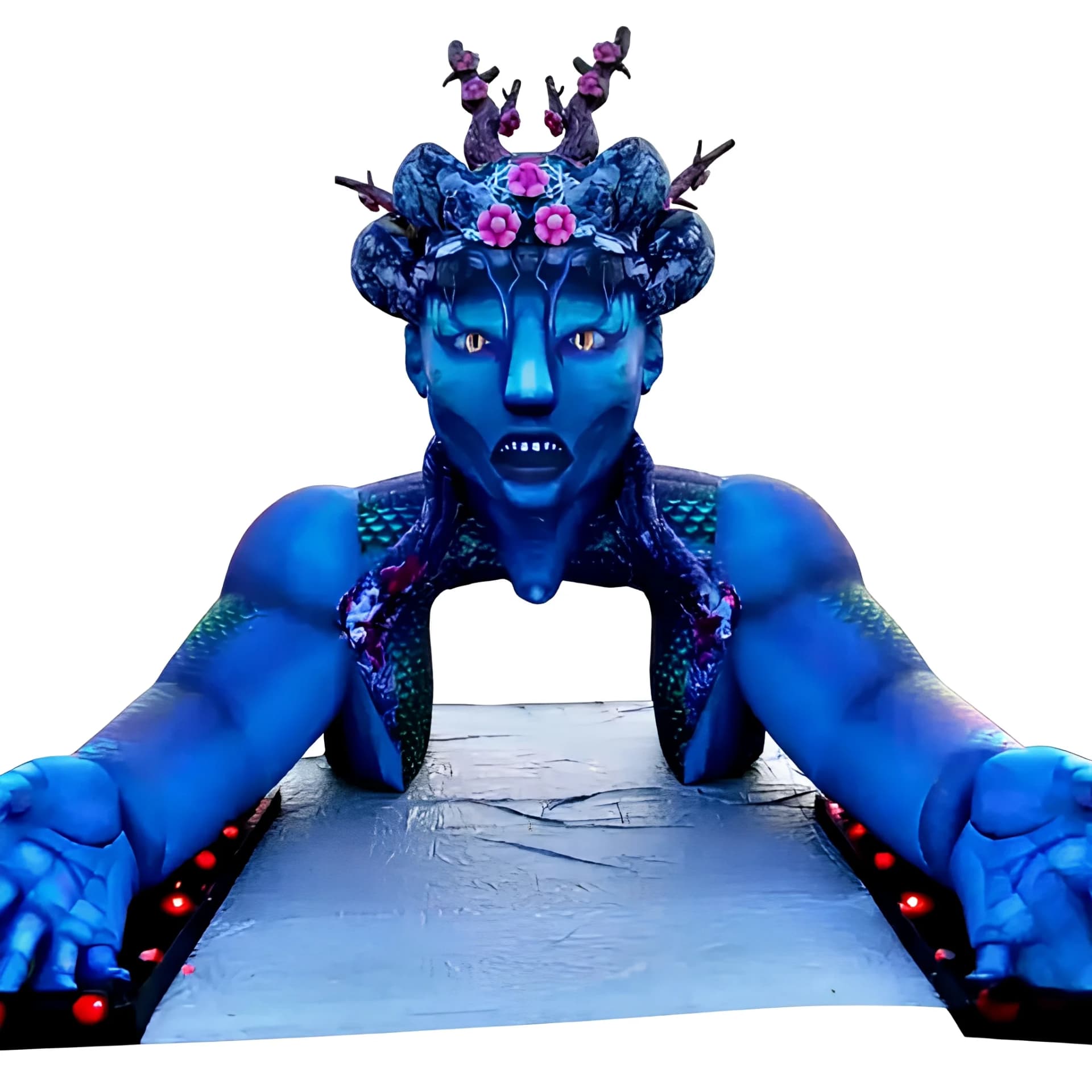
- →Custom mascot & character inflatables
- →Giant inflatable animals
- →Christmas Santa Claus displays (outdoor)
- →Giant inflatable DJ stages
- →LED illuminated inflatables (all types)
Sealed Airtight Products
- →Sealed inflatable plant & flower displays
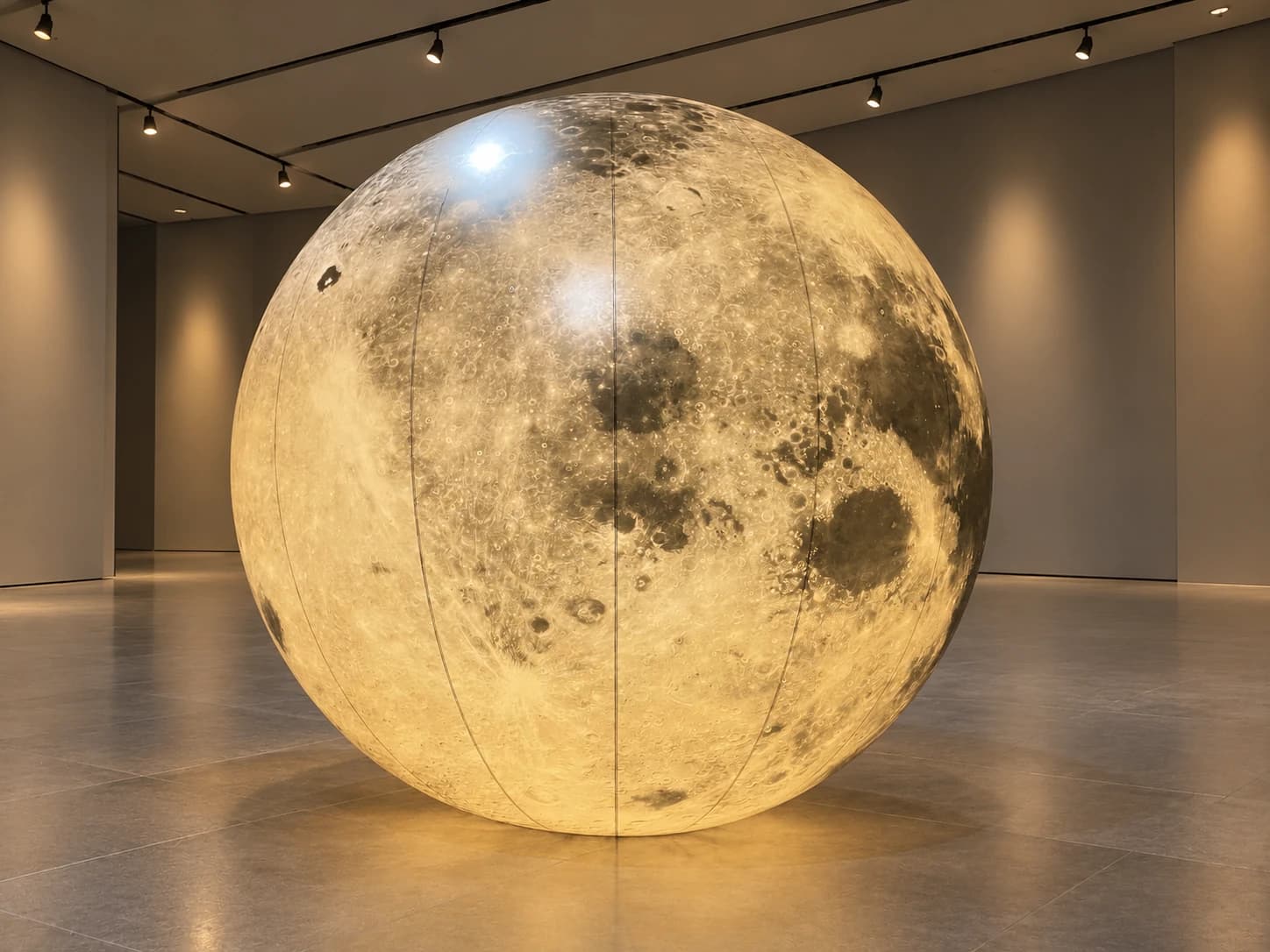
- →Closed-air decorative balloon models
- →Small retail counter display pieces
- →Photography & film prop inflatables
- →Luxury venue statement pieces
- →Trade show compact displays (under 1.5m)
Frequently Asked Questions
Do inflatables need to stay plugged in to keep their shape?
It depends on the type. Continuous-airflow inflatables must remain plugged in at all times — the blower runs constantly to maintain pressure. Sealed (airtight) inflatables are pumped once and closed, so they hold their shape without any power supply, similar to a bicycle tyre.
What is the difference between a continuous-air inflatable and a sealed inflatable?
A continuous-airflow inflatable has a blower fan running constantly, pushing fresh air in as it slowly leaks out. A sealed (airtight) inflatable is pumped to pressure once and closed with a valve — no power is needed to maintain shape. Continuous-air inflatables are better for large outdoor displays; sealed inflatables are better for indoor retail and locations without power access.
Are continuous-air inflatables noisy?
Yes. Commercial blower fans produce noise in the 55–70 dB range, similar to a running vacuum cleaner. This is acceptable outdoors and at busy events, but may be unsuitable for quiet indoor retail environments, luxury venues, and photography or film settings. Sealed inflatables are completely silent after inflation.
How long does a sealed inflatable hold air?
Under stable indoor conditions, a well-manufactured sealed PVC inflatable holds air for a minimum of 48 hours. In practice, many clients report 3–5 days before a top-up is needed. Outdoor use with temperature fluctuations reduces hold time due to air expansion and contraction.
Which inflatable type is better for a trade show?
For most trade show applications, continuous-airflow inflatables are the better choice — they maintain consistent shape throughout a multi-day event without any maintenance. Sealed inflatables are suitable for smaller trade show displays where power access is limited, or where a silent, cable-free installation is required.
Can a continuous-air inflatable repair itself if punctured?
Yes — this is one of the key advantages of the continuous-airflow design. Small punctures are effectively self-sealing while the blower is running, as the constant air pressure compensates for minor leaks. You can apply a patch at your convenience without deflating the product. Sealed inflatables must be deflated, dried, and patched before re-inflation.
Related Products
The Short Answer
Choose continuous-airflow if your display is outdoors, larger than 2 metres, at a busy event with power access, or needs to run reliably for multiple days without maintenance attention.
Choose sealed airtight if your display is indoors, smaller than 2 metres, in a quiet or premium environment, or in a location where power access or cable visibility is a problem.
Not sure which applies to your situation? Tell us your event type, venue, and display size and we will recommend the right product — free, with no obligation.