Commercial holiday display planning
Custom Christmas Inflatables for Commercial Displays: Giant Santa, Snowmen & Branded Holiday Decor
Custom Christmas inflatables give malls, retail teams and event agencies a large seasonal display that can be planned around a store entrance, plaza, atrium or photo area. This guide covers common commercial formats, venue fit, artwork review and the information needed for a practical quote.
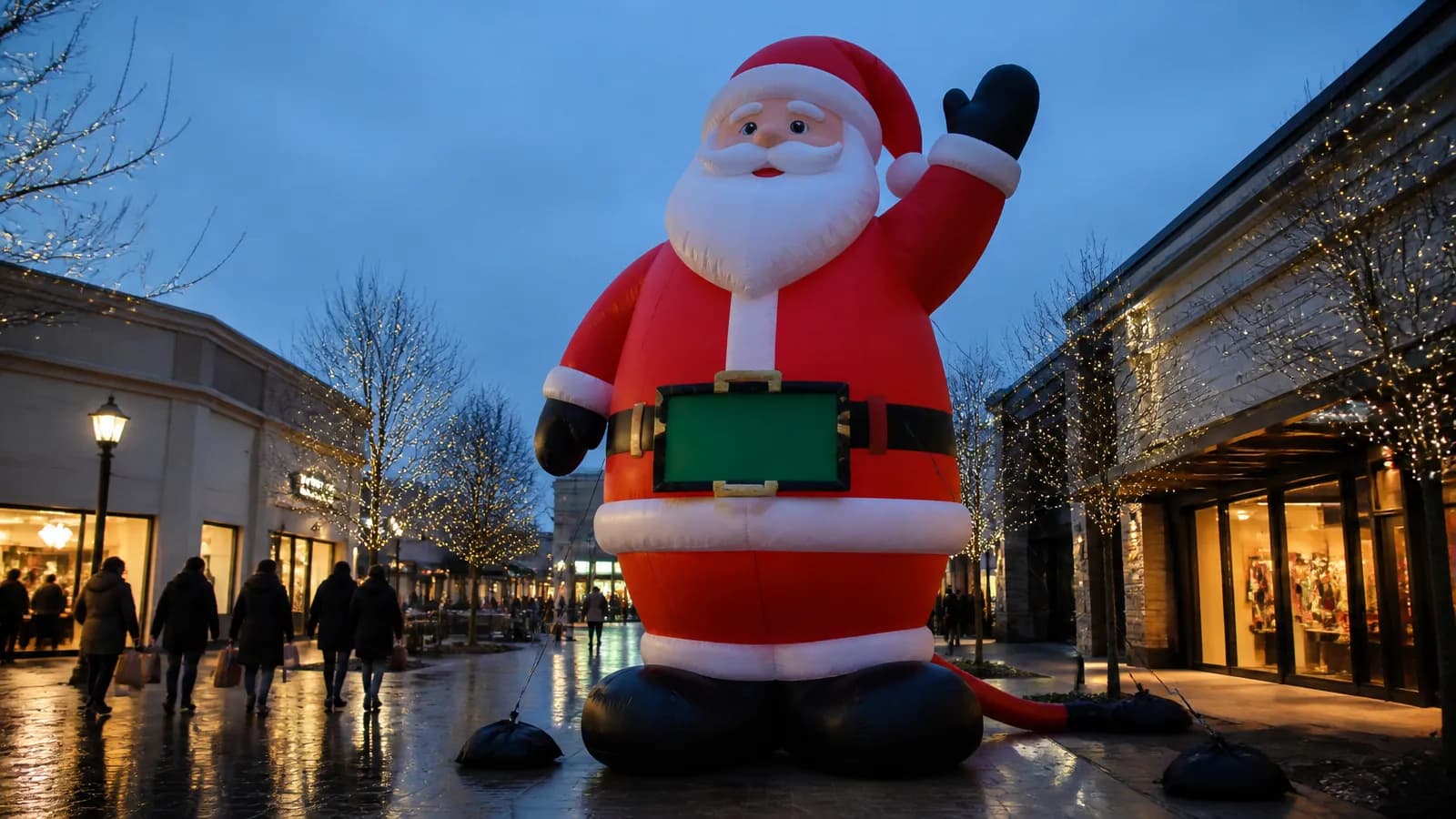
Why Retailers and Event Agencies Use Giant Christmas Inflatables
A large holiday object can establish the display zone before visitors reach the storefront or event entrance. Retail teams often use it to frame a seasonal campaign, while agencies use it to give a temporary program a clear visual center.
The display works best when the shape has a defined job: a landmark for an atrium, a photo point near a queue, a branded entrance marker or a plaza feature that can be recognized from a distance. That job should guide the chosen shape, size and placement before artwork is approved.
Before selecting a concept, agree on what a visitor should see first and what they should do next. A shopping-centre team may need a photo destination that supports a queue, while a retailer may need a clear approach-side landmark that does not block storefront access. Those are different briefs, even when both use a giant holiday character.
For agencies, the same planning conversation also protects the installation schedule. The venue contact, working footprint, power location, access window and receiving contact should be recorded with the creative reference. This gives the quotation review enough context to identify an issue before the event build begins.
Popular Custom Christmas Inflatable Designs
Giant Inflatable Santa for Malls and Plazas
A giant inflatable Santa for a shopping mall can work as an atrium landmark, a storefront focal point or part of a larger holiday scene. Ask for the ceiling height, the usable display footprint and the nearest visitor path before selecting the final proportions.
Inflatable Snowman and Reindeer Displays
Snowmen and reindeer can be grouped to form a wider visual scene or used as separate wayfinding features. A group layout needs enough spacing for visitors, maintenance access and any site-specific anchoring or power arrangement.
When several characters share one area, plan the composition from the main camera angle and the approach route instead of simply adding more objects. The team should identify the object that carries the campaign message and keep service access available behind the display.
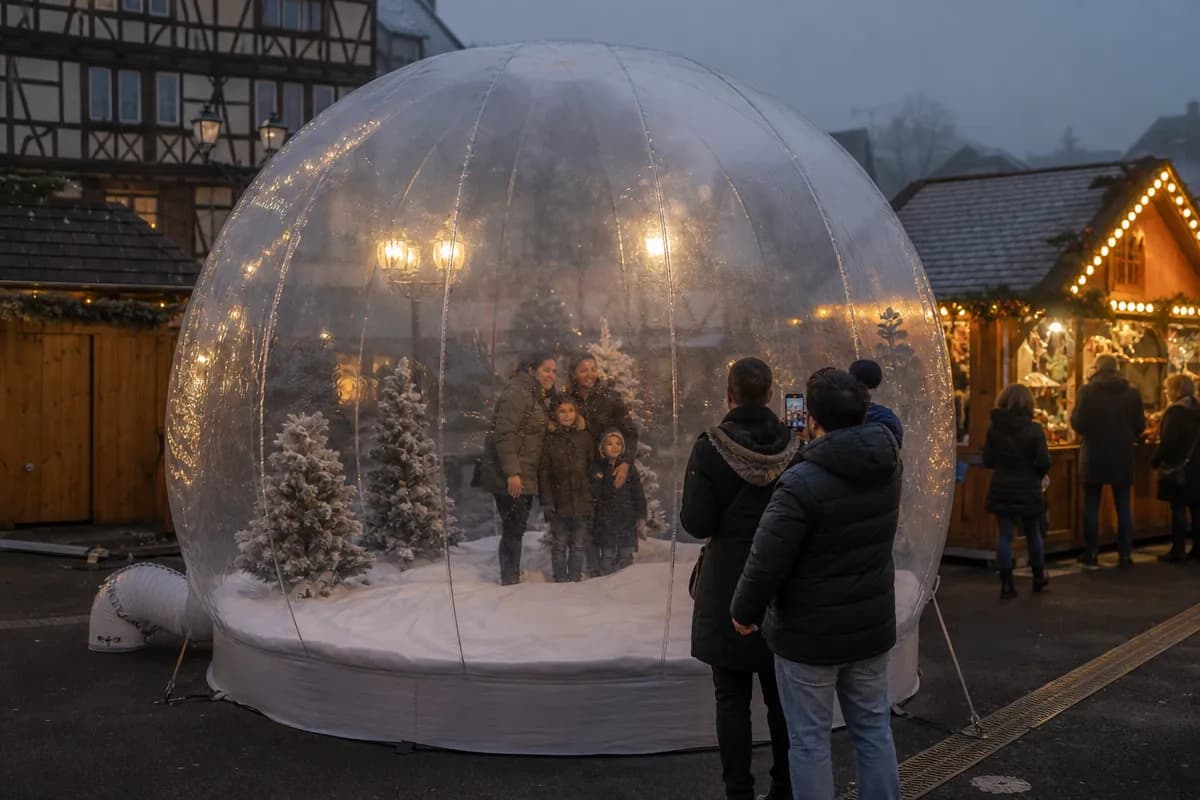
Inflatable Christmas Arch for Store Entrances
An inflatable Christmas arch for a store entrance should be planned from the clear opening first, not from the outer size. Confirm delivery doors, pedestrian flow, overhead signs and the position of any existing entrance fixtures before requesting a design.
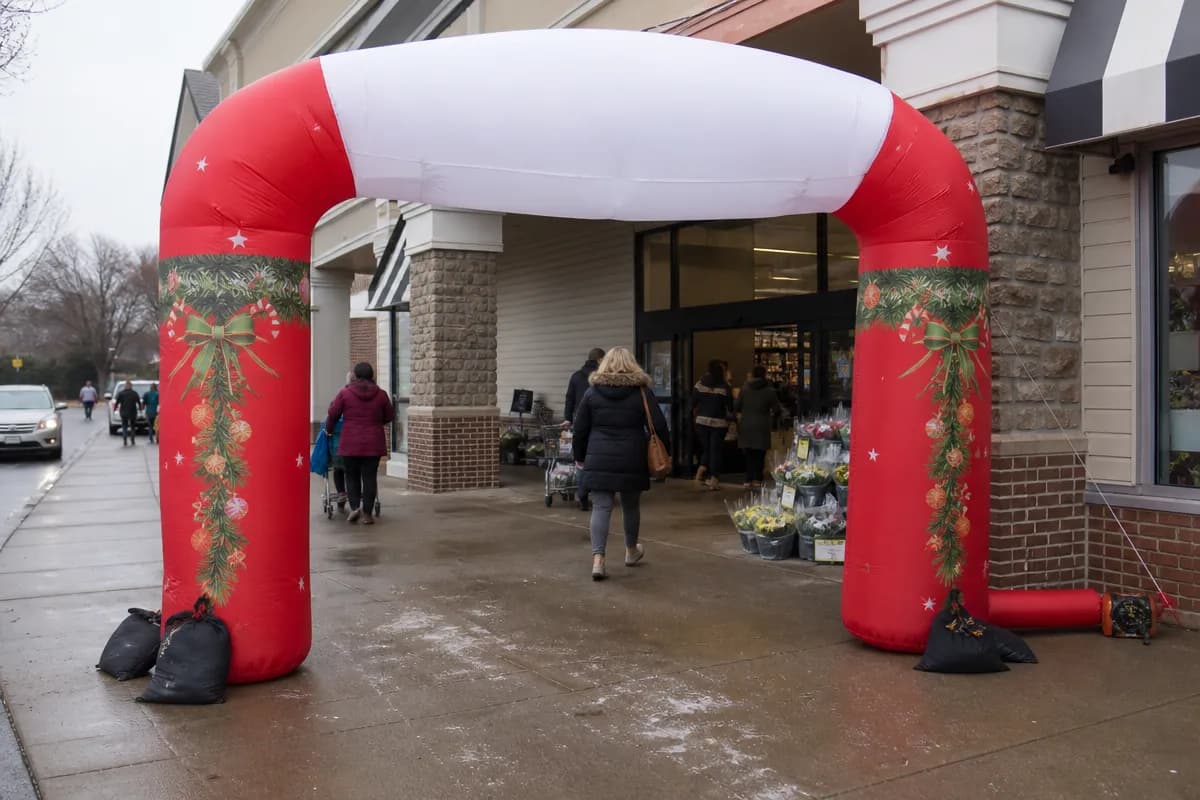
Walk-In Inflatable Snow Globe Photo Booth
A walk-in inflatable snow globe photo booth is a destination rather than a simple decoration. It needs a controlled visitor path, an operating position for staff and a review of the available space for the structure and accessories.
Ask the site for the maximum number of visitors allowed in the photo area, the location of the queue and the route used by cleaning or security teams. A photo feature is more useful when its entry, exit and staff position are as clear as its holiday appearance.
Giant Christmas Tree, Gift Box and Ornament Inflatables
Trees, gift boxes and ornaments can give a plaza or retail frontage a recognizable holiday silhouette. They can also support a campaign colour palette without requiring a literal character form.
These forms are useful when a campaign needs a clean visual object that works around a product launch, seasonal sale or branded photo point. Send the intended colours and logo placement with the reference so the design review can consider how the printed areas sit across curved surfaces.
Branded Mascots in Holiday Costume
A branded mascot in a holiday costume keeps the display tied to an existing campaign character. Supply the original character reference and identify which visual details must remain recognizable from the expected viewing distance.
It also helps to show which costume details are optional and which are required for brand recognition. This keeps the artwork review focused on the visible face, logo zone, colour blocks and proportions rather than relying on a small reference image to explain the complete display.
Choosing the Right Size for Your Venue
For many commercial displays, a 3–5 m form provides enough scale for an entrance, concourse or seasonal photo point without making planning needlessly complex. That range is a starting point, not a substitute for checking the actual venue.
For a mall atrium, record the lowest overhead clearance and the distance from the display to escalators, shopfronts and sightlines. For an outdoor plaza, record the surface, usable footprint, expected exposure and any restrictions on anchoring or cable routing.
The most useful venue sketch is simple: mark the proposed display location, all nearby obstructions, the public route and the power source. Include a wide photo from each direction visitors will approach. A project team can use this information to discuss proportions without treating a generic product image as a site plan.
Measure the clear opening before choosing an arch, and measure the lowest ceiling point before choosing a tall character or tree. If the available footprint is tight, the display can be reviewed around the space that remains rather than forcing a reference shape into an unsuitable location.
Indoor vs Outdoor: Materials, Lighting and Anchoring
Indoor and outdoor projects require different venue information even when the visual concept is similar. Indoor planning focuses on ceiling clearance, visitor flow, power access and fire or venue rules supplied by the site operator.
Outdoor planning adds surface conditions, placement, anchoring and weather exposure to the review. Material, lighting and configuration choices should be confirmed for the product and destination rather than assumed from a reference photo.
For either setting, share the venue's operating hours and the time available for installation and removal. A display that fits the available floor area may still need a different installation plan if public access remains open, if cable runs cross a visitor route or if loading access is limited.
Lighting should be reviewed as part of the scene, especially for an evening market or storefront. Explain the surrounding light level, any house rules for additional equipment and the campaign moment that matters most, such as a daytime opening or an after-dark photo opportunity.
Adding Your Logo and Brand Colors
Send vector artwork when possible, along with approved colour references and a list of the visible sides that need branding. Pantone references can help the artwork discussion, but final print placement should account for seams, curves and the distance from which the display will be seen.
For a retail campaign, decide early if the brand should be visible in the main visitor photo, on the approach to the display or from a road-facing side. This makes it easier to review the artwork without adding unnecessary detail to every surface.
Provide the logo file, the approved artwork version and one point of contact who can consolidate feedback. If several agencies or store teams approve different pieces of the project, set the review order before the design proof is prepared. This avoids late changes to the shape, print layout or target size.
When to Order Christmas Inflatables
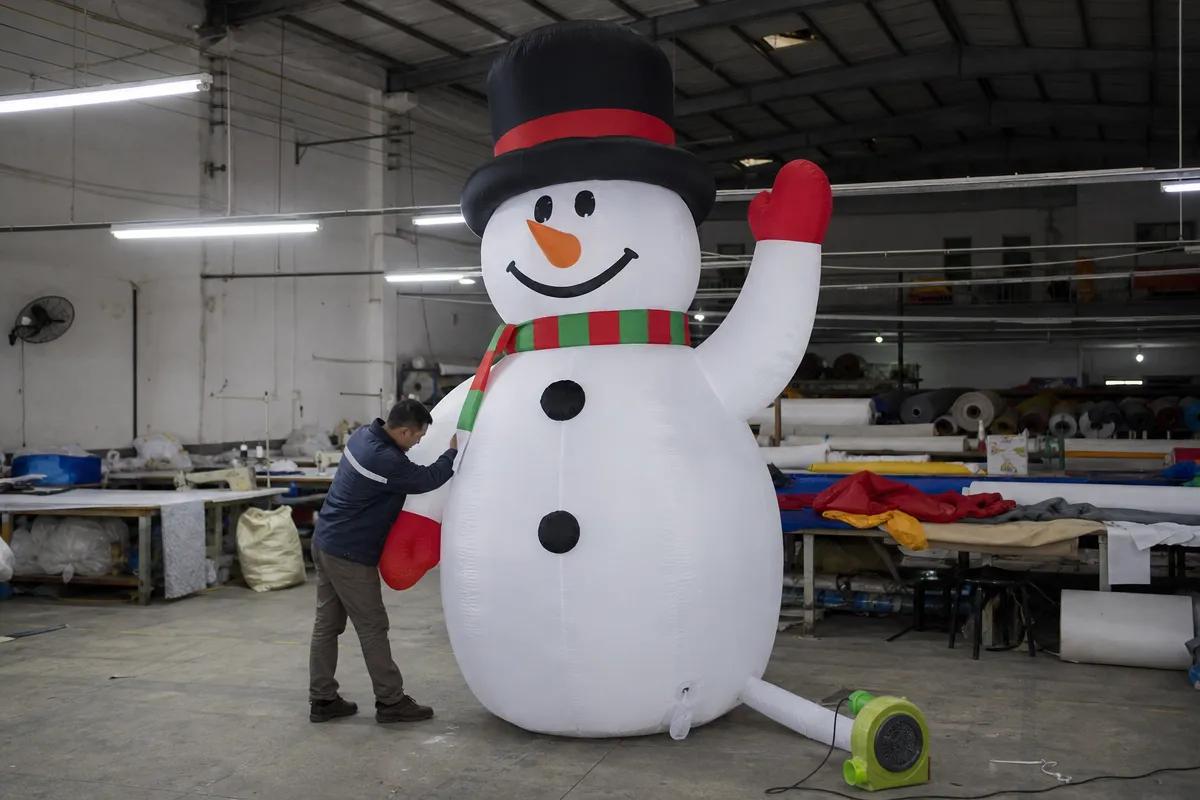
The working production planning range is 7–14 days after design approval. That schedule begins only after the design, scope and commercial details are approved, so agencies should also allow time for references, revisions, shipping and receiving.
For a specific Black Friday, Christmas or New Year's date, use the 2026 holiday inflatable ordering timeline to work backward from the required live date. The table is a planning estimate; the final production and shipping schedule is confirmed by quotation.
In the first RFQ, include the live date, delivery destination, product concept, target size, venue type and artwork status. If a Christmas market, mall or store has a fixed installation appointment, include that window as well. A complete brief makes it possible to discuss feasible timing rather than only a preferred arrival date.
Related Planning Pages
Frequently Asked Questions
What size Christmas inflatable works for a shopping mall?
Many commercial Christmas displays are planned in the 3–5 m range, but the final size depends on atrium height, viewing distance, access routes and the available footprint. Confirm the target dimensions against the venue plan before a quote is issued.
Can a Christmas inflatable include a logo or campaign colours?
Yes. Send vector artwork, approved colour references and the visible sides that need branding. Logo placement and print layout should be reviewed with the overall shape so important details remain readable at the intended viewing distance.
Can an inflatable Christmas display be used outdoors?
Outdoor use needs a project review for venue conditions, footprint, anchoring and power routing. Confirm the intended location and local site requirements before the display configuration is finalized.
How far in advance should a commercial Christmas inflatable be ordered?
Allow time for artwork review, production, shipping and a receiving buffer. Use the 2026 holiday ordering timeline as a planning tool, then confirm the actual schedule in your quotation.
What should an event agency send for a custom Christmas quote?
Provide the target size, reference artwork, venue type, indoor or outdoor use, destination, required arrival date and any power or anchoring restrictions. This gives the project team a practical basis for reviewing the display scope.
