Custom Inflatable Trade Show Displays: A Repeat-Show Packing and Cost Checklist
Published
Quick buyer answer
A custom inflatable trade show display should be assessed as a complete travelling kit. Before ordering, confirm the packed dimensions, gross weight, number of cases, accessories and repacking method. Compare the cost of moving and using that kit across your planned shows, rather than judging portability from the deflated fabric alone.
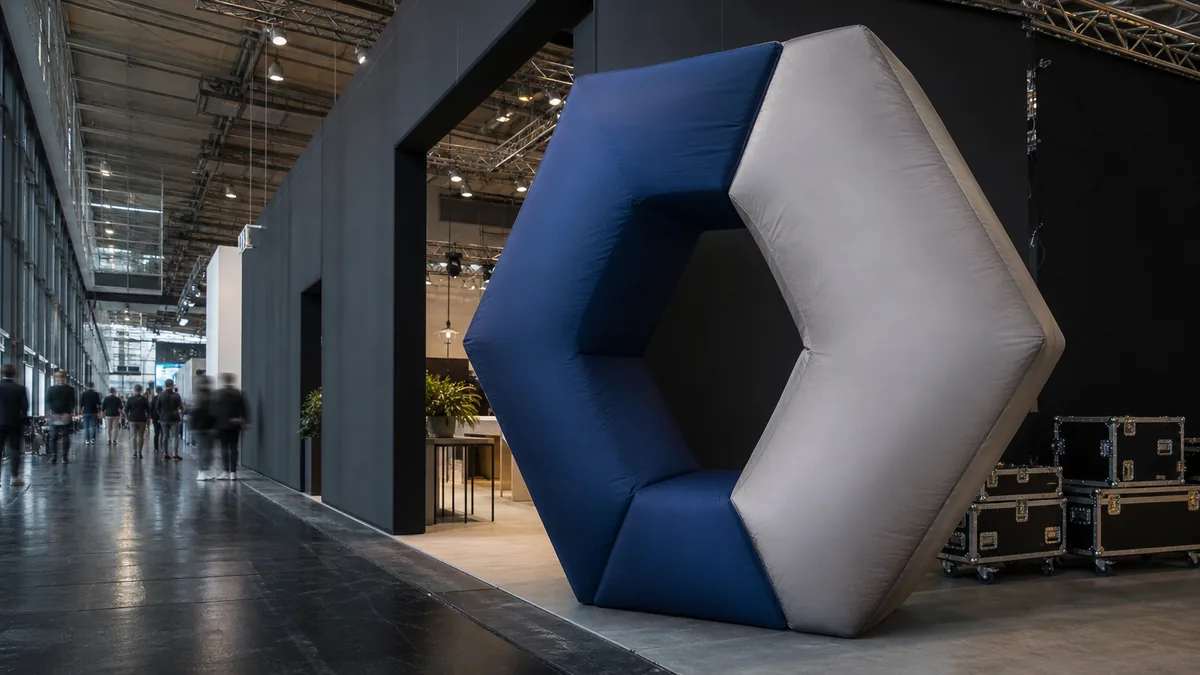
When comparing a portable trade show display, a compact product can still create a difficult transport job if its blower, protective packaging or accessories travel separately. For exhibitors attending several shows, the useful question is whether the whole kit fits the team's transport and handling arrangements each time.
1. Define the complete kit before requesting a freight estimate
Ask the supplier for a packing schedule with a separate line for every proposed case. At the quotation stage, mark estimated dimensions and weights clearly. Replace them with confirmed measurements when the finished shipment is available.
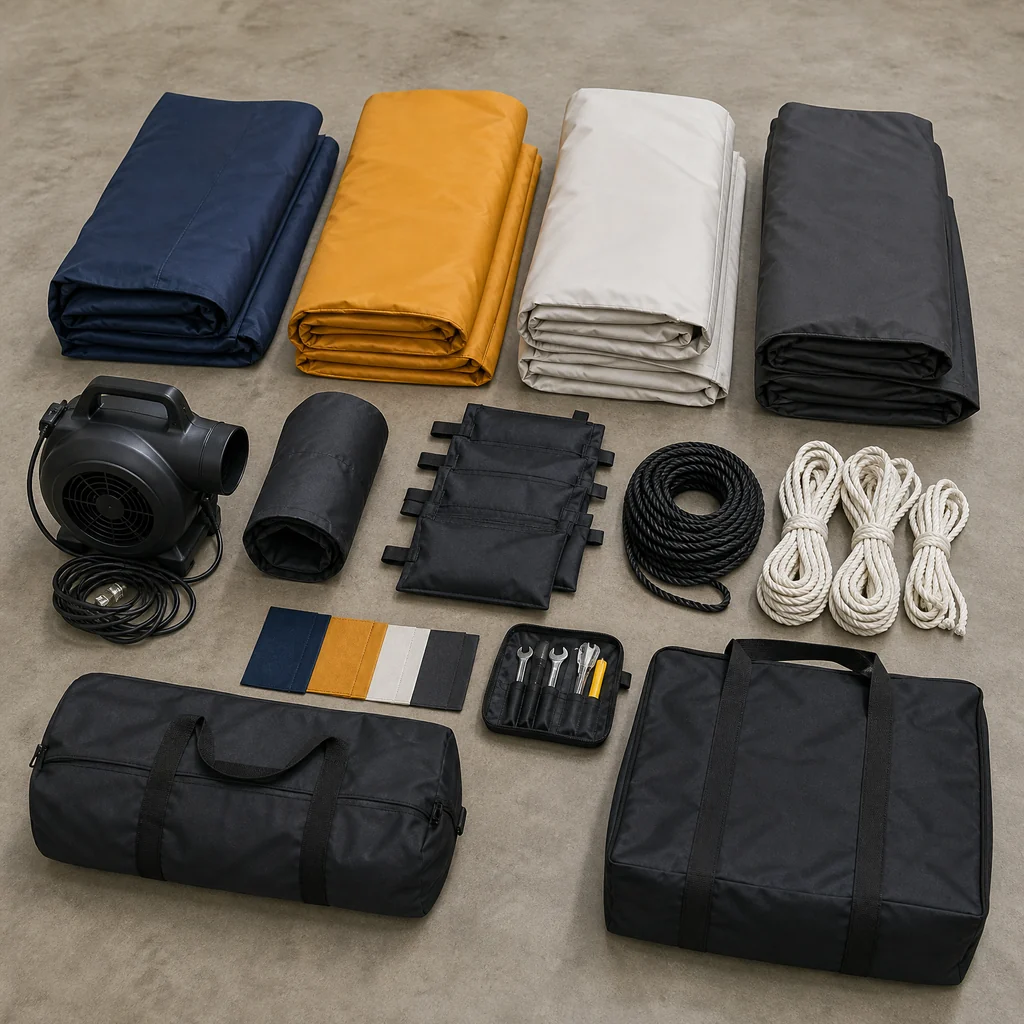
Include the inflatable body, the specified blower or pump where applicable, cables and other agreed electrical accessories, bags, instructions and repair materials. List any separate support equipment or site-supplied items. Do not assume that ballast, installation equipment or every item pictured in a concept rendering is included.
| Packing record | What to confirm |
|---|---|
| Case identification | A unique label and a contents list |
| External dimensions | Length, width and height of the packed case |
| Gross weight | Case, product and all contents together |
| Accessory scope | What is supplied, shipped separately or sourced locally |
| Handling requirements | Who receives, moves, stores and returns each case |
| Evidence status | Estimate, measured packing record or open item |
For a branded sign, start with the inflatable letters and signs category. The display size helps the design review; it does not establish its packed dimensions.
2. Separate the first export shipment from later show-to-show transport
The first delivery may travel from the supplier to a warehouse. Later movements may run between that warehouse, a venue, a hotel or a local event team. Each leg can have different receiving arrangements and charges.
Write the route for each planned show before comparing display formats. Ask the carrier or appointed logistics provider to price the actual packed kit for that route. Confirm whether the estimate includes collection, delivery, any venue handling, storage and the return journey. A factory freight quotation does not automatically cover services billed by a venue or its contractors.
If a shipping proposal uses a chargeable weight, ask which measurements and service rules determine it. Do not apply a generic dimensional-weight divisor across different carriers or routes. For air travel, obtain the airline's current acceptance rules for the packed cases and any equipment before treating a display as passenger baggage.
3. Compare the same period and the same responsibilities
A repeat-use comparison needs one shared planning period. Use your actual list of events and mark unconfirmed shows as provisional. The same purchase can look economical over many appearances and costly if the campaign stops after one.
Build a comparison that includes:
- Purchase and any agreed artwork or development charges.
- Initial freight and destination handling within the quoted scope.
- Transport to and from each event.
- Venue services, setup and pack-down responsibilities.
- Storage between events.
- Inspection, cleaning, maintenance and replacement items.
- Artwork changes or a future replacement unit, where relevant.
Leave unknown amounts blank and name the person who will obtain them. A blank cell is more useful than a guessed price that makes one option look artificially attractive. Keep taxes, customs and trade terms consistent when comparing proposals, and ask the relevant provider to confirm their treatment.
For a planning comparison, total the known and estimated costs separately. You can divide the combined planning total by the number of planned appearances to compare scenarios, but label the result an estimate. It is not a guaranteed operating cost or return on investment.
| Cost item | Initial amount | Per-show / return amount | Responsible party | Evidence status |
|---|---|---|---|---|
| Display and agreed development | Enter supplier amount | Not applicable unless changed | Buyer / supplier | Quote / estimate / open |
| Initial freight and receiving | Enter route quotation | Not applicable | Logistics provider / receiver | Quote / estimate / open |
| Outbound and return transport | Not applicable | Enter each event route amount | Event logistics lead | Quote / estimate / open |
| Venue handling, setup and pack-down | Enter any initial fee | Enter event-specific amount | Venue / appointed contractor | Quote / estimate / open |
| Storage and inspection | Enter any setup fee | Enter the allocated period cost | Warehouse / inventory lead | Quote / estimate / open |
| Maintenance and replacement scope | Enter agreed provision | Record actual or estimated need | Buyer / equipment owner | Actual / estimate / open |

4. Ask for a repacking demonstration, not only a dispatch photograph
A neat factory carton shows how a shipment leaves the supplier. Your event crew also needs a method they can repeat after the display has been used.
Before acceptance, request the agreed packing sequence and ask whether a demonstration can be included in the order scope. It should identify the equipment configuration, show the components going into their assigned bags or cases, and explain how the contents list is checked. Use the manufacturer's handling, drying and storage instructions for the actual material and equipment.
Record the practical gaps:
- Can the intended team identify each part without relying on the original packer?
- Is the bag or case intended for repeat use, or only the first shipment?
- Are electrical components separated and protected as instructed?
- Does the complete kit fit the proposed case arrangement after repacking?
- Which items must be checked, dried or reviewed before storage?
Do not force equipment into a smaller case to match a hoped-for freight price. If the repeat packing method changes the number or size of cases, update the transport comparison before the next event.
The packaging guide covers the basic components. This repeat-show check adds evidence that the proposed kit works for the people moving it after the first delivery.
5. Keep one record for the next event and the next order
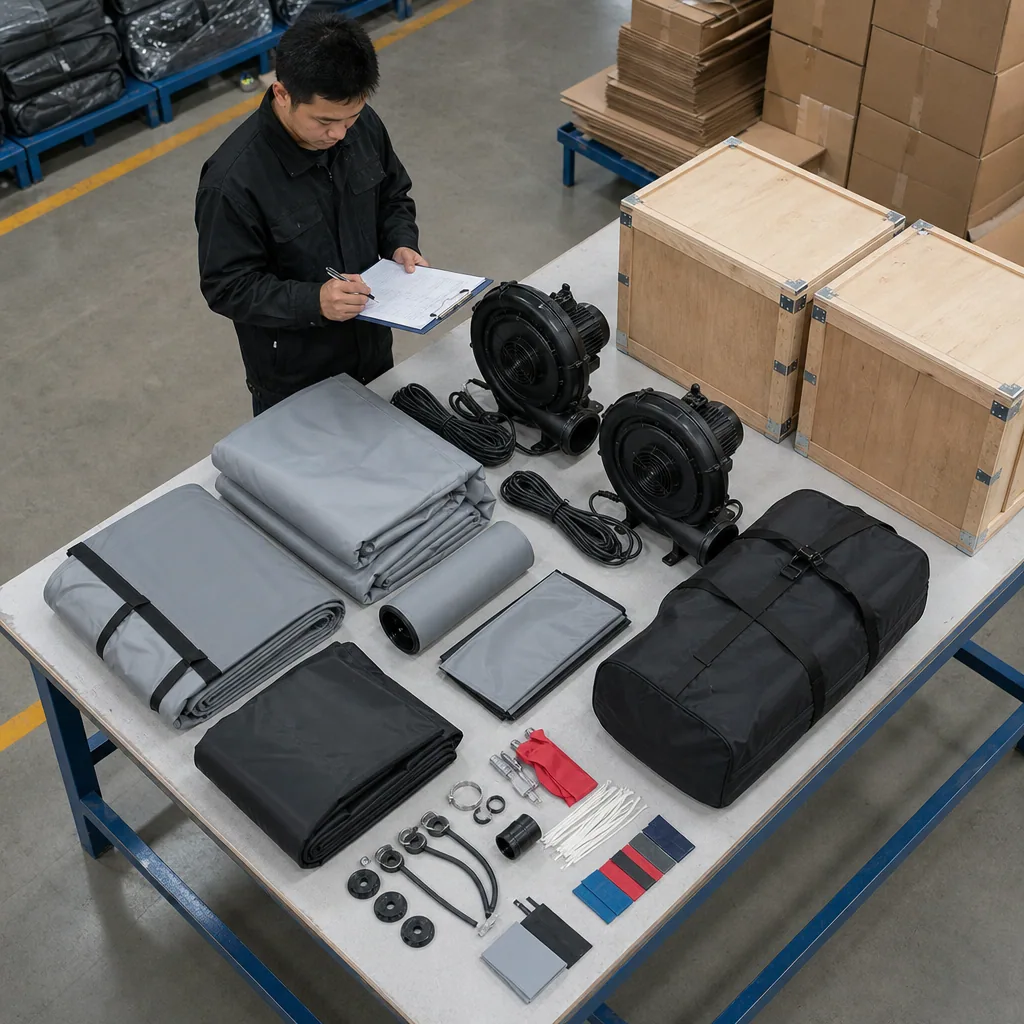
Give the display a kit identifier. Store its approved artwork version, equipment list, instructions, packing photographs, case measurements and inspection notes together. Keep site-specific installation decisions separately, so an approval for one venue is not mistaken for permission to use the same arrangement elsewhere.
After each appearance, record missing items, damage requiring review and any packing change. A replacement blower, protective case or support component can change the logistics record even when the inflatable body is unchanged.
For teams building a wider collection, the reusable agency inventory guide explains how to connect that record to reorders and future campaigns.
What to send for a repeat-show display quotation
Send the proposed form, authorised artwork, display dimensions, quantity, indoor or outdoor setting, destination and required arrival date. Add the expected event schedule, proposed transport method, receiving restrictions, storage limits and the team handling the kit.
Ask for production scope, accessory scope and packing information to be shown separately. Use a product such as the custom inflatable letter logo sign as a starting reference, not proof that a particular case size, transport method or installation arrangement is already suitable.
Plan the display and the travelling kit together
Request a project quotation with the proposed dimensions, artwork, event schedule and destination. Ask InflatCustom to review the production and packing scope against the information available, with outstanding freight and venue items clearly identified.
Discussion that informed this guide
An exhibitor's question about repeated booth-shipping costs highlighted why the number of annual appearances matters: Best booth for shipping?. It is an individual account, not a freight benchmark. A separate 2027 trade-show planning discussion raised the need to consider event costs and objectives together. This guide turns those questions into a supplier-and-logistics checklist; it does not use commenters' prices as quotations.
Quick buyer checklist
Recommended internal links
Frequently asked questions
Is an inflatable display always cheaper to transport than a rigid display?
No universal saving can be assumed. Compare the complete packed kits, actual routes, handling services and number of appearances. Include equipment and packaging for both options.
Can a custom inflatable travel as checked luggage?
That depends on the packed dimensions, weight, equipment and airline rules for the itinerary. Obtain confirmation for the complete kit before relying on passenger baggage as the transport plan.
Should the blower be included in the packing record?
Yes, if it is part of the supplied or travelling kit. Record its case, protection and instructions. If equipment is provided locally, state that separately and confirm compatibility for the proposed configuration.
What is the difference between a packing photo and a repacking check?
A packing photo records a particular shipment. A repacking check reviews whether the intended team can follow the instructions, account for the complete kit and return it to the proposed cases after use.
Can one venue's approval be reused at another show?
Treat each venue's conditions and requirements separately. Keep the product record consistent, but have the responsible team review the proposed installation and operation at each location.
Ready to plan your project?
Send your artwork, target size, event date, destination country and use environment. The InflatCustom team can help compare construction, lighting, anchoring, packing and delivery options before production.
Send Quote Request