Giant Inflatable Duck Displays: Land-Based vs Waterfront Project Briefs
Published
Quick buyer answer
A giant inflatable duck beside a lake is not necessarily a floating installation. Decide whether the display stands on land, sits beside water or must float before requesting a quote. That distinction changes the site information, supporting equipment and specialist responsibilities the project needs.
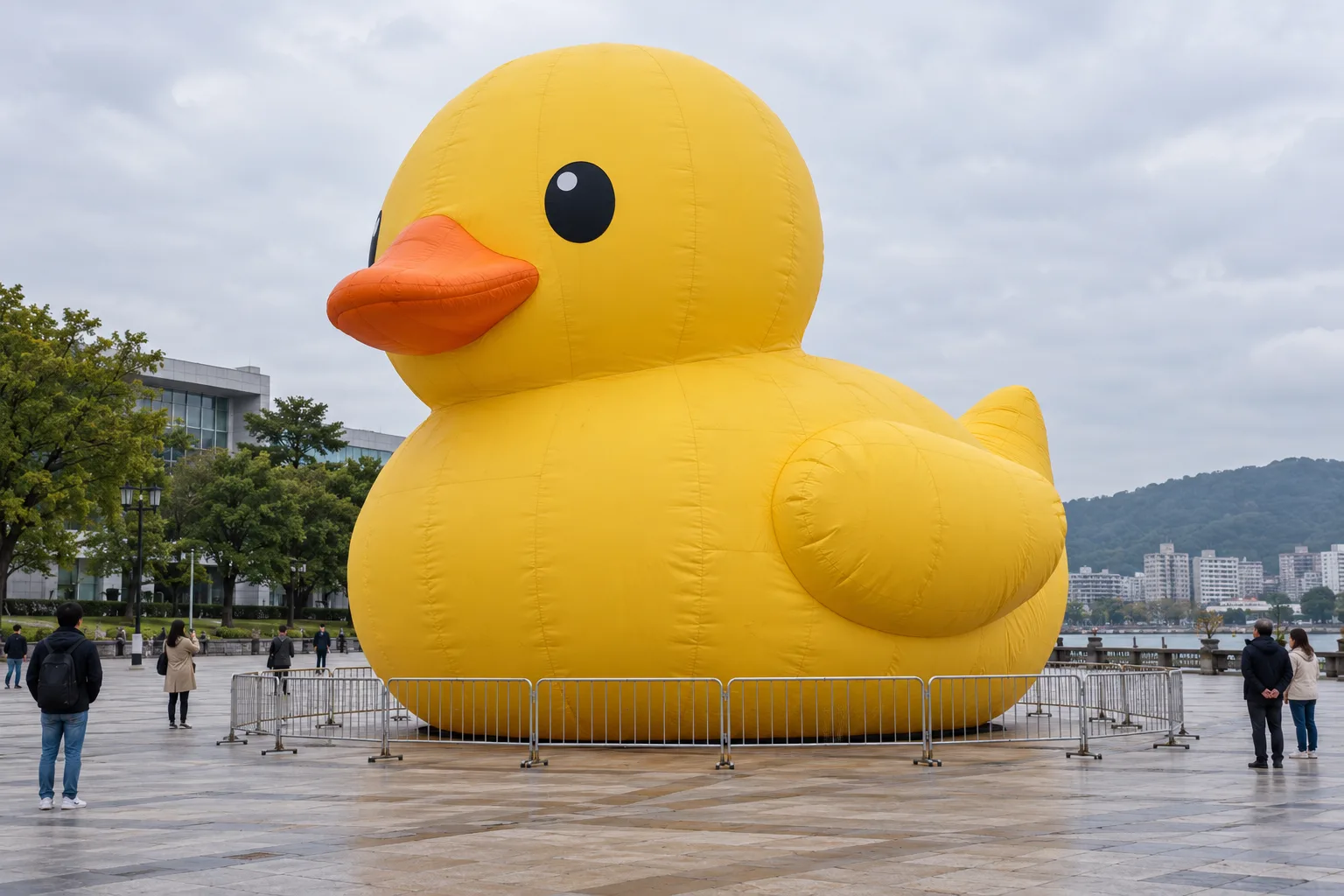
Start with the installation position, not the reference photograph
A cropped waterfront photograph can hide almost everything a project team needs to know: the ground beneath the duck, its distance from the edge, the service route and the positions from which visitors actually see it. Send a wide site photograph with your character reference rather than assuming the setting is self-explanatory.
In an April 2026 Pittsburgh Reddit discussion, visitors discussed a giant duck displayed on land and reported arriving when weather had prevented inflation. These are individual attendee accounts, not an installation specification. They do show why the advertised attraction and the available viewing experience should be considered together.
For an initial enquiry, describe the location in one unambiguous sentence: “A static duck display on a paved plaza overlooking a lake; no part of the display will enter the water.” If the project genuinely requires flotation, say so immediately. Do not leave that distinction for the installation crew to discover.
Three settings that need different briefs
| Setting | What the brief should establish | What not to assume |
|---|---|---|
| Land-based plaza or lawn | Ground surface, usable installation area, audience viewpoints and service access | The character's body dimensions equal its full operating footprint |
| Waterfront, still on land | All land-based information, plus the water edge, existing barriers and the visitor route | A waterfront reference requires a floating build |
| Floating installation | A separate feasibility review with the relevant site owner and specialist team | An ordinary land display can be placed in water or converted with improvised attachments |
This guide concerns project definition, not marine installation design. Any floating proposal needs its own confirmed scope. An initial character quotation should not be treated as approval of flotation, positioning, retrieval or operation on water.
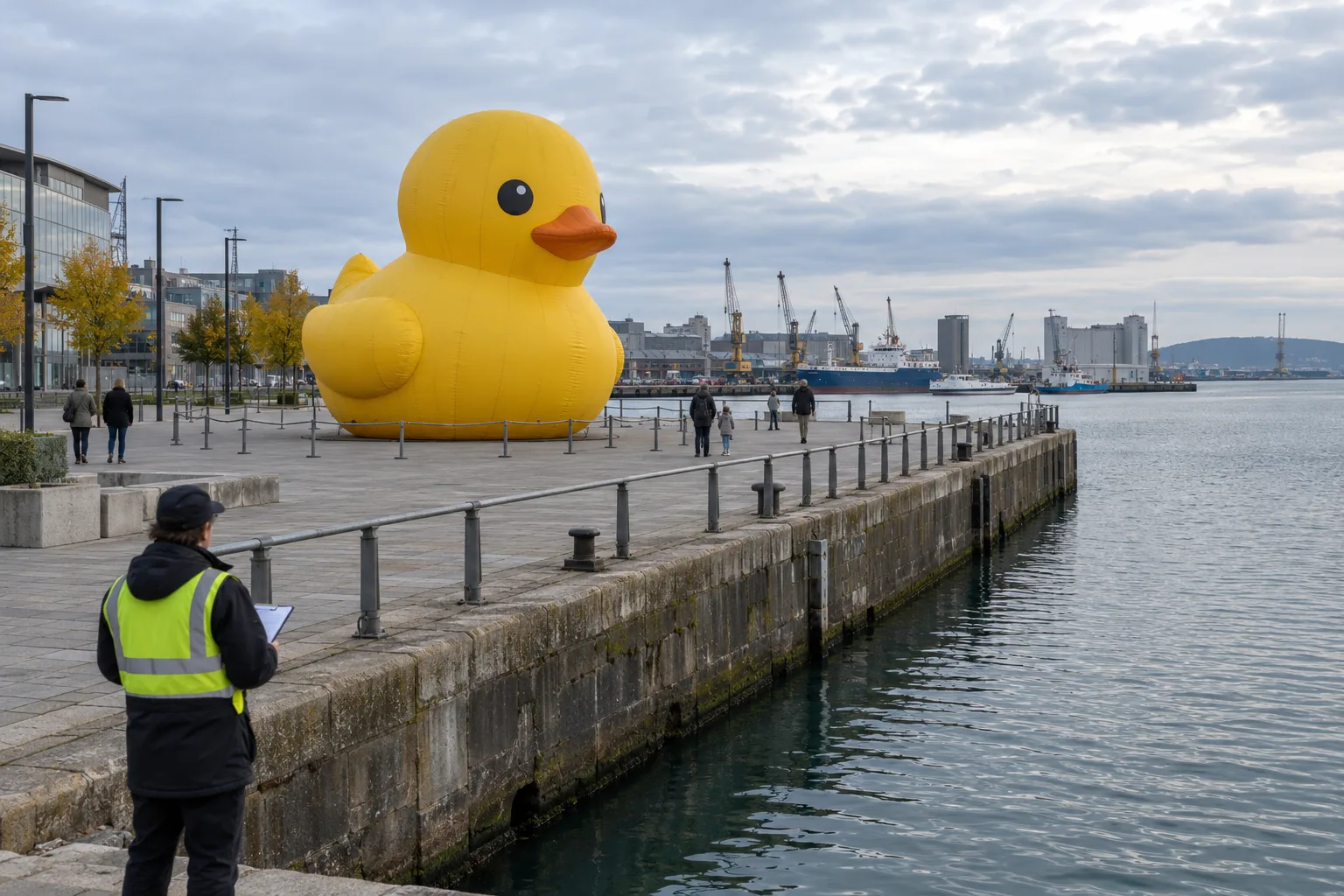
Choose the viewing position before fixing the height
Ask where the duck needs to work visually. A distant landmark seen across a lawn is a different brief from a character beside which families stand for photographs. A waterfront setting can introduce a third view: people looking from a promenade while the background stretches behind the display.
Prepare three photographs taken from the actual intended viewing positions. Mark the proposed display location in each. Include a known site measurement so scale is not inferred solely from perspective. Then identify the priority view: the one that must remain convincing if the site cannot accommodate every desired angle.
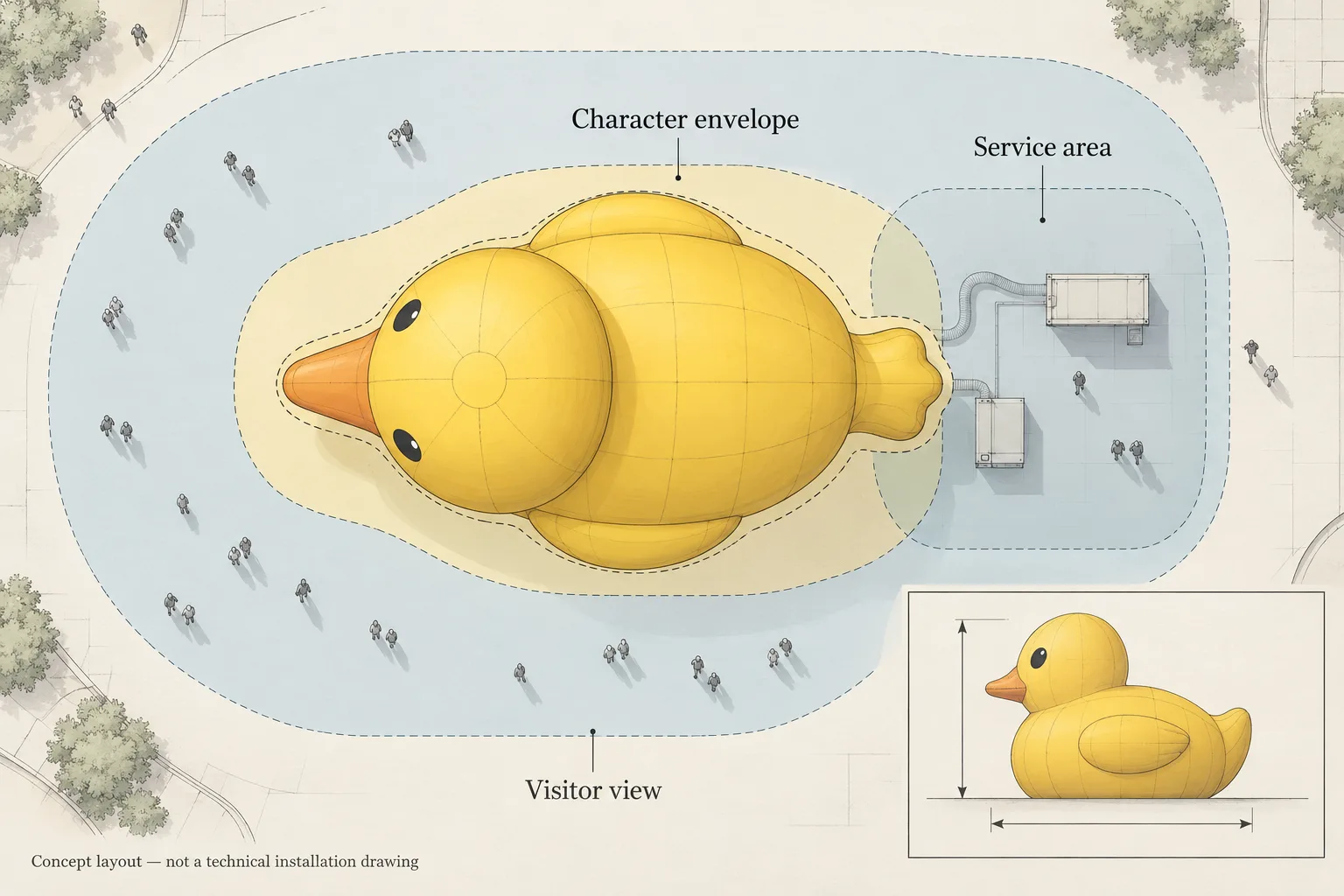
For the duck itself, record height, body width and front-to-back length separately. The beak and tail affect its silhouette and may extend beyond the area suggested by a front elevation. Ask for the proposed overall envelope to be shown on the site plan, with equipment and installation allowances identified separately.
Separate the duck's footprint from the visitor footprint
Use distinct layers on a preliminary plan:
- Display area: the character's proposed outer dimensions.
- Installation and service area: space needed for the reviewed equipment arrangement, access and operation.
- Visitor area: the place from which people watch, take photographs and move past the attraction.
- Existing site constraints: water edges, furniture, planting, entrances and other features that cannot simply move.
Do not insert a standard clearance and call the plan approved. Ask the venue and responsible installation team to confirm the arrangement for the actual site. The UK's HSE venue and site design guidance identifies ground conditions, load-bearing capacity and site layout as matters to establish when planning event structures. This is useful planning context, not a universal approval for a particular duck or location.
What should be included in the quote comparison?
Two quotations may describe the same apparent height while covering different work. Request a scope table rather than comparing the headline figure alone.
| Item | Information to confirm |
|---|---|
| Character design | Approved views, proportions, colour references and logo positions |
| Display configuration | Intended setting, air system and included equipment |
| Site interfaces | What information is required from the venue and who reviews it |
| Installation work | What is included, excluded or provided by a local team |
| Delivery and handling | Packing assumptions, access constraints and receiving arrangements |
| Review evidence | Drawings, agreed photographs and any project-specific documents |
Keep uncertain items visible. If the waterfront location is still being negotiated, state that rather than silently pricing a convenient substitute. A provisional site assumption should become a named decision to resolve before final approval.
Our custom inflatable cartoon mascot guide covers the character inputs behind this process. This location brief adds the information that a duck photograph alone cannot provide.
Plan what visitors see when the duck is unavailable
A display schedule and an event schedule are not automatically identical. Ask who confirms the installation's operating status, who updates visitor communications and what happens to the surrounding activity if the character cannot be displayed.
For a waterfront attraction, this might mean keeping an approved viewing area available without advertising that the duck is inflated, or directing arriving guests to a separate activity. These are planning options, not promises that a particular site can remain open. The responsible event team must decide the appropriate response.
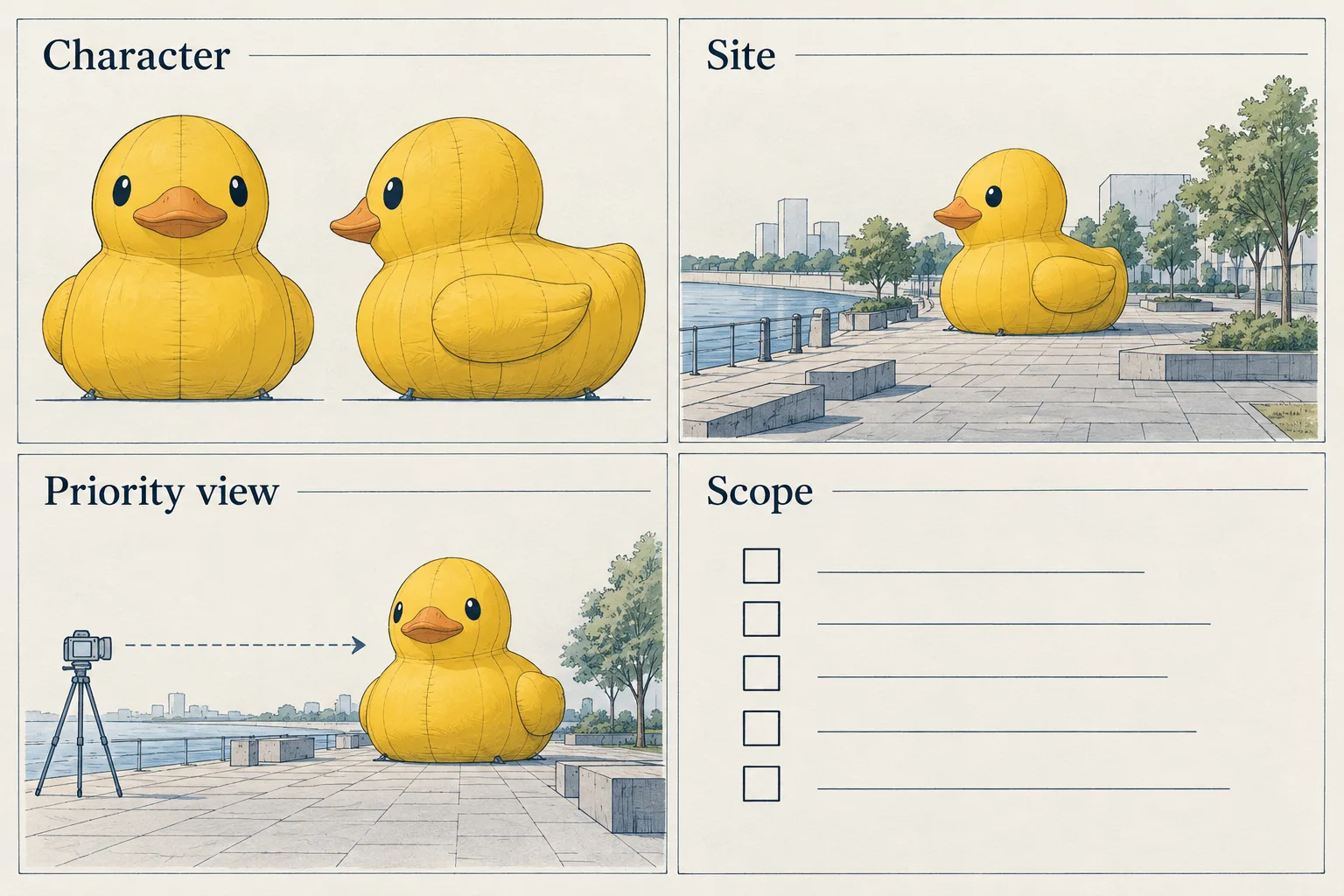
Send a location-led duck brief
Explore custom inflatable mascots and promotional characters, then send your project enquiry. Include the intended installation position, priority viewing angle and known site constraints so the proposed configuration and quote can be reviewed against the real project.
Quick buyer checklist
Related planning resources
- Custom inflatable mascots and promotional characters
- Character reference and order planning
- Discuss a location-led project brief
Frequently asked questions
Can a land-based inflatable duck be used on water?
Do not assume so. Treat a floating proposal as a separate feasibility and installation question. The character's appearance does not establish suitability for immersion or flotation.
Do we need a finished technical drawing to enquire?
No. Start with original character references, approximate dimensions, the destination, the intended date and wide photographs of the proposed location. Label the display as land-based, waterside-on-land or floating-review-required.
Can we copy a well-known giant duck artwork?
Provide an original design or confirm the necessary authorization for a protected design. A photograph found online should not be treated as permission to reproduce the artwork commercially.
Send a location-led duck brief
Include the intended installation position, priority view, approximate dimensions, date and known site constraints.
Send Quote Request