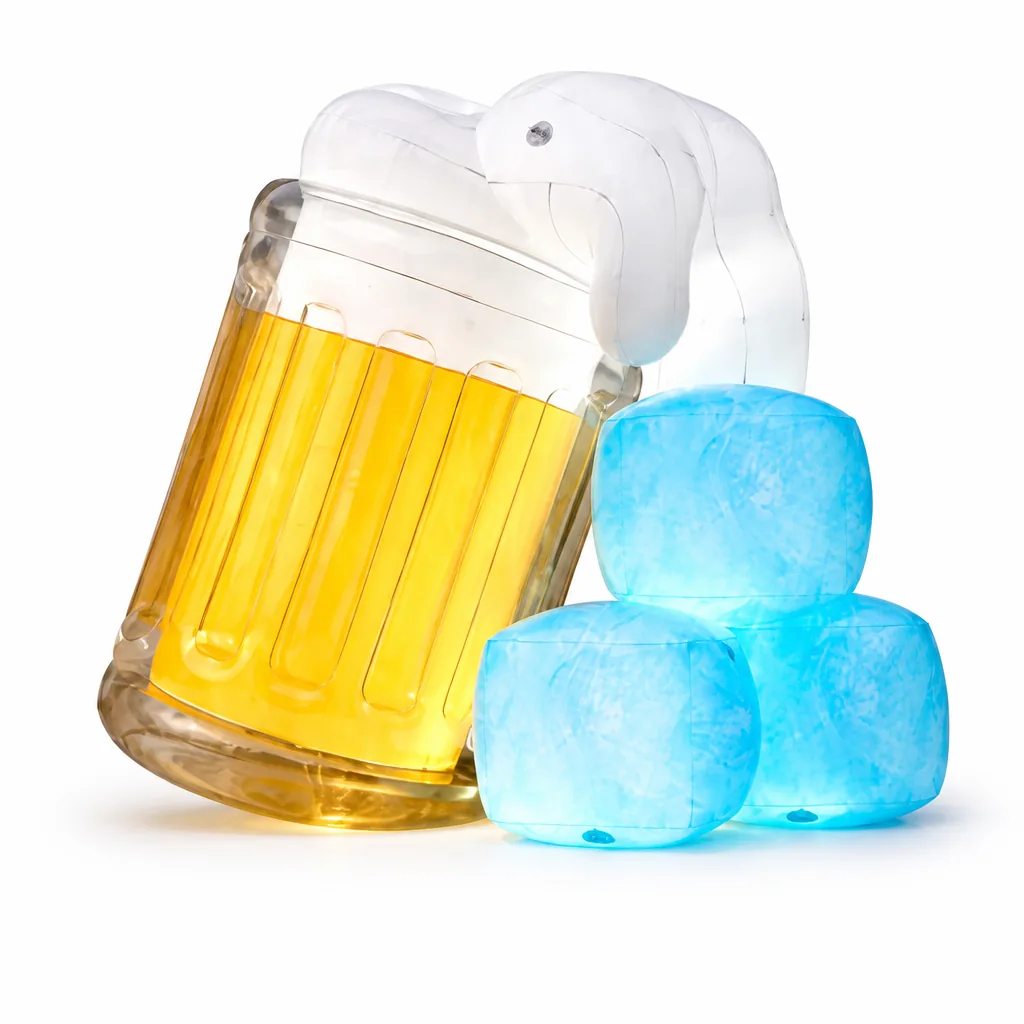
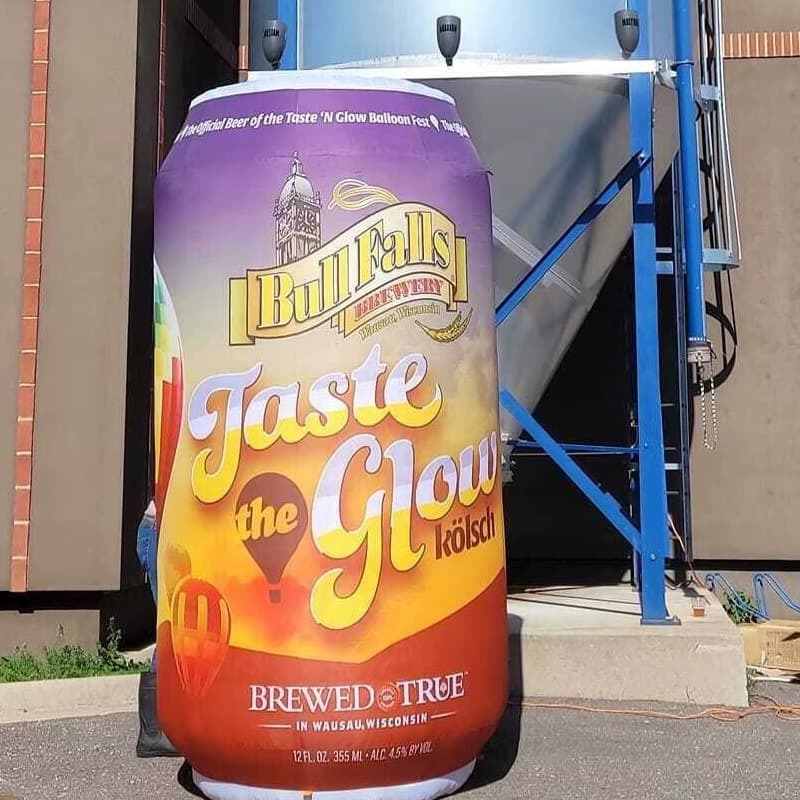
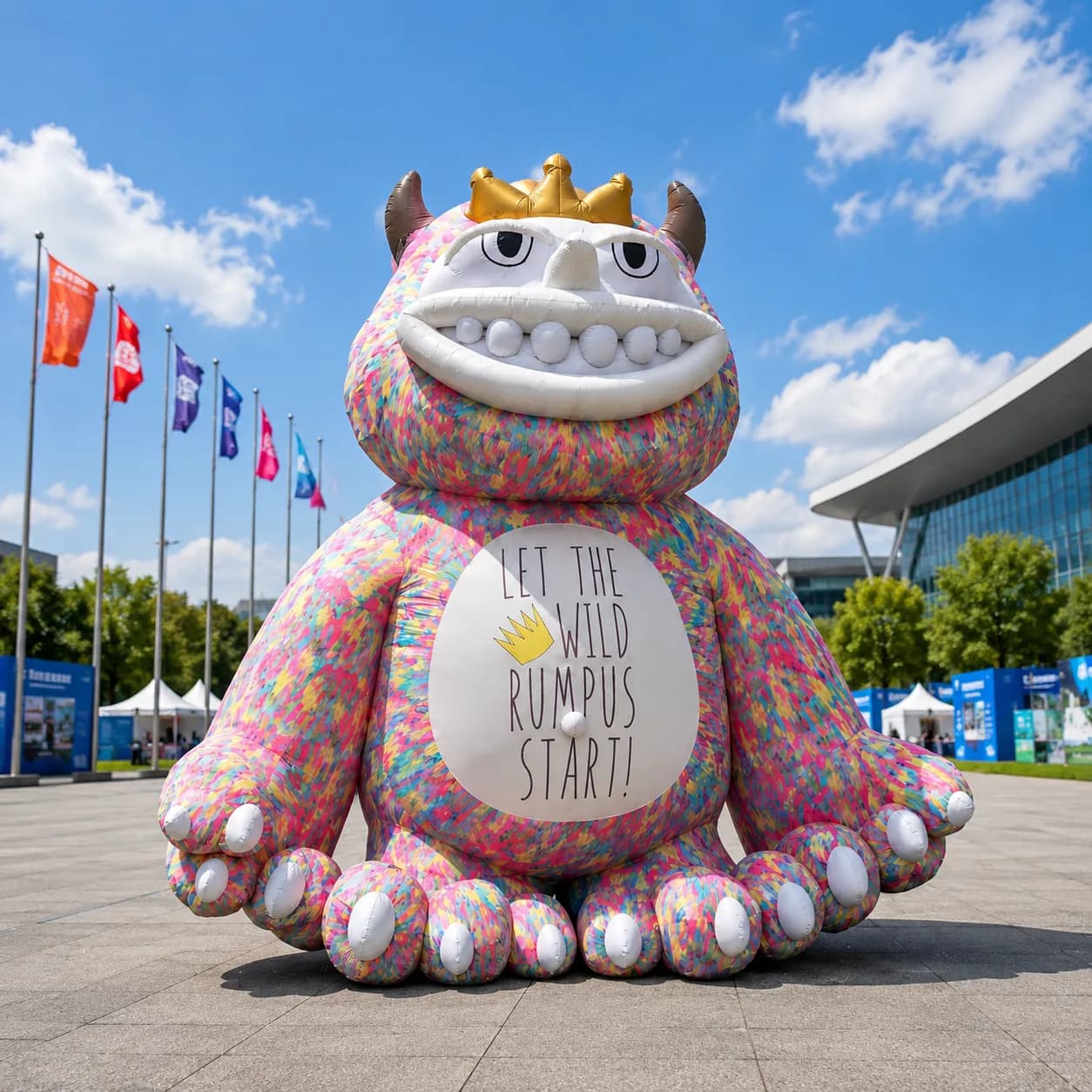
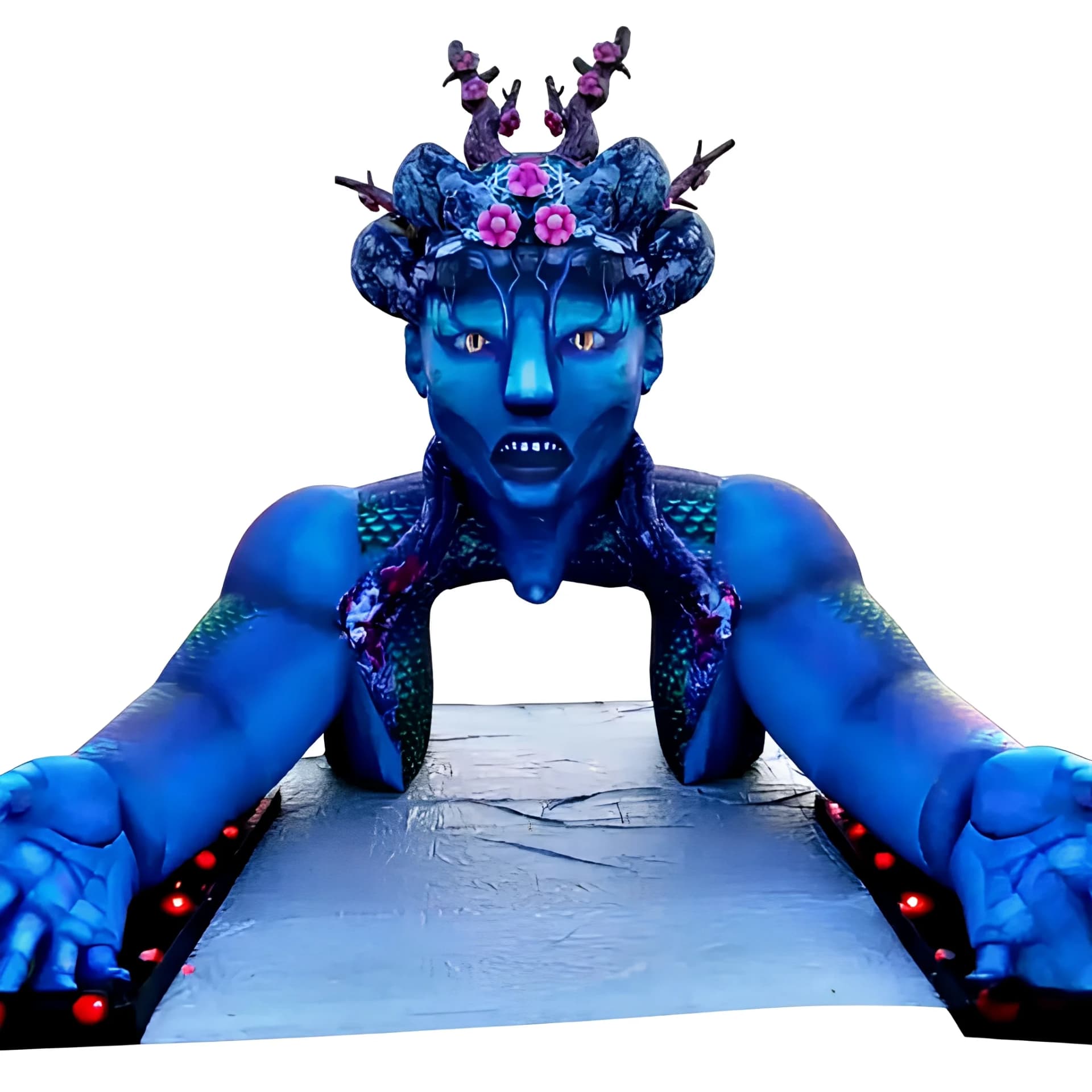
For a custom inflatable bottle or can replica, approve the installed dimensions, packaging artwork, inflation system and venue requirements before comparing prices. Ask each supplier to quote the same drawing revision, equipment, lighting, packing and delivery handover. Keep brand permission, manufacturing approval and local installation approval as separate decisions; none is guaranteed by a 3D mockup.
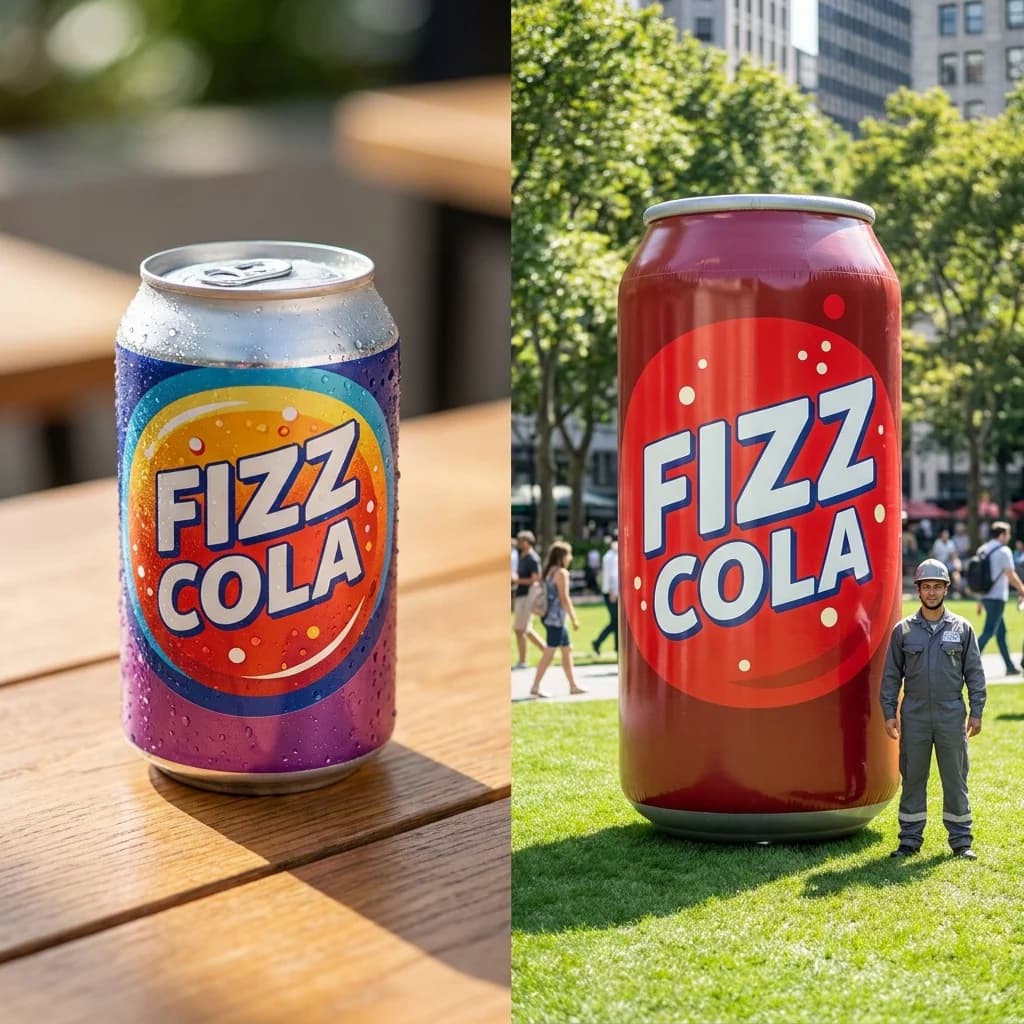
Illustrative concept: the packaging and display show scale and visual priorities, not a verified customer installation or a promise of exact reproduction.
A bottle, can, carton, food item or cosmetic package becomes a better inflatable display when the buyer starts with the campaign job: retail window, sampling zone, outdoor landmark, trade-show booth or touring activation. That decision guides the final size, visible product face, base position, packing method and the setup information needed from the venue.
Fast Buyer Answer
What makes a product-replica quote comparable?
Compare the same approved product shape, visible artwork faces, installed scale, inflation approach, accessory scope, packing plan, destination terms and exclusions. A lower headline price is not a usable comparison if those inputs differ.
USA retail & trade show brief
Add the site facts that change a USA quote
For US retail launches and trade show booths, a good product reference is only the beginning. Add the destination city, booth or site plan, primary viewing angle, height and footprint limits, delivery access, power location and planned reuse. These details let the team review the build and packing scope without presenting factory production as local permitting or installation.


Retail launch
Confirm storefront or mall access, main customer approach, photo direction and any space reserved for the blower or inflation system.
Trade show booth
Confirm booth footprint, hall height, service access, cable route and the venue rules the buyer must review locally.
Touring campaign
Define carry bags, accessory labeling, repair items, storage owner and the locations that will receive the display.
Quote comparison
Compare shape approval, artwork coverage, size, accessories, packed volume, delivery terms and exclusions in one written scope.
Bottle or can: specify the shape and installed envelope
A can, a long-neck bottle and a shaped package create different approval questions. Start with the original product dimensions and front, side, back and top views. Define the hero label and the direction from which visitors will approach. The design should preserve the recognizable silhouette and main artwork; small text, embossed details and sharp edges may need an agreed simplification rather than an unsupported exact-match promise.
| Replica shape | Check on the proof | Confirm in the quote |
|---|---|---|
| Beverage can | Body diameter, rim, top and wrap seam; label direction. | Printed circumference, top treatment and base arrangement. |
| Bottle | Shoulder, neck, cap and taper; artwork across curved panels. | Approved silhouette and any simplified packaging features. |
| Irregular package | Corners, handles, protrusions and the main viewing angle. | Feasible geometry, visible faces and agreed compromises. |
Record outside inflated height, maximum width or diameter and depth, then separately allow for the base, blower, hoses, cables and the site-specific restraint arrangement. A quoted height is not the same as the clear space needed to operate the display. Give the supplier the doorway and loading route, ceiling or booth limit and a marked site plan. Ask the venue or responsible installer to confirm access, emergency routes and installation requirements before the design is locked.
Choose inflation, lighting and power together
Do not select a continuous-air or sealed-air build from a product photo alone. Ask the supplier to explain which construction is proposed for this shape, scale and operating period. A continuous-air design needs its specified blower during operation, with an agreed location and cable route. A sealed-air proposal still needs a defined inflation method, pressure checks and operating instructions; it is not a universal promise of maintenance-free use or unlimited air retention.
- Inflation equipment: identify the included blower or pump, quantity, voltage, frequency, plug and replacement arrangement.
- Lighting: confirm whether LEDs are included, the proposed layout, service access, driver or controller and how the printed colors will be reviewed under illumination.
- Site power: record the supply location, operating hours and cable protection. The venue or a qualified local professional should confirm the actual electrical installation.
- Outdoor operation: obtain instructions and a project-specific restraint and weather plan. Do not infer a wind rating or local approval from a generic display photograph.
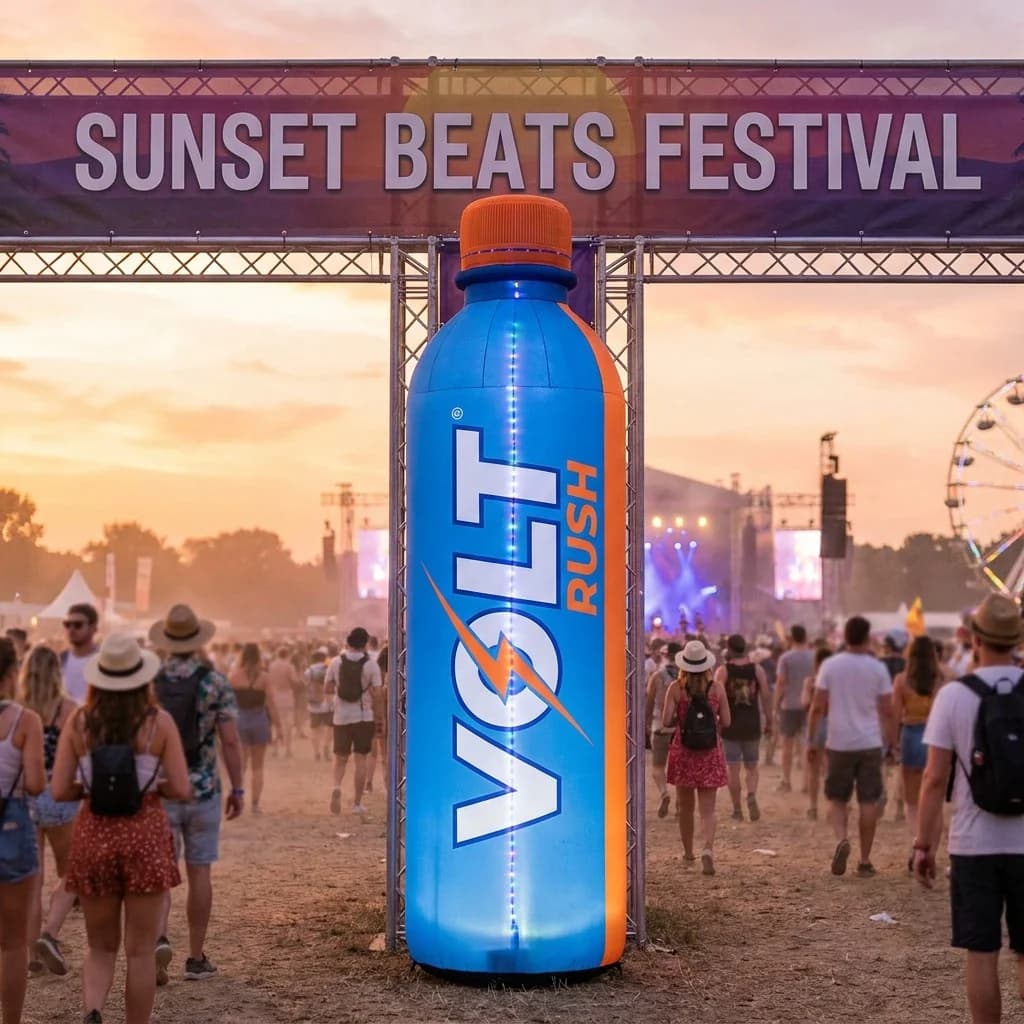
Compare the LED bottle and can option and sealed-air bottle and can option as starting points for discussion, not interchangeable specifications.
Compare the quote line by line, including freight handover
Give every supplier the same approved revision and request a written included / optional / excluded list. It should cover the shell and printing, artwork preparation, inflation equipment, lighting, base or attachment accessories, repair items, packing and available inspection evidence. Confirm who supplies any ballast or local installation equipment. Record the quote validity, currency, payment milestones and the point from which the proposed production schedule starts; do not treat these as fixed site-wide terms.
Separate factory completion, carrier collection, international transit and required on-site arrival. Ask for the packed dimensions, gross weight and number of packages once the build is defined, and identify who will receive and unload the shipment. The display shell and equipment may need different protection; a compact folded shell does not establish the freight cost for the complete kit.
FOB and FCA are not generic words for shipping included
Write the agreed rule, named place or port and Incoterms® version into the quotation. FOB is for sea or inland-waterway shipment with delivery on board the vessel. If the goods are handed to a carrier at a terminal before vessel loading, discuss FCA instead with the forwarder. FCA can also be used for other transport modes. Ask the parties to confirm the actual transfer point, freight, insurance, destination handling, import clearance and taxes rather than assuming an abbreviated price covers them all.
Reference: ICC Incoterms® 2020 explanatory notes for FOB and ICC guidance on transport modes, checked 27 October 2026. These explain trade-rule selection, not a guaranteed shipping service, price or customs outcome.
Build a repeat-use handover, not just a delivery
For touring campaigns, specify the number and sequence of venues, likely setup crew and storage conditions. Request an agreed equipment inventory, labeled bags, setup and deflation instructions, cleaning and drying guidance, and repair or spare-part options. Record a receiving check before the first event and inspect the kit between uses. Confirm whether replacement graphics or repairs are feasible for the chosen construction instead of assuming a universal service life or warranty.
Keep the approved artwork, drawing, quotation, inspection record and packing inventory together. The detailed artwork and rights checklist below includes an initial RFQ template you can adapt without supplying unnecessary confidential brand contracts.
Request a Bottle or Can Specification ReviewCountry + Application Paths
Start with the destination and the real campaign role
Use these paths when the quote needs to reflect a retail launch, trade show, festival or repeat activation context. Each page is a project-planning guide, not a claim of local installation or venue approval.
B2B Buying Guide · Updated 17 October 2026
Branded Inflatable Bottle and Can Approval: From Artwork to Export Handover
For beverage brands, experiential agencies, trade-show contractors, franchise operators and importers. This project-specific checklist supports a better design and quotation review; it does not confer trademark rights, customs release or venue permission.
Fast answer: what must a buyer approve before production?
For a branded inflatable bottle or beer can, approve four connected records, not only an attractive 3D render: the correct product reference, a dimensioned and print-aware artwork proof, the buyer's authority to use the brand, and a written manufacturing/export scope. The documents do different jobs. A good-looking proof does not verify trademark rights; a valid brand authorization does not establish that the printed shape will fit the venue; a paid invoice does not guarantee a particular customs outcome.
Start the RFQ with product images, the approximate installed size, quantity, destination, intended display use and event date. Ask the supplier to identify what else is needed to confirm feasibility. Exact construction, material documents, packing, trade terms and delivery commitments should remain project-specific until reviewed in writing.
1. Define the buying relationship before discussing a branded replica
The person requesting a custom inflatable is not necessarily the trademark owner. A brand's head office may commission a worldwide retail rollout, an advertising agency may be purchasing for a client, a licensed distributor may manage one territory, or a franchise store may be ordering decoration for its own premises. These are commercially credible situations, but they can involve different rights and sign-off arrangements.
Record the contracting buyer, the legal brand owner if known, the person empowered to approve artwork, the company that will appear on the purchase and shipping documents, and the intended importing country. Do not assume that finding someone on the brand's store locator gives the same authority as a permission to have that mark manufactured on a physical display. Equally, do not dismiss a legitimate buyer merely because the buyer is a franchisee rather than headquarters.
If an agency or store is ordering for another trademark owner, request an appropriate, verifiable authorization chain before final artwork approval. This need not expose the entire confidential franchise agreement. A project-specific rights-holder letter or other evidence accepted by the relevant parties may be more practical. The rights owner and customs adviser should determine the exact wording and form; a supplier should not invent a universal legal template.
2. Build an artwork reference pack the production team can actually use
Ask for front, back, both side and top views of the retail can or bottle. Include the source package's real height, width or diameter, the exact regional label version, and the target size of the inflatable. A seasonal label, a national-language variant and a promotional limited edition can have different artwork even when the underlying bottle shape is identical.
For print files, request approved vector artwork where available: AI, EPS, SVG or print-ready PDF, with fonts handled according to the brand's licensing rules. Include approved brand colors, the hero logo, permitted imagery and any labels that must remain legible. A phone photograph is a useful first enquiry reference; it is not necessarily an adequate final print master. If tracing or recreating a low-resolution logo is necessary, confirm who approves the rebuilt artwork and whether that work is included in the quotation.
Mark the primary customer-facing surface, camera angle and likely viewing distance. The product replica is usually seen from a particular approach: at the entrance to a retail store, at the side of a sampling stand, or on the main aisle of an exhibition booth. Prioritize the visual elements that must be readable from that position. Do not spend the entire budget reproducing fine print that the audience cannot see, while allowing the brand's main wordmark to cross a structural join.
3. Approve the 3D surface, not just a flat label wrap
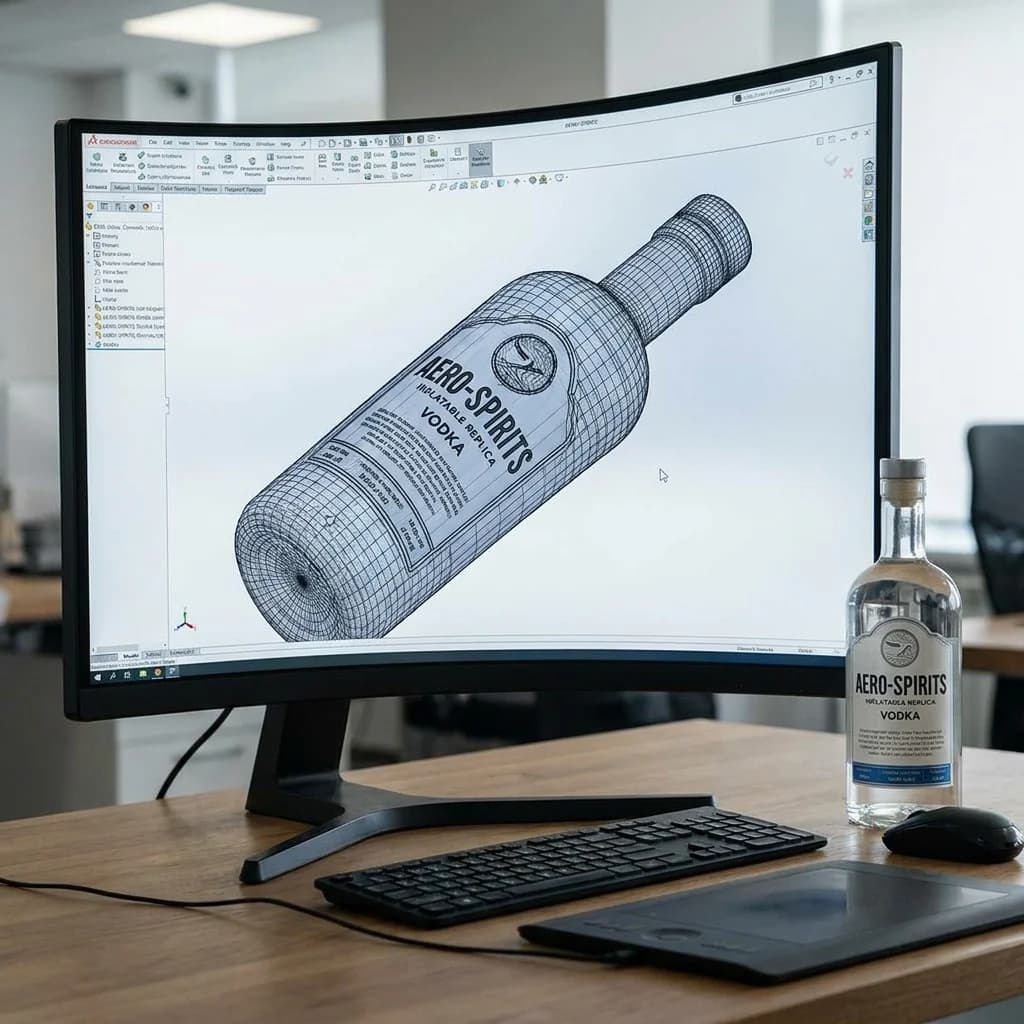
A beer can has a relatively regular cylindrical body, although its rim, base, support treatment and seam locations still matter. A bottle introduces a shoulder, neck, cap and sometimes a pronounced taper. Graphic panels crossing those curves can compress or stretch visually. The design review should show the target logo and packaging on a front elevation and at least one three-quarter view of the proposed inflated form.
The approval must identify the final outside height, maximum width/diameter and approximate installed depth, plus the positions of seams, inflation fittings, access openings, reinforcement, blower outlets or sealed-air valves, and any base or anchoring hardware that may affect the printed face. Ask which package features require deliberate simplification at display scale. A digitally perfect mockup with invisible joins is a concept, not a construction-ready approval.
| Display format | Main artwork question | Practical quotation implication |
|---|---|---|
| Cylindrical beverage can | Is the principal label legible around seams and the rim? | State printed faces and main camera orientation. |
| Tapered bottle | Do shoulder and neck curves distort the logo or essential label? | Approve front and angled mockups, including simplified details. |
| Unusual packaged product | Which corners or textures can actually be reproduced at size? | Record allowable compromises in the approved drawing. |
| Repeated retail rollout | Will every outlet use the same file revision and signage direction? | Confirm artwork version, store quantity, packing labels and change control. |
4. Resolve venue constraints before locking a quoted design
A display intended for a mall window differs from a trade-show feature or an outdoor campaign. Provide ceiling height, booth or site plan, door and freight access measurements, available footprint, main viewing path, power position, operating hours and whether people can come into contact with the structure. Where the event involves the public, ask the local organizer to determine the relevant safe passage, installation, supervision and emergency access requirements.
Do not decide that a continuous blower, sealed-air system, LED lighting, suspended mounting or an outdoor setup will work merely because it is shown on another project. The supplier should consider the actual proposed shape, venue and operating period. Verify what power equipment, accessories, inspection records and materials are actually offered. A generic statement that material meets a standard is not evidence that a finished, site-installed advertising inflatable has been independently certified for every use.
If the display will move between stores or events, include repeated inflation, crew skill, cleaning, repair, storage and repacking requirements. These affect the real project scope. Clarify who is responsible for local installation and for obtaining permission from the venue, rather than assuming these services are included in an offshore manufacturing quote.
5. Keep brand-use permission separate from the artwork proof
A brand-use review asks a different question from the design proof: is the ordering party authorized to have this particular mark reproduced for the intended physical display and market? Useful supporting information may identify the rights holder, authorized purchaser, mark or artwork covered, approved use, approximate quantity or project reference, destination/territory, campaign purpose, effective period and person authorized to sign. Which items are legally necessary depends on the actual rights and jurisdiction, so this is a commercial checklist rather than a claim about mandatory documentation.
A customer's statement that a giant inflatable will be used solely outside the customer's own shop helps explain the purpose. It does not, by itself, decide trademark permission or export clearance. Likewise, a web listing proving that a person manages a branded store is relevant supporting context, but it should not be silently substituted for the owner's required authorization. If there are several brand marks or third-party characters on the artwork, review those elements individually.
Company stamps are not universal. Some overseas businesses use signed documents or electronic signatures rather than a traditional company chop. Rather than insisting on a stamp or promising that an email signature always works, ask the appropriate rights-holder contact and export broker what evidence they will accept for the specific transaction. Keep a verifiable contact path so a documentary question can be resolved without asking the client to share commercially unnecessary confidential material.
6. Prepare the China export document handover early
China Customs operates an intellectual-property border protection and recordation system. Its official public service guide describes rights-holder information, registered marks and lawful-use information. The US Patent and Trademark Office's China IP Rights Toolkit also discusses the possibility of customs action involving exports of goods that may infringe protected rights. These sources establish a framework for asking good questions; they do not establish whether a particular brand is recorded or whether any given shipment will be cleared.
Before a dispatch date is promised, coordinate with the appointed export and import brokers on the actual product description, exporter and consignee names, accurate commercial invoice, packing list, destination, photographs of the finished display and available permission evidence. Ask the broker to assess whether a customs-IP recordation or lawful-user issue requires additional review. HS classification, customs declarations, supporting documents and shipment handling must reflect the real goods and be confirmed by the competent parties. Avoid interpreting a generic online checklist as an automatic clearance route.
If a broker raises an unresolved brand-rights question, establish a documentary hold and identify who will obtain clarification. A finished product, completed payment or attractive brand rendering is not a reason to overstate certainty about release timing. Record the outcome so the final approval pack ties the finished inflatable, the artwork revision, the contracting party and the commercial shipment together.
7. Use three separate sign-offs instead of one vague approval
Concept and feasibility: agree the source packaging, approximate scale, primary viewing angle, destination, event date and site. Identify who will approve the brand assets.
Print and manufacturing proof: receive a version-numbered drawing with dimensions, visible print faces, seam/valve locations and any justified simplifications. Obtain the appropriate brand-use confirmation. Make competing suppliers quote against the same revision and written scope, including exclusions.
Pre-dispatch handover: confirm what product inspection photos or videos, accessory inventory, packed measurements and available project documents will be supplied. Have the brokers review shipping and rights-related questions before the dispatch commitment is finalized. A pre-shipment video may document the physical product; it cannot replace any independent venue inspection or customs authority decision.
| Responsible party | Decision they should own | Evidence worth retaining |
|---|---|---|
| Brand owner or authorized buyer | Permission to reproduce the protected artwork for this project | Applicable written approval and approved artwork version |
| Supplier/project manager | Exact inflated shape, print location, dimensions and included accessories | Dated drawing, quotation revision and inspection references |
| Export/import broker | Appropriate declarations and relevant customs/IP documentary checks | Reviewed commercial documents and any broker clarification |
| Venue/event operator | Actual installation conditions, permissions and operating controls | Site plan, approved installation arrangement and named operator |
8. Compare suppliers using the complete scope, not the headline price
A useful comparison includes the proposed outside dimensions, material and printing approach, number of printed faces, quantity, inflation configuration, lighting where specified, blower or pump, power requirements, base and accessories, packing method, destination trade term and explicit exclusions. Ask when the quoted production schedule begins; artwork changes, authorization questions and seasonal transport conditions may affect project timing.
For a retail rollout or touring activation, include the cost and practicalities of storage, repeat setup, shipping between sites, replacement graphics and spares if these are offered. A lower unit price is not automatically the best offer when a different supplier has excluded an essential blower, custom artwork work or suitable packing. Do not rely on a fixed MOQ, quoted delivery time, certificate or shipping/tax arrangement without project-specific confirmation.
9. A concise, quote-ready initial RFQ
Product: custom inflatable beverage [bottle / can / product replica]. Buyer role: [brand owner / agency / franchise / authorized distributor]. Authorized artwork contact: [name or function]. Reference: [front/side/top package images and original dimensions]. Main visible face: [angle and distance]. Proposed inflated size: [height × diameter or width × depth]. Quantity: [units and whether the design repeats at other sites]. Venue: [city, country, indoor/outdoor, available space, access and power]. Schedule: [event date and requested arrival date]. Use: [retail decoration / trade show / sampling event / touring campaign]. Export: [destination, buyer/importer details and appointed broker, if known]. Quote request: compare construction and artwork scope, proposed printing, inflation equipment, accessories, packing, trade terms, project evidence and exclusions. Approval: send a dimensioned proof, listing any items that require separate buyer, brand-owner or venue sign-off.
Do not postpone the first enquiry because every supporting document is not yet ready. A reliable supplier should be able to identify the missing decisions without inventing a fixed lead time or promising customs or venue approval.
Short FAQ
Can a franchise store order a branded inflatable? It can inquire and obtain a project review. Whether it can authorize manufacturing of the logo depends on its actual permission from the rights holder and the transaction. Ask for appropriate evidence rather than assuming every franchise has identical rights.
Is a signed authorization always sufficient for export from China? No universal answer applies. The customs broker and relevant rights-holder representative should review the actual mark, item, documents and route. A signature, company stamp or store-listing webpage alone is not a guaranteed release document.
Can we start with a photograph rather than an AI or EPS logo? Yes, for feasibility and initial pricing discussion. Before printing, confirm a suitable approved artwork master or the scope of any recreation work.
Will a giant bottle display exactly reproduce every line of packaging text? Not necessarily. Inflated shoulder geometry, seams and viewing distance can make small features impractical. Agree documented compromises during proof approval.
Does a supplier's fire-rating statement authorize use in a shopping mall? No. Ask the mall/event operator what documentation and site approval are required, and verify the specific documents offered for the proposed build.
What should be agreed before a supplier can quote shipping? At minimum, destination and delivery term; packed size, weight and equipment scope should follow the approved build. Broker and rights-document questions need separate review before dispatch.
Related pages and request for quotation
For product formats and sizes, visit the custom bottle and can replica category. For logo and packaging files, see the artwork preparation checklist. For the scope of safety documents and site responsibilities, consult the commercial inflatable compliance guide. When you are ready, request a project-specific B2B quote with your product reference, approximate size, quantity, destination and event date; the other items can be resolved as part of the review.
Reference context (checked 17 October 2026): China Customs — official intellectual-property recordation service guide (original publication date not clearly stated on the accessed page); USPTO — new edition of the China IP Rights Toolkit, published 30 November 2023; and UK Health and Safety Executive — event planning responsibilities (guidance page, original publication date not clearly stated). These are external general references, not InflatCustom certifications, customer cases or legal advice.
Frequently Asked Questions
What should I send for a custom inflatable bottle or can replica quote?
Send product photographs and original dimensions, approved label or logo files if available, target inflated size, quantity, destination, indoor or outdoor use and the required arrival date. Add the venue footprint, access, power and repeat-use plan when known; the supplier should identify missing decisions before confirming the specification.
How do I compare a bottle replica with a can replica?
Compare the shape on a dimensioned proof: a can needs review of its cylindrical wrap, rim and top, while a bottle adds shoulder, neck and cap geometry. Approve the main visible label, seam positions and any simplified details, then include the full installed footprint rather than height alone.
Is sealed-air or continuous-air construction better for my display?
There is no universal choice. Ask for a project-specific recommendation based on shape, size, venue, operating hours and crew. Confirm the required pump or blower, power, pressure checks and instructions; sealed-air does not mean maintenance-free, and continuous-air needs the specified blower during use.
What needs to be confirmed for an illuminated inflatable bottle or can?
Confirm the lighting layout, power requirements, driver or controller, equipment access and whether lighting is included in the quote. Review the printed appearance under the intended illumination and have the venue or qualified local professional confirm the actual electrical arrangement.
Should a replica shipment be quoted FOB or FCA?
Choose the rule with the forwarder for the actual handover and transport mode, and name the place or port and Incoterms version. FOB applies to delivery on board a vessel for sea or inland-waterway transport. Where delivery to a carrier occurs before vessel loading, discuss FCA rather than treating FOB as a general shipping-included price.
What should a touring campaign request in the handover pack?
Request the approved drawing and artwork revision, equipment inventory, labeled packing, setup and deflation instructions, cleaning and drying guidance, and agreed repair or spare options. Confirm packed dimensions, receiving checks and responsibility for site approval and operation at each venue; do not assume an unlimited service life.

Send Us Your Product and We'll Engineer the Replica
Provide product references, label artwork, target size, venue type, quantity and destination country. We will review the shape, print areas, mockup approval path, packing and shipping options for the specific project.