Inflatable Moon Displays for Events: Floor Stand or Suspended Installation?
Published
Quick buyer answer
Start with a floor-supported inflatable moon when the composition works at a lower level and overhead rigging is unavailable or undesirable. Consider a suspended moon when the creative brief depends on an elevated focal point and the venue can approve the complete installation. Decide the support approach before fixing the diameter: available floor space, usable height, viewing angles and installation responsibilities all change the answer.
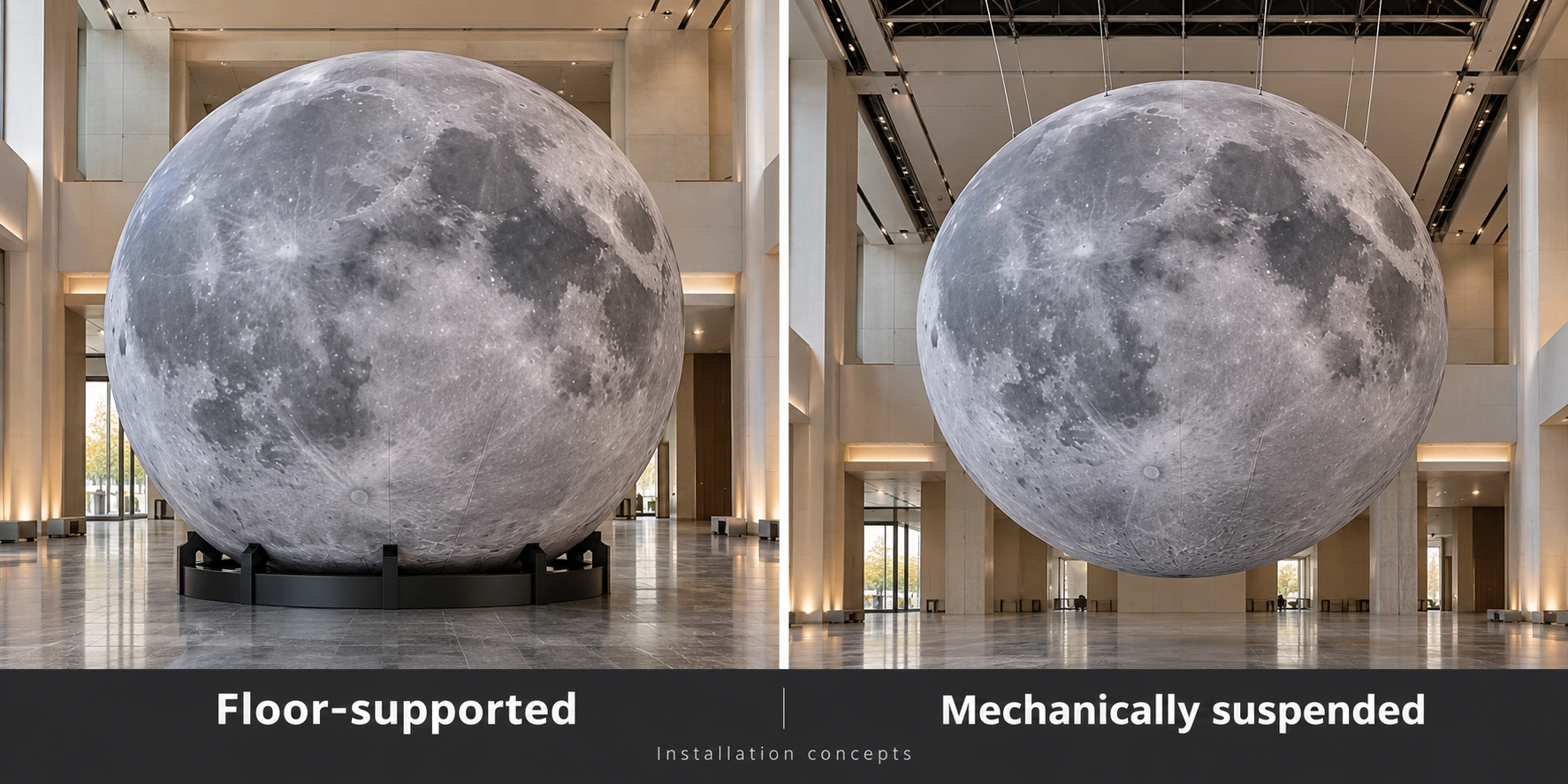
InflatCustom offers a moon stand product and a moon and planet display range. Use them to start a project discussion. Confirm the construction, equipment and support arrangement for the version being quoted.
Define the image you want visitors to see
A moon can be a close-view object, a background for portraits or the visual center of a large room. Those roles need different positions.
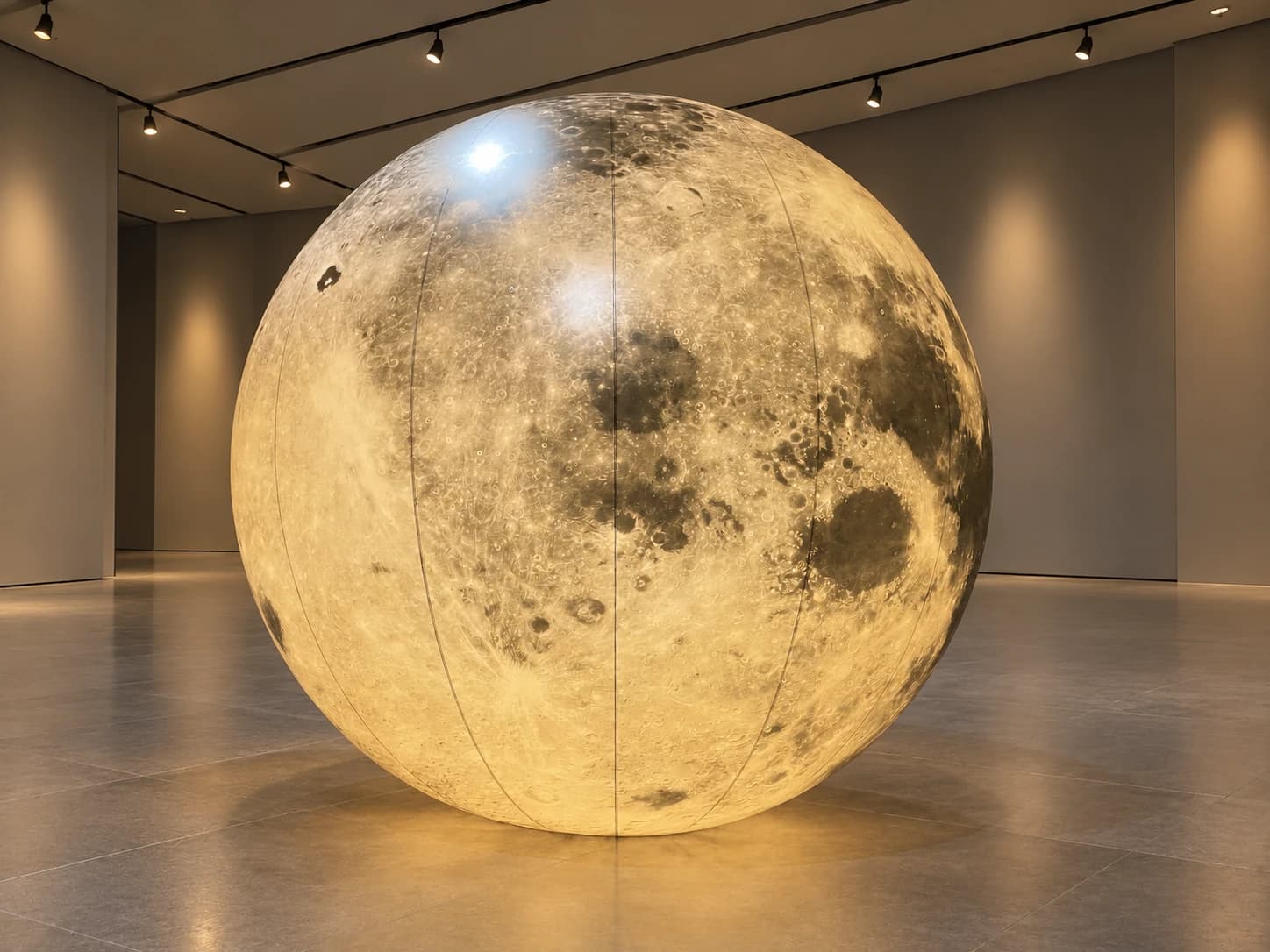
For a visitor photo setting, sketch the camera position, the visitor position and the moon's visible outline. A floor-supported display may make it easier to compose the person and lunar surface together. Check whether the stand is visible and whether that appearance suits the design. Concealing a base with scenery must be reviewed for access and operation; it should not be improvised after delivery.
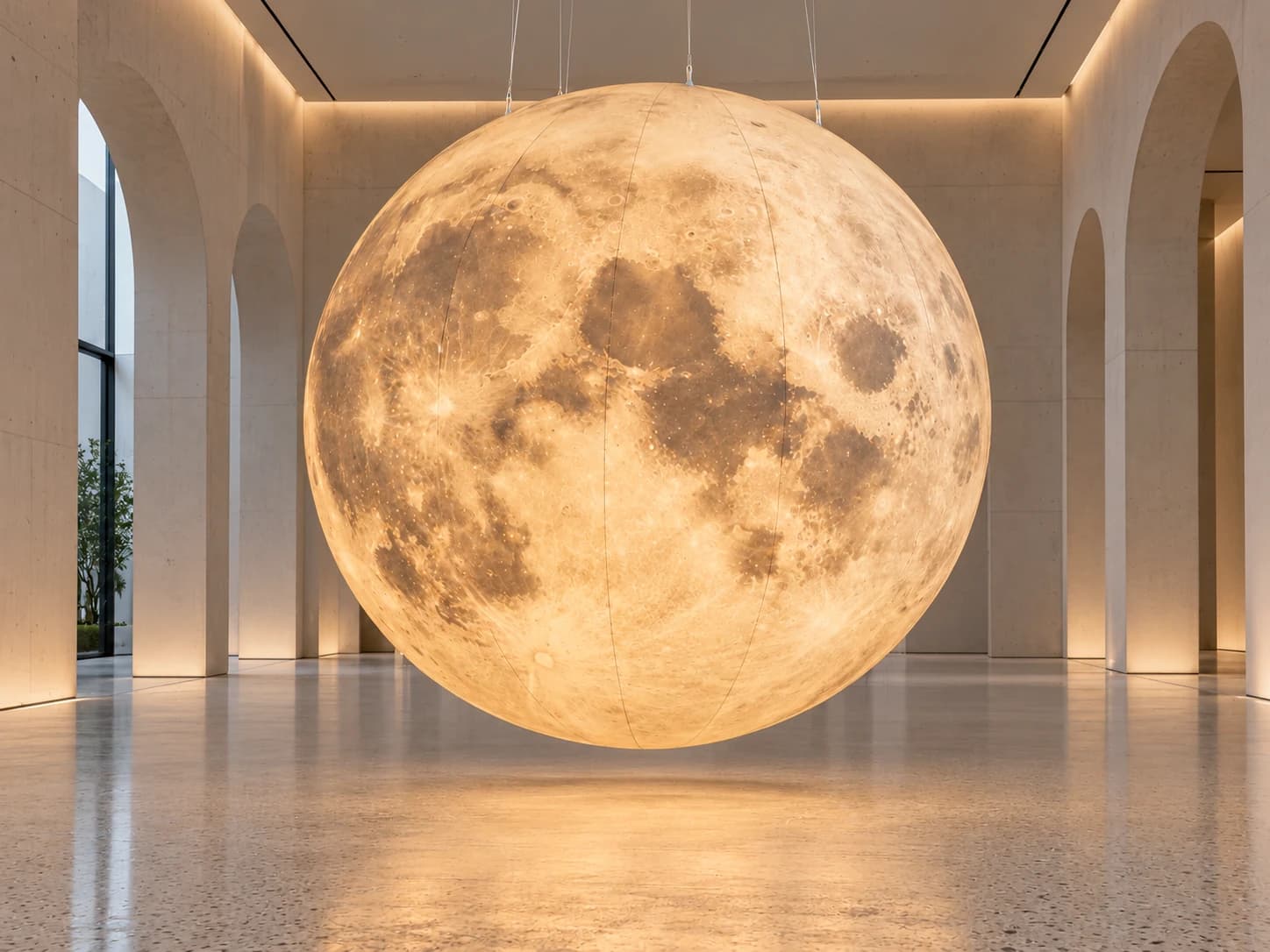
For an overhead focal point, test views from the entrance, main gathering area and any balcony. A moon that looks centered on a floor plan may overlap signs, lighting fixtures or stage scenery from the audience's position. Ask for a sightline mockup that includes those objects.
Identify the primary and secondary views before discussing diameter and position.
Floor stand versus suspension: a decision table
| Decision | Floor-supported concept | Suspended concept |
|---|---|---|
| Main visual opportunity | A moon positioned within a lower-level composition | An elevated focal point across the room |
| Space to review | Sphere, base, equipment and approved surrounding area | Sphere, usable overhead volume and the installation arrangement |
| Key venue question | Where may the complete floor display operate? | Will the venue approve this specific suspended object and support system? |
| Photography check | Does the base affect the intended frame? | Is the moon too high to appear with people or stage content? |
| Local services to identify | Placement, stability, electrical routing and access | Qualified rigging review, access, electrical routing and removal |
| Reuse concern | Different floors, room layouts and transport access | Different venues may have incompatible rigging rules or locations |
The floor version still requires a suitable installation and operating plan. The suspended version may reduce the permanent floor area occupied by the display body, but installation access, equipment and venue restrictions can still affect the floor below. Neither option creates unrestricted public space automatically.
“Suspended” describes mechanical support
In this guide, a suspended inflatable moon means a display supported by an approved mechanical rigging arrangement. It does not mean the sphere floats using helium.
Terms such as “moon balloon” appear in product searches, but they do not establish how a particular display is supported or inflated. Put the required arrangement in the brief and ask the supplier to describe it explicitly. Do not infer lifting capacity, attachment suitability or load ratings from a product photograph.
If suspension is under consideration, introduce the supplier to the venue's authorized rigging contact early. Ask what technical information is required and who will approve it. The final product configuration, its complete installed assembly and the venue's support system must be reviewed together by qualified parties.
Qualified specialists must determine the rigging design and installation procedure.
Choose diameter after checking usable space
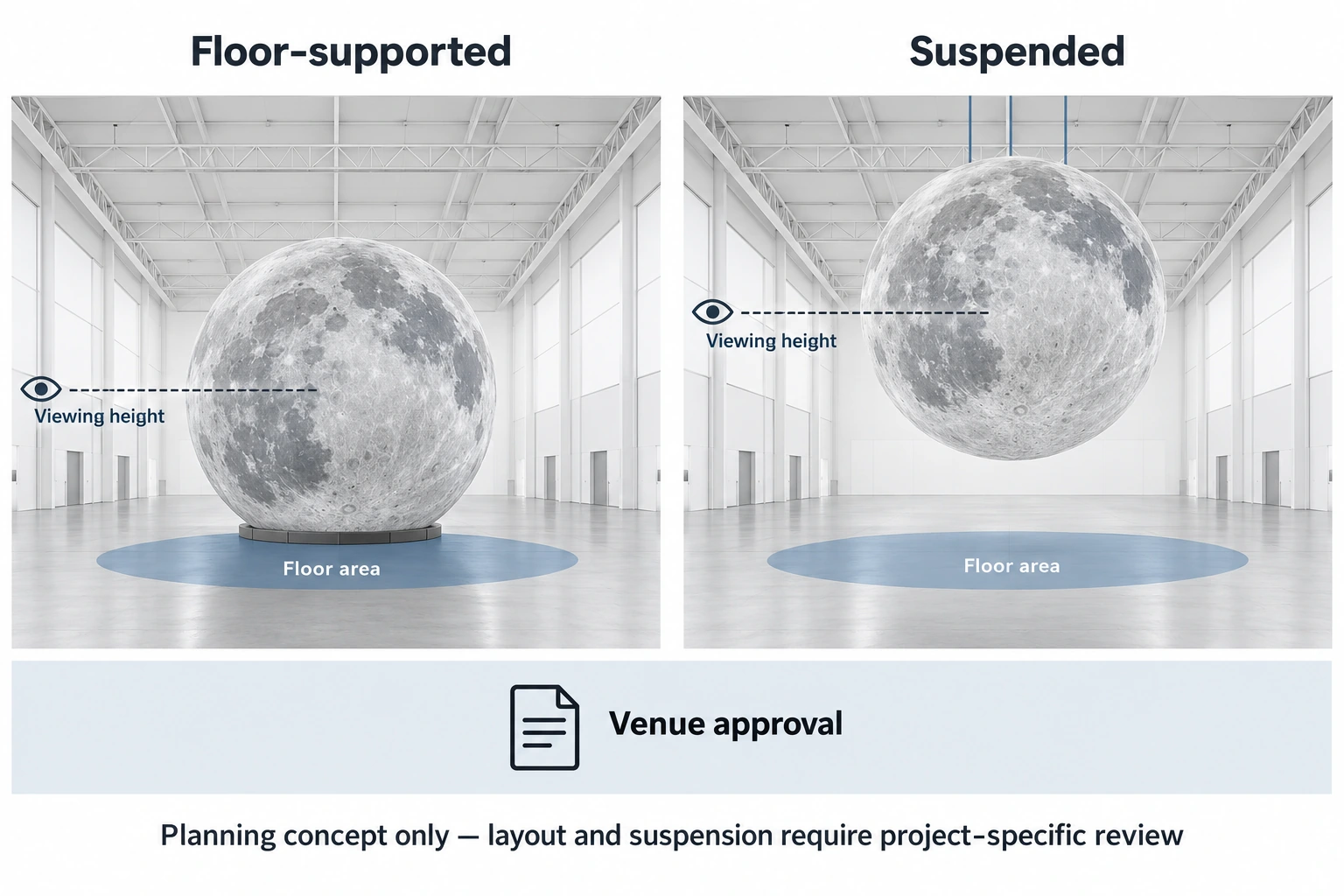
For a floor-supported concept, request the sphere diameter, total installed height and full base dimensions separately. A diameter does not tell you how high the top of the moon will sit. It also does not identify equipment positions or the space required to inspect and maintain the display.
For a suspended concept, distinguish the venue's ceiling height from the height actually available for the proposed installation. Existing structures, services and the approved suspension arrangement may reduce that space. Have the venue and qualified installation team establish the allowable position and required clearances.
Ask for two diameter alternatives within the feasible arrangement. Compare them in the same room view and with the same camera position. This makes the trade-off visible: does the larger moon improve recognition, or does it obscure other parts of the exhibition?
Review lunar texture and light as part of the composition
The texture and lighting brief should match the intended use. A science-led exhibition may prioritize recognizable surface features and a defined viewing orientation. A branded evening event may prioritize a particular visual mood. Record which priority wins when they conflict.
Review the proposed artwork both with illumination and under the venue's expected ambient light. Request images or a sample review process appropriate to the order, with the review scope agreed in advance. A digitally rendered glow is a design reference, not evidence of the finished product's brightness or camera appearance.
Also identify the portion of the sphere most often seen by visitors. A floor-level close view and a view from below a suspended sphere reveal different areas. Ask how artwork orientation, seams and service access will relate to that view. If photography is central to the campaign, include a camera test in the agreed acceptance plan rather than assuming every light setting will produce the desired result.
Put installation responsibilities into the quotation
A useful comparison separates the manufactured display from local installation services. Ask who supplies the base or approved attachment provisions, what electrical equipment is included, and which technical documents can be supplied for review. Have the local contractor identify its own scope.
Use this handover checklist before approving an order:
- Selected support approach and two-dimensional site views
- Proposed diameter and overall installed envelope
- Indoor or outdoor location and expected operating conditions
- Venue's technical contact and required approval documents
- Named responsibility for installation, inspection and removal
- Equipment and power-routing requirements to be confirmed
- Artwork orientation and agreed lighting review
- Delivery, receiving and installation dates stated separately
For repeat-use inventory, list the confirmed venues. A unit accepted in one room is not automatically approved for another. If you want both standing and suspended use, request a specifically reviewed dual-use scope. Do not assume that adding a stand or hanging an existing floor display is a simple accessory change.
Ask for a configuration-specific quote
Compare the moon stand and moon and planet range, then send a project inquiry.
Start with the form's required name, business email, product type and destination country. In the optional project description, state “floor-supported,” “mechanically suspended” or “both options under review,” followed by the proposed diameter, venue status and installation date. The contact page provides a WhatsApp route for reference files. That information gives the quotation team a clearer basis for discussing the product and the approvals still needed.
Quick buyer checklist
Related product options
Frequently asked questions
Is a floor stand always the cheaper choice?
Compare complete project costs. Local labor, venue requirements, access, equipment and future reuse can change the result. Obtain a defined supply quotation and the relevant local-service estimates instead of comparing only the inflatable's price.
Can a suspended inflatable moon use helium?
This article concerns mechanically suspended displays. Helium lift is a different technical proposal and should not be assumed from the word “balloon.” Ask the supplier to confirm the exact inflation and support system being quoted.
Can one moon be used both standing and hanging?
Only if both configurations have been specifically reviewed and supplied for the intended use. Ask for the configuration details and approval requirements before ordering. A product image or an apparent attachment loop is insufficient evidence.
What should we send if the venue has not approved suspension?
Send the desired location, approximate diameter, room drawings or photographs, and the venue's review requirements. State clearly that suspension is pending. Keep a floor-supported concept under consideration if it can meet the same creative objective.
Can we use the moon outdoors?
Outdoor use needs a separate review of the proposed product, support arrangement, weather exposure, electrical equipment and operating plan. An indoor concept or a general product description does not establish suitability for your outdoor site.
Request a project-specific comparison
Decide how the moon will be supported before fixing its diameter. Compare floor space, overhead feasibility, audience views and quotation responsibilities.
Send Quote Request