Realistic or Stylized? Choosing a Giant Inflatable Animal for a Brand Campaign
Published
Quick buyer answer
Choose a realistic direction when recognizing the animal's natural form is central to the campaign. Choose a stylized direction when the animal must express a distinctive brand character through simplified shapes, colors and expression. A hybrid can work, but the brief must say which natural features stay accurate and which features may change.
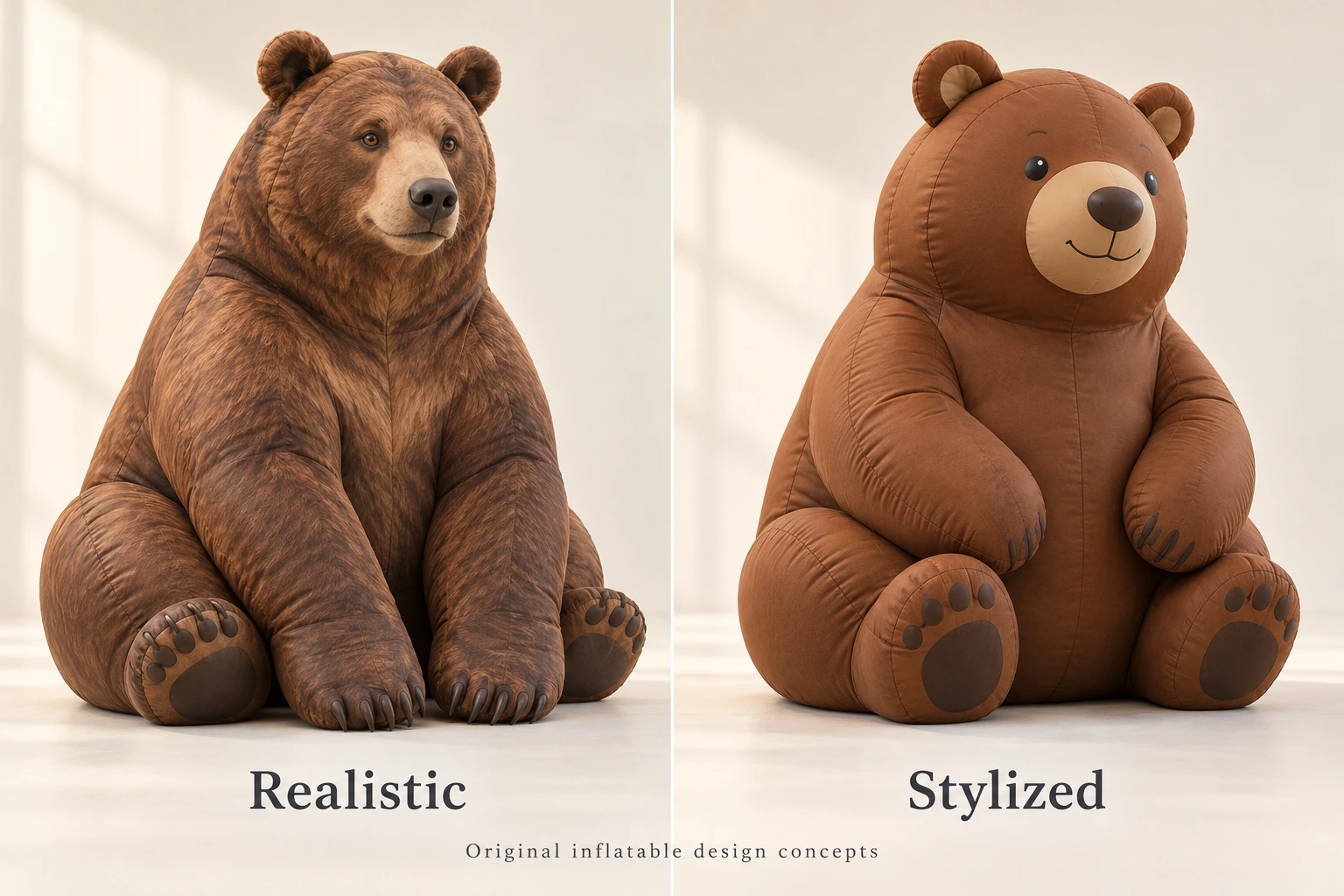
The decision is easier when both concepts use the same animal, pose and target size. This guide uses an original bear concept to explain the trade-offs. It is an illustrative design exercise, not a customer project or a licensed character.
Define what the audience must recognize
Start by completing this sentence: “Someone looking at the display should immediately recognize ___.”
For a wildlife exhibition, the answer might be a particular bear species. For a pet or outdoor brand, it might be an approachable bear associated with the campaign's identity. For an event sponsor, it might be a distinctive silhouette and color combination already used in advertising.
These goals require different approval criteria. “Looks like a bear” is too broad when the exhibition needs a particular species. “Scientifically realistic” is unnecessarily restrictive when the approved brand character has oversized eyes and an intentionally rounded body.
Write one primary recognition goal and three non-negotiable features. For the illustrative bear, those might be the rounded ears, muzzle shape and seated body silhouette. Give the supplier permission to propose simplifications elsewhere, subject to review.
InflatCustom's custom inflatable animal model is a starting point for discussing artwork-based animal displays. The wider animal product category can help frame the intended product direction; the brief should still define your own animal and design requirements.
Compare both directions on the same criteria
| Criterion | Realistic direction | Stylized direction |
|---|---|---|
| Recognition goal | Animal identity, proportions and characteristic markings | A distinctive campaign character and consistent visual identity |
| Useful references | Multiple views of the intended animal, with usage rights checked | Approved character artwork and brand guidelines |
| Details to protect | Head shape, body proportions, muzzle, paws and relevant markings | Eye spacing, expression, silhouette and controlled brand colors |
| Common approval risk | Mixing references from different species or poses | Changing the character's personality during 3D interpretation |
| Branding decision | Keep branding separate or define a deliberate placement | Integrate approved colors or a designated brand area |
| Best comparison test | Does it still read as the intended animal from the main views? | Does it remain the same recognizable character across views? |
Neither direction automatically means more detail, lower cost or a faster order. A simple-looking character can require careful revision because a small change to its eyes or muzzle changes its expression. Compare the actual design scope rather than attaching assumptions to the style label.
Decide which details need shape and which need print
An inflatable animal translates a visual idea into a three-dimensional fabric form. Review the features that create recognition before requesting fine surface detail.
For the bear, the rounded ears, muzzle, broad body and paws may carry the identity. Fur markings could be interpreted through printing, shaped sections or a combination proposed by the supplier. Ask which features will change the silhouette and which will remain surface graphics.
This distinction matters from a distance. A printed fur pattern may enrich a close photograph but contribute little to recognition across an event space. Conversely, an exaggerated paw or ear can change the display's whole outline and the space it needs.
Ask for a plain-shape view as well as a fully decorated rendering. If the character only works with intricate artwork visible, consider whether that matches the audience's actual viewing distance.
Keep the comparison fair: one bear, two design directions
Imagine an original brown bear in a seated pose. In a realistic direction, the team preserves recognizable bear proportions and a restrained natural fur palette. In a stylized direction, it uses a rounder body, simplified surface markings and an approved campaign palette.
Keep the seated pose and target height broadly comparable while deciding between them. Review both against the same neutral background and from the same viewpoints. Decide style before adding scenery or dramatic lighting.
A hybrid brief should be equally explicit. For example: retain the recognizable ear shape and muzzle outline, simplify fur detail, and use the campaign color only on a defined graphic area. Avoid vague instructions such as “half realistic, half cartoon,” which leave reviewers to imagine different outcomes.
Remove rejected versions from the active production approval pack.
Approve the views the audience will actually see
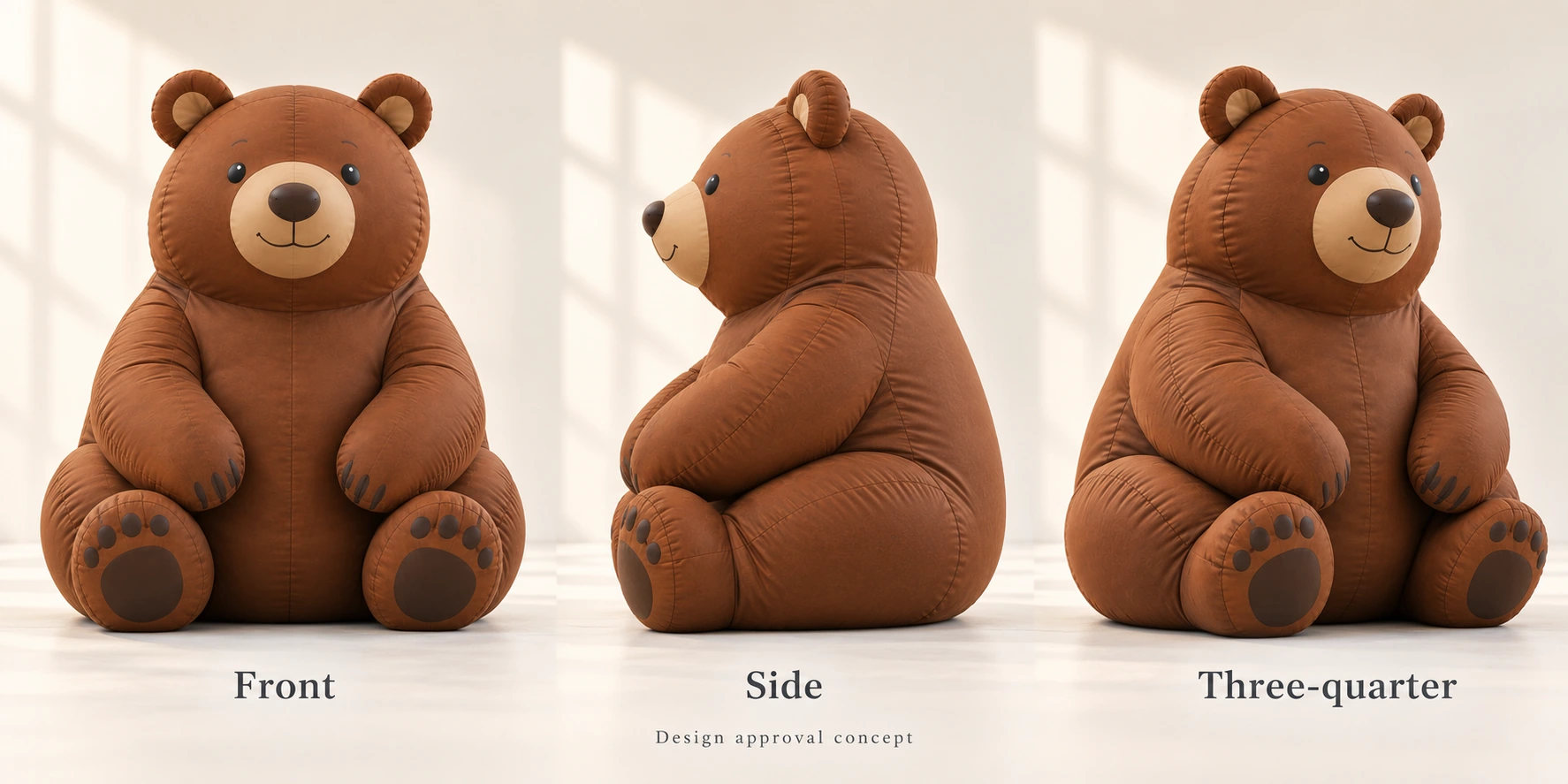
A front-facing logo cannot answer every question about a three-dimensional animal. The side view may reveal an unexpected muzzle projection or body depth. The three-quarter view may change the expression because the eyes sit differently around the curved head.
Request these views before production approval:
- Front: eye spacing, face shape, symmetry and main markings
- Side: body depth, muzzle profile, forepaw position and hind-paw projection
- Three-quarter: expression and transitions between front and side
- Rear, when publicly visible: finished appearance, branding and proposed service-access location
- Intended audience view: the character shown from the actual viewing height and distance
Give comments in terms of observable changes. “Reduce the eye spacing to match approved drawing A” is more actionable than “make it friendlier.” Keep one dated approval file, identify the decision-maker and separate mandatory corrections from optional suggestions.
Treat branding as a design choice
A realistic animal can lose its natural character if a large logo is placed across an important marking. A stylized animal can lose brand consistency if the factory invents an unapproved smile or changes the eye shape to make room for a graphic.
Decide whether the animal itself is the brand identifier or whether it needs a separate logo treatment. Review proposed logo placement from the main camera view and on the curved surface. Do not approve it only as a flat artwork file.
Use references you own, have permission to use, or have checked for the intended commercial use. A familiar animal species is a useful creative starting point; another company's distinctive character should not become a shortcut to your design. Have the appropriate reviewer resolve rights questions before the artwork enters production.
Turn the selected direction into a useful RFQ
Use the custom animal model page as a reference, then send a project inquiry.
The contact form requires a name, business email, product type and destination country. Add the animal, design direction, target size, quantity and installation date in the optional fields and project description. List the three recognition features that must survive the 3D interpretation, the views needing approval and the reference files available. The contact page offers WhatsApp for sharing those files. A clear design decision gives the supplier a stronger starting point than “make us a giant animal.”
Quick buyer checklist
Related product options
Frequently asked questions
Does realistic mean scientifically accurate?
No. “Realistic” describes a visual direction unless accuracy requirements are defined. A science-led project should identify the species, approved references and features that an appropriate subject reviewer must accept. Agree that review process before production.
Is a stylized inflatable animal easier to approve?
It can have fewer surface details, but brand features may be tightly controlled. Eye shape, proportions and expression often need careful review. A complete character guide helps more than simply requesting a cartoon style.
Can we start with only one photograph or a flat logo?
It can start a discussion, but unseen views remain unresolved. Ask the supplier to identify what must be interpreted and submit those views for approval. Do not let missing reference information become an accidental production decision.
Will a larger animal preserve more detail?
Size alone does not establish the final appearance. Viewing distance, curvature, printing, seams and feature construction all affect what visitors see. Specify the details that matter and agree how their appearance will be reviewed.
Can we request realistic and stylized quotations together?
Yes, define both concepts clearly and keep the size, pose, quantity and intended use comparable. Ask the quotation to identify differences in design work, construction and review scope. Do not assume a standard percentage difference between styles.
Request a project-specific comparison
Use the same original bear to compare two design directions. Define the features, views and brand decisions that a three-dimensional animal must preserve.
Send Quote Request