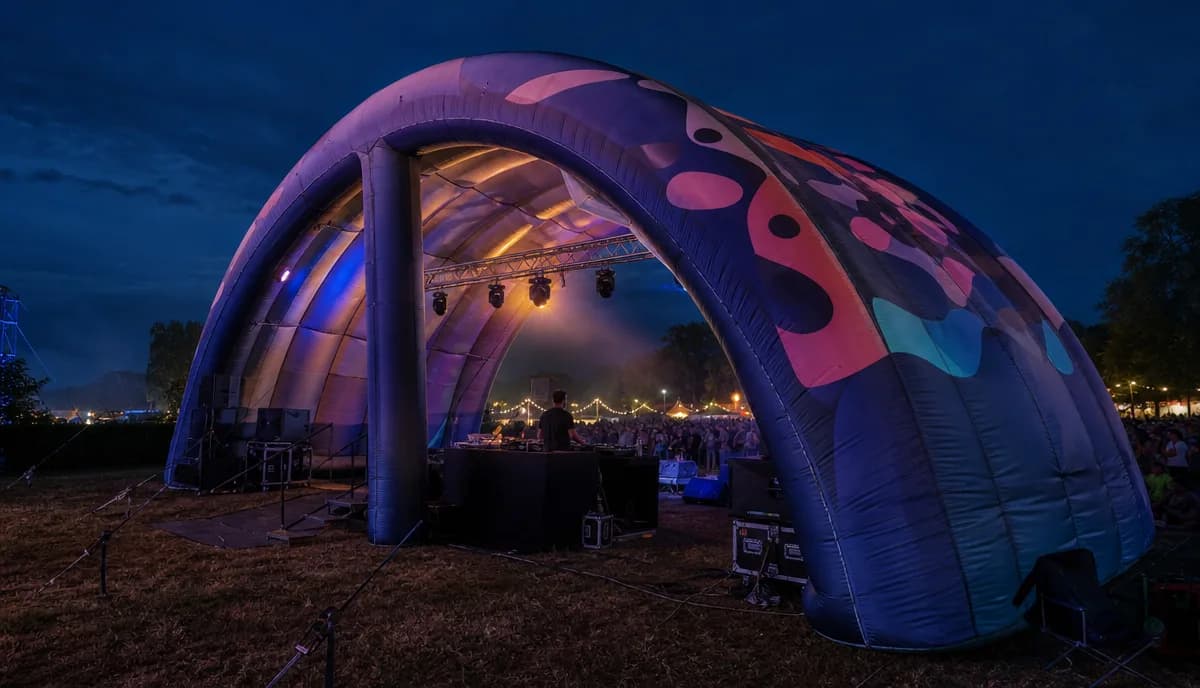
Outdoor DJ events, festival side stages and branded music activations often need more identity than a standard truss roof provides. A custom inflatable stage tent can frame the performance area, carry campaign color and create a landmark that guests can spot across a busy site. It is also a technical event item: dimensions, power, anchoring, access and operating responsibility need to be clear before production begins.
What is a giant inflatable stage tent?
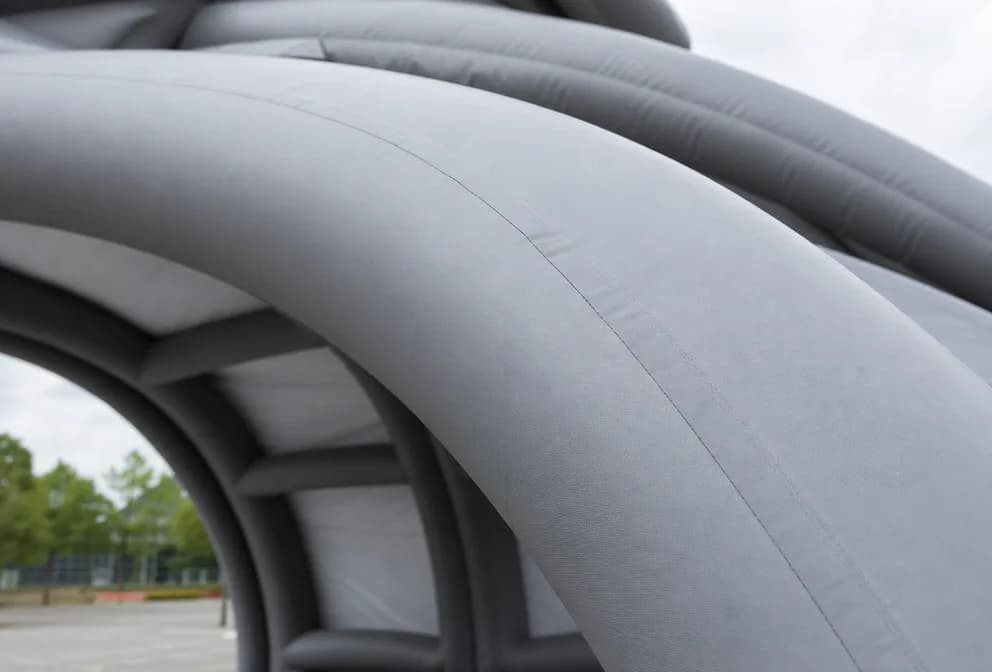
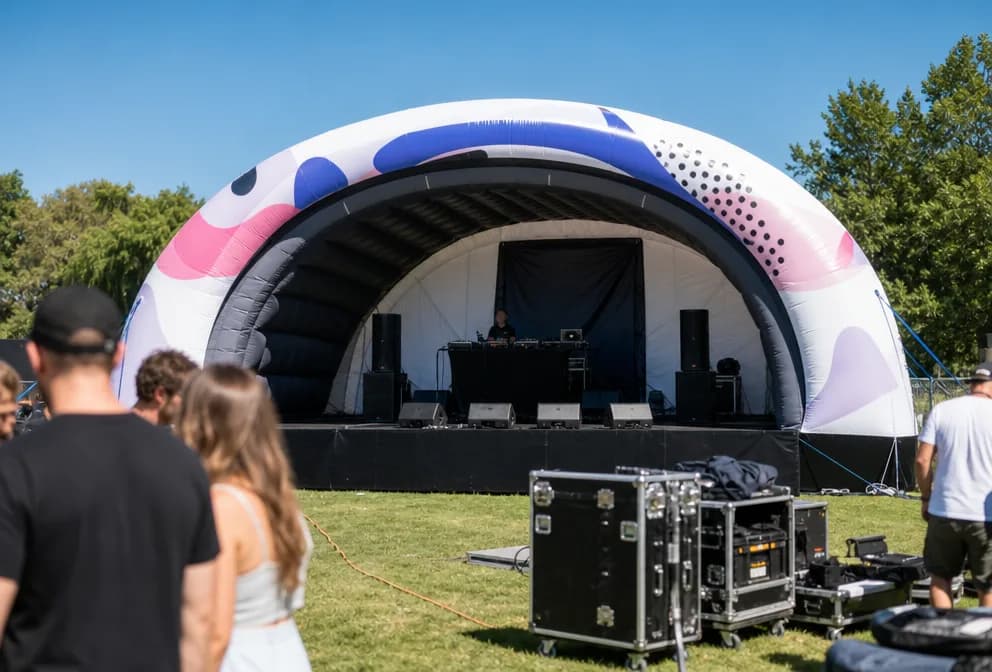
A giant inflatable stage tent is a custom, air-supported canopy or enclosure designed around a performance, DJ, sponsor or event-production area. It can combine inflatable arches, sidewalls, a branded front profile and integrated openings for equipment access. The final form is developed from the approved site and event brief rather than selected as an off-the-shelf shelter.
For buyers, the key distinction is simple: this is not just a decorative photo backdrop. If people, lighting, audio equipment or operations are intended to sit beneath it, the project must be reviewed as an operating event structure with qualified venue and installation oversight.
Structure versus decoration: choose the right brief
Many early briefs use the same phrase—“inflatable stage”—for two very different jobs. Separate the visual role from the operational role before asking for a proposal. It prevents a quote for a decorative surround being compared with a quote for a canopy intended to support a live event workflow.
| Planning question | Decorative inflatable | Stage tent / operating canopy |
|---|---|---|
| Main purpose | Visual impact, entrance, backdrop or photo point. | A defined event zone planned around performers, equipment and site workflow. |
| Buyer brief | Artwork, display size, location and installation window. | All decorative inputs plus performance area, power, access, anchors and operating plan. |
| Safety review | Placement, stability and public separation for the display. | Project-specific installation, inspection, weather and emergency procedures with the venue. |
| Quote comparison | Shape, print, material, packing and basic accessories. | The written scope must also state the proposed blower, power, anchoring and operating assumptions. |
Size from the inside out
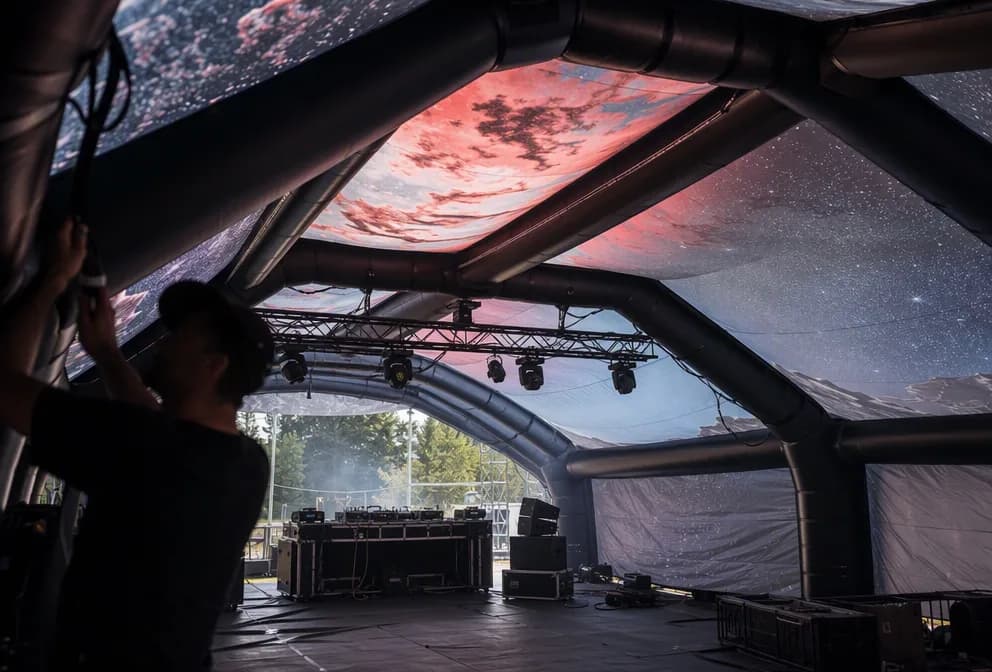
Start with the usable area, not the front elevation. Map the DJ booth or stage deck, speaker positions, lighting, cable paths, technician circulation, sight lines and any set change or emergency access. Then add the inflated frame depth and the clear zone required around it. This turns an attractive render into a layout that can be checked against the venue.
Your supplier can work more accurately when the brief distinguishes outer footprint, internal usable width and height, equipment clearance and the available site envelope. A drone photo, ground plan and a few measured reference points often reduce revisions more than a long mood board does.
Safety and operating responsibility come first
A continuous-air stage canopy only holds its intended shape while its specified air system is operating. The supplier should state the proposed equipment and installation assumptions, while the venue and qualified event professionals review the actual site, electrical supply, weather response, staffing and operating controls.
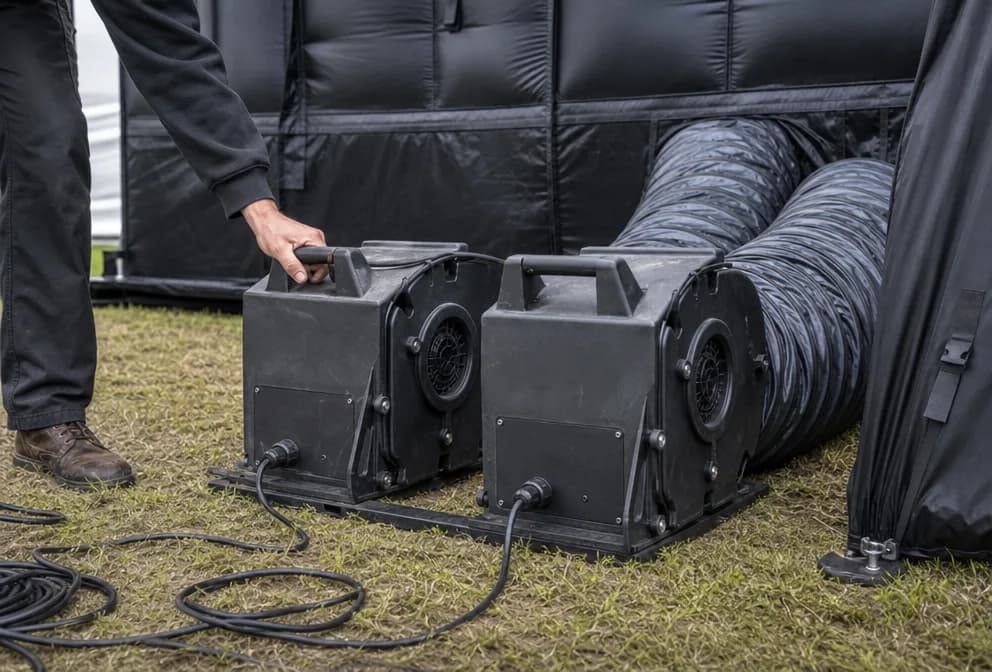
Ask directly whether the quote includes or excludes items such as blower configuration, spare equipment, distribution, cables, anchor hardware, ballast, local setup services and technical documentation. A clear answer is more valuable than an assumed “standard package.”
Design the branding for sight lines, not only close-up approval
At a festival or outdoor event, most guests read the silhouette and main graphic from a distance. Prioritize the front-facing logo area, high-contrast campaign colors and the parts of the canopy visible above a crowd. Treat small copy, dense sponsor lists and fine gradients cautiously: they may look correct in an artwork file but disappear from the audience viewpoint.
Before final artwork approval, ask for a scaled visual that shows the main viewing direction, entrance side, stage orientation and any logo zones that may be interrupted by seams, entrances or equipment. The goal is a graphic hierarchy that works during the event, not just in a flat PDF.
What drives cost?
A custom quote is shaped by the approved footprint, height, pattern complexity, material choice, print coverage, internal engineering, blower arrangement, accessory scope, packing and destination. Event teams should avoid comparing only a headline total: a lower price may cover a different size, operating assumption or delivery scope.
Request a line-by-line scope that separates the inflatable unit, proposed inflation equipment, accessories, packing and shipping terms. If the project has a fixed event date, also state it early so production and freight options can be reviewed honestly instead of implied.
Logistics, access and repeat-use planning
Large event inflatables create a second planning challenge after the design is approved: how the packed tent moves from the truck to the exact setup area, and how it is protected after use. Check gate widths, loading routes, stairs, lifts, temporary fencing, storage space and the time permitted for installation and pack-down.
For touring or repeat activations, ask for the final packed dimensions and weight after the design is confirmed, then keep a simple inspection and drying routine between events. A clean, dry pack-down and documented pre-event check help preserve the unit and make future deployments easier to plan.
For more project planning resources, see the inflatable wind safety guide, outdoor installation checklist and custom inflatable shipping guide.
Buyer questions
Frequently asked questions
Does a giant inflatable stage tent need continuous power?
For a continuous-air inflatable stage canopy, yes—without exception. Its shape depends on maintained air pressure. Do not operate people or equipment beneath it without project-specific blower, power, anchoring, installation, inspection and emergency procedures reviewed by qualified professionals and the venue.
What information should I send for an inflatable DJ stage tent quote?
Share the venue country, approximate outer footprint and usable performance area, stage or DJ equipment layout, event dates, artwork, expected site surface, available power, access restrictions and delivery destination. The more complete the brief, the easier it is to confirm the actual scope.
Can an inflatable stage tent be used outdoors?
Outdoor suitability must be reviewed for the specific venue and operating plan. The project team should confirm weather monitoring, anchoring or ballast, ground conditions, electrical supply, access, local rules and the event team responsible for setup and shutdown.
Should I request backup blowers or power redundancy?
Ask the supplier to state exactly what blower configuration, spare equipment and contingency procedures are included for your project. Whether redundancy is needed depends on the event risk assessment, venue requirements and the approved operating plan; it should never be assumed.
How is the final cost of a custom inflatable stage tent determined?
Cost depends on the approved dimensions, shape, print coverage, material, internal engineering, blower configuration, anchors or ballast scope, packing, destination and any separately agreed services. Compare written quotes line by line so product scope and delivery scope are both clear.