B2B buying guide · Reviewed 24 October 2026
Inflatable Blower Voltage and Plug Types: International B2B Buyer Checklist
Direct answer: specify the exact blower nameplate voltage and frequency, destination plug and grounding arrangement, event-site power, indoor/outdoor use and the quoted accessories before approving a custom inflatable. Country averages and a travel-plug adapter are not substitutes for equipment and venue checks.
This guide is for brand activation managers, exhibition builders, rental companies and importers ordering inflatable mascots, product replicas, arches or illuminated displays for the United States, Canada, Germany, the United Kingdom and Australia. It focuses on purchase decisions—not a claim that one blower model suits all destinations. InflatCustom can review your brief and provide a project-specific quotation; listed equipment, documents and inclusions must be confirmed for the actual design.
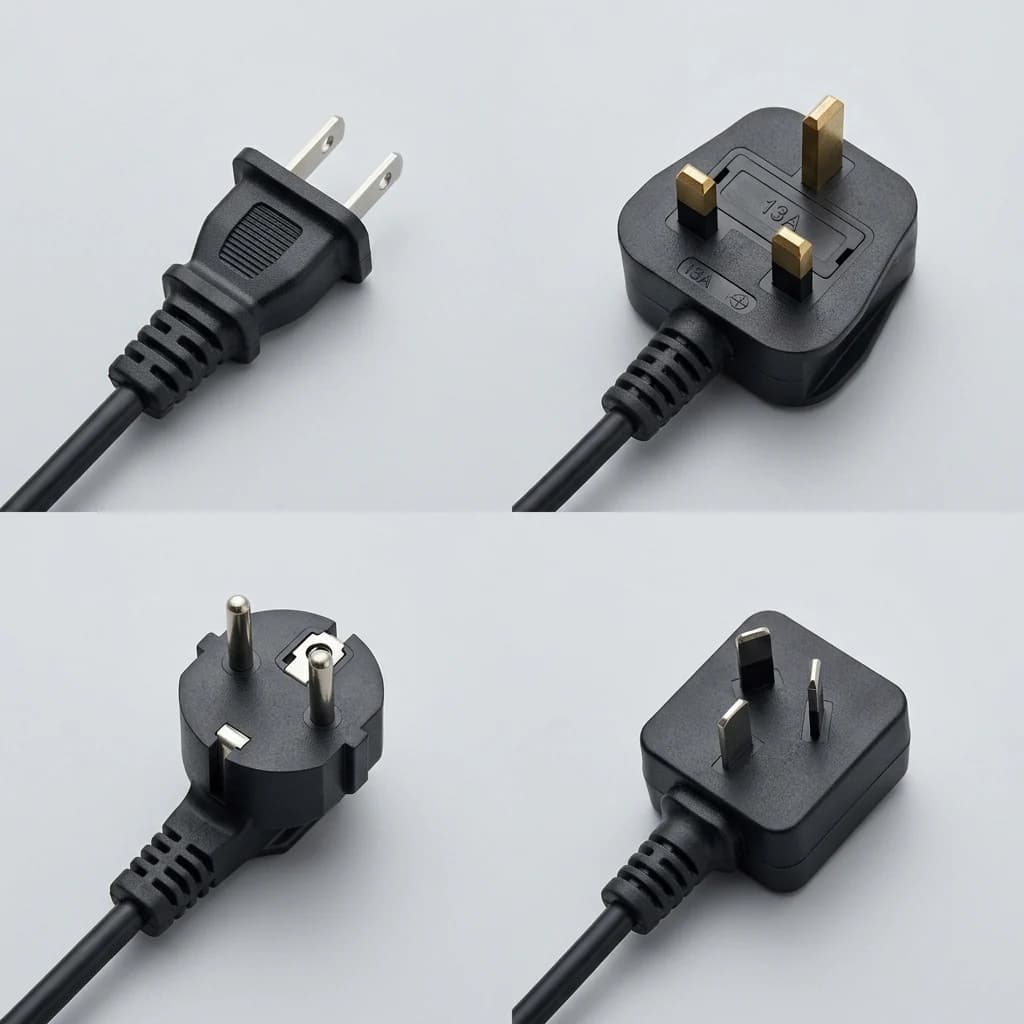
Existing illustrative plug comparison image. It does not certify a specific blower or local installation.
1. Start with the nameplate—not the destination country alone
Ask for the proposed blower manufacturer and model, rated supply voltage, frequency (Hz), input current or power, protective class, connector and operating instructions. Have the event electrician compare these against the exact venue power outlet, available circuit, applicable electrical rules and environmental conditions. A label reading 110–120V does not automatically mean the equipment is suitable for every 120V outlet; circuit capacity, condition and installation matter too.
The table below provides planning references, not installation approval. Temporary generators, trade-show distribution boards, industrial circuits and custom venue outlets can differ from ordinary household power. Actual rated input on the supplied equipment and the approved on-site supply must control the decision.
| Event destination | Common nominal mains reference | Common plug reference | Quote approval check |
|---|---|---|---|
| United States / Canada | 120 V, 60 Hz | Type A/B; other venue sockets possible | Exact circuit, current rating, earthing and relevant listing/documentation |
| Germany / much of continental Europe | 230 V, 50 Hz | Type C/F for some equipment; verify grounding | Approved compatible plug, CE-related documentation where applicable and hall rules |
| United Kingdom | 230 V, 50 Hz | Type G commonly used | Outlet and circuit, event contractor approvals and applicable documentation |
| Australia | 230 V, 50 Hz | Type I commonly used | Site protection, plug approval, electrical documentation and weather conditions |
These are common power-system references. Final suitability requires the actual equipment rating, local electrical rules and event-site approval. Not all equipment is available or certified for all markets.
2. Separate three decisions: blower, inflatable construction and installation
A continuous-air model needs a compatible blower operating throughout the display. A sealed-air model generally uses a pump during inflation and then holds pressure through its chamber and valve system, subject to periodic inspection. Neither design is automatically quieter, safer, more durable or more economical in every location. Geometry, use duration and confirmed construction govern the choice.
| Buyer decision | Continuous-air format | Sealed-air format |
|---|---|---|
| Power during display | Usually required continuously | Pump typically used to inflate; pressure maintenance needs a plan |
| Venue constraints | Check blower noise, airflow path, cable runs and power backup | Check pressure retention, valve access, lifting/rigging and inspection |
| Quotation scope | Blower model, cable, spare availability and operation | Pump, valve/spare parts, pressure checking and service |
| Typical buyer use | Static ground displays, some arches and large figures when design allows | Some hanging or quiet indoor displays when design and venue allow |
Compare the specific requirements in our continuous-air versus sealed-air guide. For an indoor suspended display, the venue rigger must also approve attachment and loads; a power-compatible unit is not automatically safe to hang.
3. Ask for a site-specific electrical and operating brief
Provide the outlet location, supply voltage and frequency, temporary-distribution or generator details, permitted circuit capacity, cable route, nearby water, public access and setup hours. The event contractor should confirm overcurrent protection and any ground-fault or residual-current protection required locally. A plug adapter changes the mechanical connection; it does not convert voltage or frequency. Do not field-modify a supplied plug or defeat its grounding arrangements.
For outdoor activations, describe rain exposure, ground surface and weather monitoring. Any blower, connector or extension lead used outdoors must be suitable for the actual conditions and installed according to local rules. Obtain manufacturer operating instructions and agree who can stop the display if the site becomes unsafe. US OSHA rules address visual inspection of portable cords and compatible plugs; Australian work safety guidance discusses equipment condition and RCDs for high-risk work. These are external workplace-safety references, not InflatCustom product certification.
- United States: OSHA 29 CFR 1910.334, use of equipment.
- Australia: Safe Work Australia, electrical safety duties and RCDs.
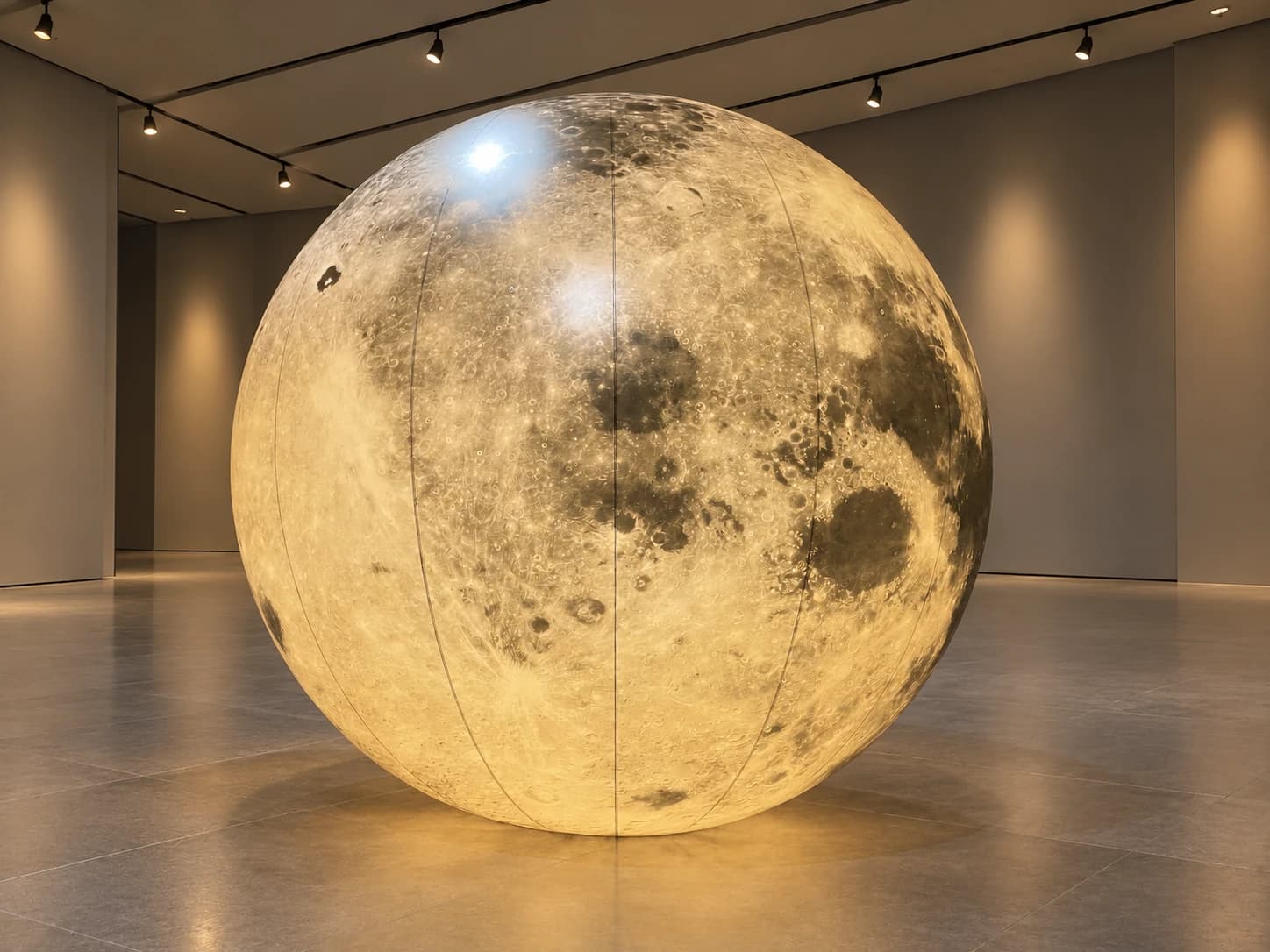
If LED illumination is requested, identify the lighting driver, its electrical rating, cable exits, access panels, switching requirements and power total separately. A render showing a lit bottle is not proof that the final assembly has a particular ingress rating, light output or electrical approval.
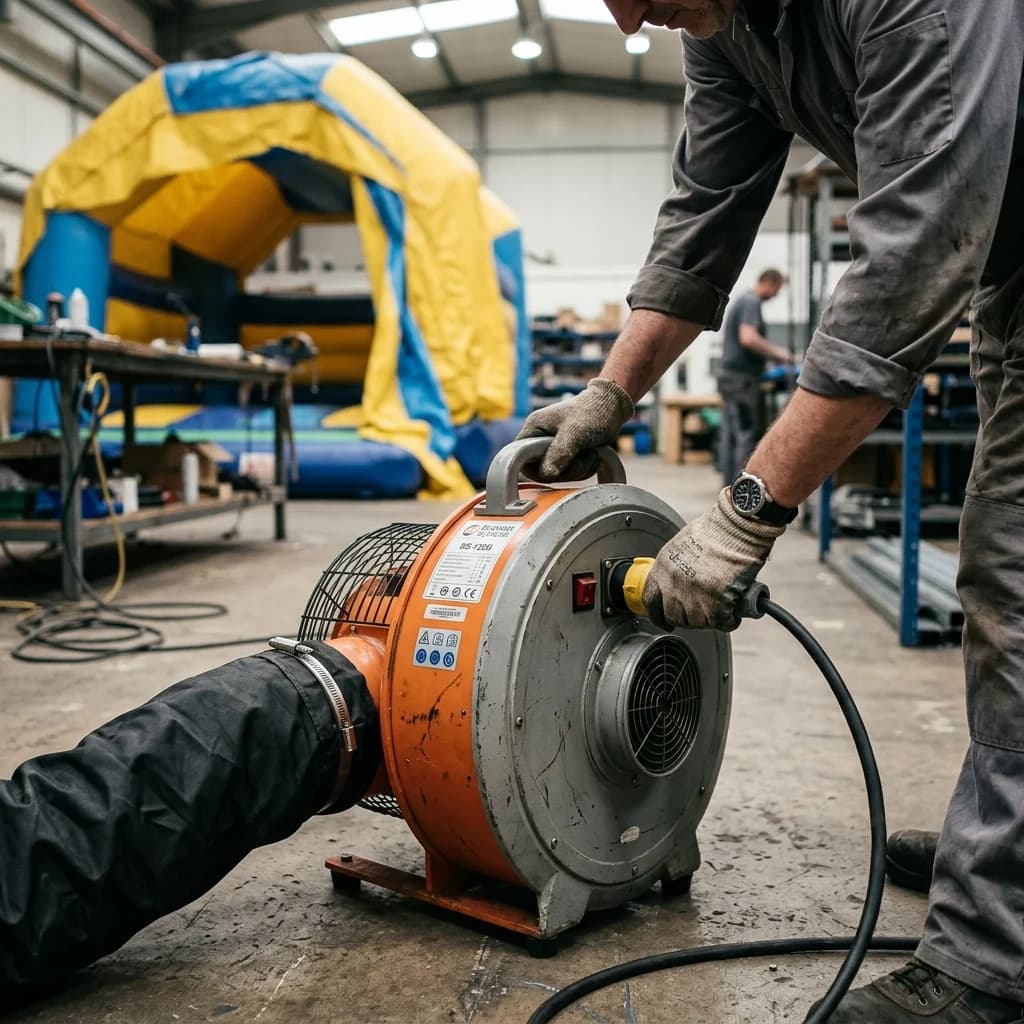
Existing reference image; request exact-equipment photos and documents for the quoted project.
4. Compare two quotations by supplied evidence, not just headline price
When comparing inflatable suppliers, request a line-item quote that identifies the air system, fabric or PVC specification, printed artwork, dimension drawing, cable and connector, blower or pump model, packing, repair items, documents and exclusions. Confirm whether the project requires a spare blower and who supplies it. A quote for the inflatable shell alone is not equivalent to an installation-ready package.
Ask whether photographs of the exact equipment label, functional trial and packaging can be supplied before dispatch. Request test reports and conformity evidence tied to the specified material and equipment as applicable. A document about one fabric sample does not automatically certify a finished inflatable assembly or meet a particular venue's requirements. Use our material and compliance evidence checklist to identify what to ask.
5. Include export terms and delivery deadlines in the technical RFQ
For B2B imports, request a project quotation with a clearly named trade term—for example, FOB Tianjin Port when appropriate—and separately confirm the destination, freight responsibilities and any onsite installation scope. Specify the required arrival date rather than only the event date: allow time for receiving, unpacking, electrical approval, rehearsal and remedial work. Packing dimensions and weights are determined by the confirmed design, not by an example displayed on a product page.
A professional RFQ should identify the organization buying the display, intended activity and dates, quantity, design ownership, target dimensions, artwork, destination, installation method, local supply details, desired inspection records and the person approving the build. If any item is unknown, say so; the supplier should flag technical assumptions explicitly rather than promising a universal specification.
6. Copy this pre-quotation checklist
Buyer project brief: international inflatable with power supply
- Company, role and event organizer or end customer.
- Inflatable type (replica / arch / mascot / letters) and reference photos or 3D drawing.
- Required size, estimated quantity and approved logo artwork.
- Country, city, venue and indoor / outdoor location.
- Voltage, frequency, socket photo if available and temporary power details.
- Operating hours, lighting needs, noise constraints and safe cable route.
- Ground-standing, suspended or other fixing proposal and venue approvals.
- Requested equipment documents, testing evidence and pre-shipment photos.
- Destination port or delivery address, trade term and event / required-arrival date.
- Quote scope: blower/pump, spare, packaging, accessories, freight and exclusions.
Frequently asked questions
Is a blower included with every custom inflatable quotation?
Not necessarily. Ask whether the price covers the blower model, voltage, plug, cable, spare unit, shipment and any lighting. A sealed-air item may use a separate inflation pump. Only the written quotation defines inclusions.
Can I run a 120V blower at a 230V event using a travel plug adapter?
No. A basic travel adapter changes connector shape, not supply voltage or frequency. Do not connect mismatched equipment. Request a suitable model and have the venue electrician verify the supply.
Does a 230V blower work everywhere in Europe and Australia?
Not automatically. Frequency, actual socket, earthing, approved equipment rating, local documentation and venue requirements still need review. Confirm the exact nameplate and site details in writing.
Should I choose continuous-air or sealed-air inflation for an indoor trade show?
Compare noise, access to power, size, exhibition rules, allowed rigging, operating hours and maintenance. Continuous-air needs a running blower; sealed-air normally uses a pump initially and needs pressure checks.
What should a supplier send before approving blower shipment?
Request photographs of the exact blower nameplate and plug, model details, applicable documentation, setup instructions, packing list and—if agreed—a functional test video. Agree on any additional testing before shipment.
What details make an international inflatable RFQ ready for pricing?
Include product drawing or photo, dimensions, quantity, venue country and outlet details, indoor or outdoor use, operating hours, event date, address or destination, artwork and required documentation.
Scope note: this guide helps buyers prepare an RFQ. It is not an electrical design, permit, site safety approval or proof of any particular InflatCustom product certification. Local competent professionals and the venue remain responsible for required installation checks.
Request a blower-compatible custom inflatable quote
Send your design, quantity, venue country, actual supply voltage and frequency, outlet type, operating hours, event date and destination. We can review the requested configuration and clarify the proposed blower, included accessories and available evidence in a written quotation.
Request a Project Quote