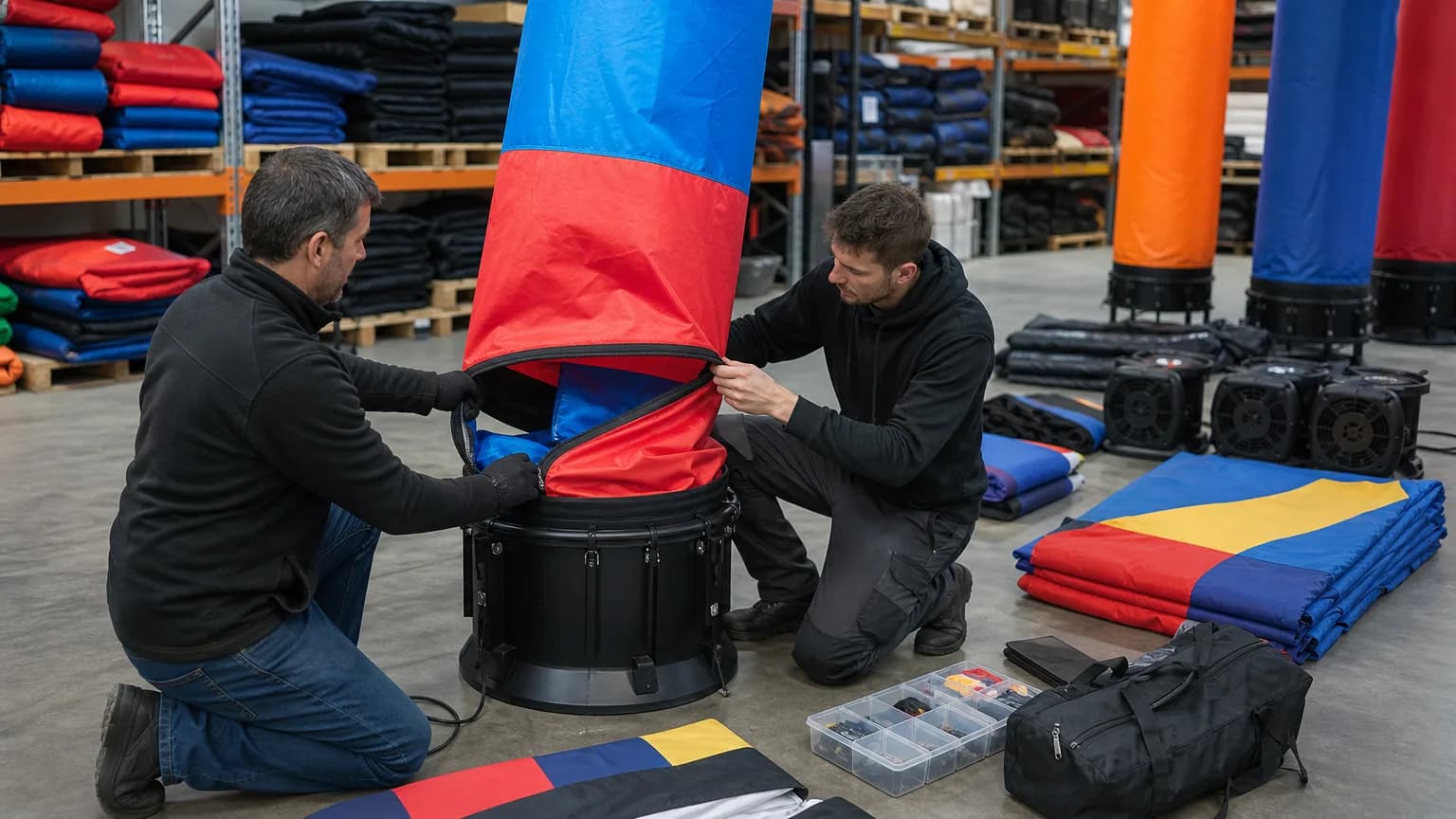
When a quick-change format makes sense
A quick-change format can help an agency or brand adapt a display across promotions when the base figure, fastening method and visual panels are designed together. It is not a substitute for checking the movement, cleaning and storage requirements.
- Multiple campaign treatments
- Repeat-use inventory
- Replaceable visual elements
- Fast changeover by trained staff
- Spare-part and storage plan
Questions before approval
Confirm what can be changed, how it is secured, whether the blower and base remain compatible, and which replacement parts are included. Ask for the process in the quote and retain the approved pattern files.
FAQ
What is a custom inflatable tube man?
It is a fabric figure designed around a supplied silhouette, colour direction or logo treatment and animated by continuous airflow. The final shape, blower and base are confirmed after artwork and use-case review.
Can a tube man carry a company logo?
Logo placement can be reviewed on the body, base or selected printed panels. Artwork should be checked for legibility while the fabric moves and for the viewing distance at the venue.
What should be included in the quote?
Ask for height, fabric, printing, seam construction, blower, base, anchors, spare parts, packing, destination, event date and approval steps.
Is an air dancer suitable for a car dealership?
It can suit dealership entrances, road-facing promotions and grand openings when local rules, wind exposure, power access, sightlines and anchoring are reviewed.
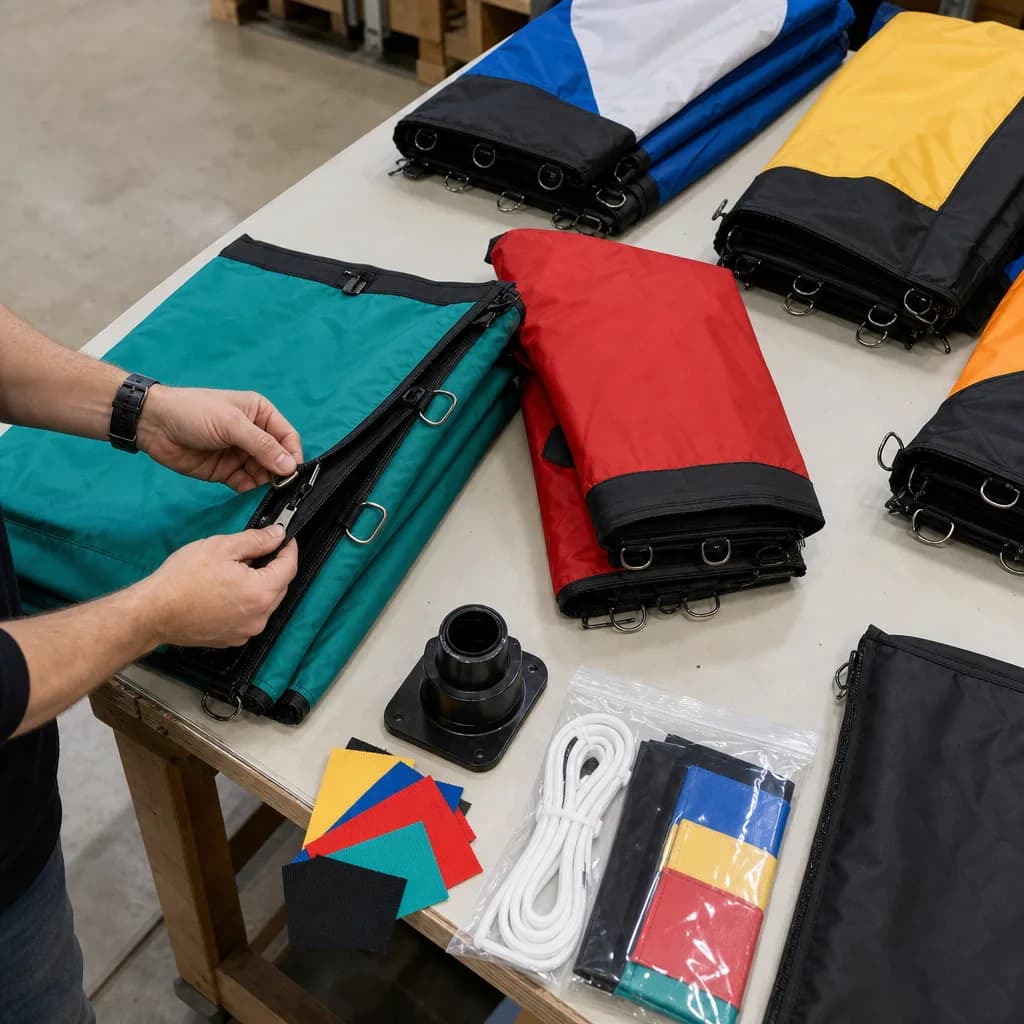
How do quick-change figures work?
A quick-change concept uses a planned interchangeable visual or garment treatment. Confirm the change method, fastening, compatibility, cleaning and spare-part scope before production.
Should I rent or buy a tube man?
Local rental is often suitable for a short campaign with ready-made inventory. Ownership is more suitable when exact branding, repeat use, wholesale supply or export procurement matters.
